





What is Surface Finish?
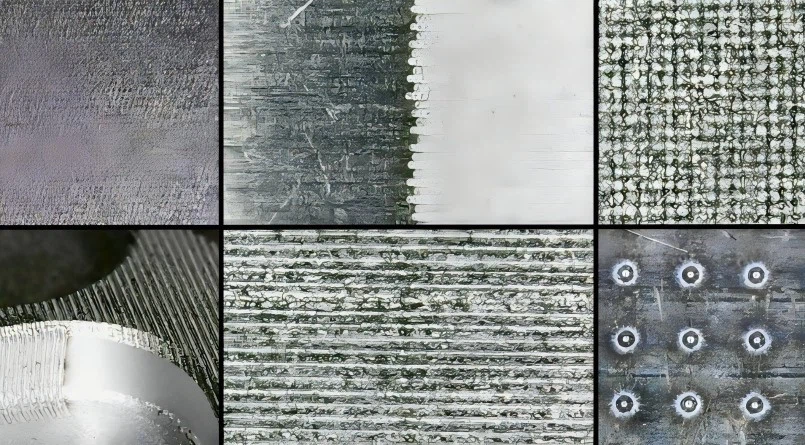
Surface finish refers to the texture and topography of a manufactured component's outer layer, characterized by roughness, waviness, and lay patterns. This property determines how a surface appears, feels, and performs in its intended application. Engineers specify surface finish using standardized measurements like Ra (average roughness) and Rz (peak-to-valley height), typically expressed in micrometers or microinches.
The quality of surface finish directly impacts component functionality. In manufacturing processes like Metal Injection Molding, achieving proper surface finish is essential for part performance, as sintered components typically reach densities above 97% with surface roughness around 0.8 micrometers before additional finishing operations.
Put simply, the definition of surface finish refers to the overall condition of a part's outer layer after all manufacturing and post-processing steps are complete. To define surface finish in practical terms: it is the combination of roughness, waviness, and lay that determines how a finished surface looks, feels, and performs. While the meaning of surface finish may seem straightforward, the concept carries significant engineering weight-every surface finishing process leaves a unique signature on the workpiece, and that signature directly affects how well the part functions in service.
Understanding what surface finishing is and why it matters goes beyond academic curiosity. When engineers select the right surface finish specification early in the design phase, they avoid costly rework, reduce scrap rates, and ensure that parts meet both functional and aesthetic requirements from the first production run. This is especially true in industries like mold making and injection molding, where the surface finish of the mold cavity transfers directly to every plastic part produced from it.
The Three Components That Define Surface Finish
Surface finish isn't a single characteristic but rather three distinct elements working together. Understanding each component helps manufacturers specify and achieve the right finish for their applications.
Roughness represents the smallest irregularities on a surface. These microscopic peaks and valleys, measured perpendicular to the lay direction, typically range from submicron levels to several micrometers. A profilometer traces these variations to generate roughness values. The most common parameter, Ra, averages all height deviations from the mean line across the measurement length. For precision bearings in aerospace applications, roughness must stay within 0.1 to 0.4 micrometers Ra to ensure optimal performance.
Waviness describes broader, more widely spaced surface variations. These periodic imperfections are larger than roughness sampling lengths but smaller than overall flatness defects. Waviness commonly results from vibrations during machining, material deflection under cutting forces, or thermal warping from heating and cooling cycles. While less critical than roughness in many applications, excessive waviness can compromise sealing surfaces and load-bearing capabilities.
Lay indicates the predominant pattern direction on a surface. Manufacturing processes naturally create directional patterns-turning produces circular lay, milling creates parallel or crosshatched patterns, and grinding typically yields parallel lines. Lay direction matters significantly for tribological performance. A surface with perpendicular lay to the direction of motion experiences different friction and wear characteristics than one with parallel lay.
How Surface Roughness Is Measured
Modern metrology employs two primary approaches: contact and non-contact methods. Each serves specific measurement needs with distinct advantages.
Contact measurement uses a stylus profilometer, where a diamond-tipped probe physically traces across the surface. The stylus rides over peaks and valleys, with its vertical displacement converted into electrical signals. These devices measure roughness with high accuracy, typically within 0.01 micrometers, making them the standard for quality control in manufacturing. The measurement process takes seconds and provides immediate numerical results for Ra, Rz, and other parameters.
Non-contact methods include optical interferometry, confocal microscopy, and focus variation techniques. These systems use light rather than physical contact, making them ideal for delicate surfaces, soft materials, or parts where contamination must be avoided. Optical methods can scan entire areas rather than single lines, providing three-dimensional surface maps. However, they typically cost more than contact profilometers and require careful setup to achieve accurate results.
Key Roughness Parameters
Ra remains the most widely specified parameter globally. It calculates the arithmetic average of absolute deviations from the mean line: Ra = (1/L) ∫|z(x)|dx from 0 to L. This formula produces a single number representing overall surface texture. A surface with Ra = 3.2 micrometers-the typical machined finish-has an average peak-to-valley variation of 3.2 micrometers across the sampling length.
Rz provides a different perspective by measuring the average distance between the five highest peaks and five deepest valleys within the evaluation length. Unlike Ra, which averages all data points, Rz highlights extreme variations. Two surfaces with identical Ra values can have significantly different Rz measurements if one contains occasional deep scratches or high peaks. Converting between Ra and Rz requires caution; a rough approximation suggests Rz equals Ra multiplied by 5 to 7, but this varies considerably based on surface characteristics.
Standard Surface Finish Values Across Industries
Manufacturing processes achieve different roughness levels based on their nature and tooling. Understanding these ranges helps engineers select appropriate processes and specify realistic requirements.
The roughest manufacturing processes include flame cutting (50 to 200 micrometers Ra) and hot rolling (12.5 to 25 micrometers Ra). These produce functional surfaces but lack precision or smoothness. Sand casting yields 6.3 to 25 micrometers Ra, suitable for non-critical components where appearance matters little.
Machining processes offer middle-range finishes. Rough milling and turning typically achieve 3.2 to 6.3 micrometers Ra-the default finish for many CNC operations. This roughness remains visible to the naked eye but proves acceptable for most mechanical applications. Fine machining with sharp tools and optimal parameters can reach 0.8 to 1.6 micrometers Ra, producing smoother surfaces appropriate for moderate-precision requirements.
Grinding breaks into the precision range, delivering 0.2 to 0.8 micrometers Ra depending on wheel selection and grinding parameters. Cylindrical and surface grinding operations regularly achieve these finishes on hardened components. For even smoother results, honing produces 0.1 to 0.4 micrometers Ra through controlled abrasive stone action.
The finest manufacturing processes include lapping and superfinishing. Lapping with fine abrasive slurries achieves 0.025 to 0.1 micrometers Ra, creating mirror-like surfaces. Superfinishing processes can reach below 0.02 micrometers Ra, though such extreme smoothness serves only specialized applications like precision optics or high-performance bearings.
The 2024-2025 surface treatment market, valued at $13.5 billion globally and growing at 4.5% annually, reflects increasing demand for advanced surface finishing capabilities across automotive and aerospace sectors. This growth stems partly from stricter regulations around PFAS chemicals and increased focus on environmentally responsible finishing processes.
The Critical Role of Surface Finish in Component Performance
Surface characteristics determine how components interact with their environment and other parts. Specifying incorrect surface finish can lead to premature failure, increased maintenance costs, or manufacturing waste.
Friction and Wear Control
Surface roughness directly affects friction coefficients between sliding surfaces. Smoother surfaces generally produce lower friction, but the relationship isn't linear. Too smooth a surface can paradoxically increase friction through excessive metal-to-metal contact. Optimal roughness provides small valleys that retain lubricant while keeping peaks low enough to prevent metal contact. Ball bearings, for example, require raceway roughness between 0.1 and 0.25 micrometers Ra to balance these competing factors.
Wear patterns depend heavily on surface finish. Rough surfaces wear faster initially as peaks are knocked off, but may then reach a stable condition. Very smooth surfaces can gall or seize in high-load applications due to insufficient roughness to break up adhesive forces. The aerospace industry specifies surface finishes for landing gear components between 0.4 and 1.6 micrometers Ra, providing wear resistance while maintaining acceptable friction levels.
Sealing and Leakage Prevention
Gasket interfaces require careful surface finish consideration. Too rough, and leak paths form around gasket material; too smooth, and the gasket cannot conform to fill microscopic voids. Most gasket applications specify 1.6 to 3.2 micrometers Ra as optimal. Hydraulic cylinder bores typically need 0.4 to 0.8 micrometers Ra to prevent seal damage while maintaining proper oil film retention.
O-ring sealing surfaces demonstrate the principle clearly. A surface rougher than 1.6 micrometers Ra can cut or abrade the elastomer, reducing seal life. Conversely, surfaces smoother than 0.4 micrometers Ra may be too slick for the o-ring to grip properly during pressure surges. The sweet spot of 0.8 to 1.2 micrometers Ra balances these requirements.
Coating and Plating Adhesion
Paint, powder coating, and plating processes require specific surface roughness for optimal adhesion. Coating materials need microscopic peaks and valleys to mechanically grip. Parts prepared for powder coating typically target 3.2 to 6.3 micrometers Ra-smooth enough for a quality appearance but rough enough for coating adhesion.
Electroplating presents different requirements. The base metal surface should be polished to 0.4 to 0.8 micrometers Ra before plating. This smoothness ensures the plated layer fills surface irregularities evenly, producing a uniform, defect-free coating. Chrome plating for aerospace components demands base surface finishes below 0.4 micrometers Ra to meet stringent quality standards.
Corrosion Resistance
Rougher surfaces hold more moisture and contaminants in their valleys, accelerating corrosion. Passivation effectiveness on stainless steel improves dramatically with smoother finishes. Parts with 0.8 micrometers Ra or better form more uniform passive oxide layers than those with 3.2 micrometers Ra finishes.
Marine applications illustrate this principle. Ship propeller surfaces start with relatively fine finishes (1.6 to 3.2 micrometers Ra) to minimize drag and corrosion initiation. Though service conditions erode this finish quickly, starting smooth extends time before corrosion becomes problematic.
Surface Finish Standards and Symbols
Engineers communicate surface requirements through standardized symbols and notations on technical drawings. Two primary standards dominate: ASME (American) and ISO (International).
ASME Y14.36M Standard
The ASME Y14.36M standard governs surface texture symbols in North America. The basic symbol resembles a checkmark with the point touching the surface requiring specification. Numerical values and additional information appear in designated locations around this symbol.
Position "a" shows the roughness value (typically Ra) in micrometers or microinches. Position "b" can indicate the production method, coating, or other notes. Position "c" specifies the roughness sampling length. Position "d" shows lay direction using standardized symbols: = for parallel, ⊥ for perpendicular, X for crossed, M for multidirectional, C for circular, and R for radial patterns.
An advanced symbol might read: Ra 1.6/0.8, indicating maximum roughness of 1.6 micrometers and minimum of 0.8 micrometers. This range specification prevents over-finishing, which wastes time and money.
ISO 1302:2002 Standard
The ISO standard provides similar functionality with slight variations in symbol appearance and default parameters. ISO uses the same basic checkmark symbol but emphasizes different default interpretations. When no parameter is specified, ISO assumes Ra measurement, while older drawings might use Rz as default.
ISO 21920-1:2021 has superseded the 2002 standard, introducing refined definitions and modern measurement parameters. However, many existing drawings still reference the older standard, requiring engineers to understand both systems.
Material Removal Specifications
Surface finish symbols can include material removal requirements. A symbol with a circle at the vertex indicates material removal is prohibited-the surface must maintain its as-manufactured condition. A horizontal bar above the symbol indicates material removal is required, typically through machining. No addition to the basic symbol means material removal is optional.
Surface Finishing Processes and Techniques
Achieving specified surface finish requires selecting appropriate manufacturing and finishing processes. Each method suits different material types, geometries, and target roughness values.
Mechanical Finishing
Grinding uses rotating abrasive wheels to remove material and smooth surfaces. Belt grinding proves effective for flat or gently curved surfaces, while cylindrical grinding handles shafts and bores. Grinding achieves 0.2 to 1.6 micrometers Ra depending on wheel grit, speed, and feed rates. Silicon carbide and aluminum oxide wheels serve most applications, while diamond and CBN (cubic boron nitride) wheels handle extremely hard materials.
Honing improves on grinding by using controlled abrasive stones in a specific motion pattern. Hydraulic cylinders, engine cylinder bores, and bearing races commonly undergo honing to achieve 0.1 to 0.8 micrometers Ra with precise crosshatch patterns. The process removes minimal material while correcting both geometry and surface finish.
Lapping creates the finest mechanical finishes through loose abrasive slurry between the workpiece and a soft lap tool. Diamond paste or other fine abrasives suspended in oil flow between surfaces as they move relative to each other. Lapping reaches 0.025 to 0.1 micrometers Ra but remains time-consuming and skill-intensive. Gauge blocks, optical flats, and precision sealing surfaces justify lapping's cost through their extreme requirements.
Chemical and Electrochemical Processes
Electropolishing removes material through anodic dissolution in an electrolyte bath. Electric current preferentially attacks surface peaks, smoothing the profile while removing a thin layer. Stainless steel, aluminum, and titanium components benefit from electropolishing, which achieves 0.1 to 0.4 micrometers Ra while simultaneously improving corrosion resistance. Medical implants and pharmaceutical equipment regularly specify electropolished surfaces for their hygienic properties.
Chemical etching uses acidic or alkaline solutions to dissolve surface material. Unlike electropolishing, chemical etching doesn't require electrical current but offers less control. The process roughens surfaces in a controlled way, making it useful for preparing surfaces for adhesive bonding or coating rather than smoothing them.
Abrasive Media Processes
Vibratory finishing places parts in a vibrating bowl filled with ceramic, plastic, or metal media. The media cascades over parts, abrading high spots and gradually smoothing surfaces. This batch process handles large quantities economically, achieving 0.4 to 3.2 micrometers Ra depending on media selection and processing time. Vibratory finishing also deburrs edges simultaneously.
Sandblasting and bead blasting propel abrasive particles at surfaces using compressed air. Unlike smoothing processes, these roughen surfaces to 3.2 to 12.5 micrometers Ra. Applications include surface preparation for painting, creating matte decorative finishes, and removing oxides or contamination. Glass bead blasting produces more uniform, less aggressive roughness than aluminum oxide or silicon carbide blasting.
Thermal and Coating Processes
Anodizing modifies aluminum and titanium surfaces through electrochemical oxidation, creating a porous oxide layer. The process slightly roughens surfaces-typically increasing Ra by 0.1 to 0.3 micrometers-while dramatically improving corrosion and wear resistance. Aerospace components rely heavily on anodizing for its combination of protection and weight efficiency.
Electroplating deposits metal coatings that can smooth or roughen depending on base surface preparation and plating thickness. Chrome plating typically reduces surface roughness by 20 to 30% compared to the base metal, as the deposited chrome fills microscopic valleys. Nickel plating behaves similarly, though it's less effective at smoothing very rough surfaces.
Surface Finish in Injection Molding: SPI and VDI Standards
In plastic injection molding, the concept of surface finish takes on a unique dimension. Unlike CNC machining or 3D printing, where the surface finishing process happens after the part is made, injection molding builds the finish into the mold itself. The mold cavity surface is polished or textured to a specific grade, and every molded part replicates that texture throughout the tool's production life. This means surface finish requirements must be locked in during mold design-not treated as an afterthought.
The plastics industry relies on two primary classification systems for specifying mold surface finishes. The SPI (Society of the Plastics Industry) standard divides finishes into four grades-A (glossy), B (semi-glossy), C (matte), and D (textured)-with three levels within each grade, creating twelve distinct surface finish types in total. A-1 finishes use diamond buffing to achieve mirror-like surfaces with Ra values as low as 0.012 micrometers, suitable for optical lenses and transparent components. B-grade finishes rely on grit sandpaper polishing for consumer electronics housings. C-grade stone-polished finishes hide flow lines and sink marks, while D-grade dry-blasted textures improve grip and mask minor molding imperfections.
The VDI 3400 standard, developed by the German Engineering Association, takes a different approach by defining 46 texture grades achieved primarily through Electrical Discharge Machining (EDM). Commonly used grades range from VDI 12 (fine matte) to VDI 45 (coarse texture), with each grade corresponding to a specific Ra value. Unlike SPI, VDI grades do not include mirror-polish finishes-all VDI textures are matte to some degree.
Selecting the right finish grade requires balancing several factors. Material behavior plays a central role: amorphous polymers like ABS and polycarbonate reproduce high-gloss A-grade finishes well, while semi-crystalline resins such as polypropylene struggle with glossy replication due to higher shrinkage. Textured finishes (SPI D-grade or VDI 30 and above) demand increased draft angles to prevent drag marks during ejection-typically 1.5 degrees of additional draft for every 0.025 mm of texture depth.
At ABIS Mold, we work with clients to determine the optimal surface finish specification before cutting steel. Whether your project calls for a high-gloss A-1 polish for cosmetic packaging or a functional VDI 24 texture for an ergonomic grip surface, our engineering team can advise on material compatibility, draft requirements, and cost trade-offs. If you're unsure which surface finish types best suit your application, contact our team for a free DFM review-getting the finish right at the mold design stage saves significant time and tooling cost down the line.
Surface Finish in Metal Injection Molding
Metal Injection Molding (MIM) produces complex precision components by injecting metal powder feedstock into molds, then debinding and sintering. The resulting parts typically exhibit surface roughness around 0.8 micrometers Ra in the as-sintered condition, smoother than conventional powder metallurgy but rougher than precision machining.
As-molded MIM parts occasionally meet final requirements without additional finishing, particularly for internal features or non-critical surfaces. However, visible surfaces, mating faces, or precision areas often need secondary operations. Gate marks, parting lines, and ejector pin marks may require removal through mechanical finishing.
MIM parts reaching 97% or higher density respond well to most finishing processes. Vibratory finishing removes minor surface imperfections and creates uniform matte finishes. For higher quality requirements, grinding or polishing can achieve 0.4 micrometers Ra or better. The high density of sintered MIM components allows them to accept electroplating, coating, and heat treatment similar to wrought metals.
Chemical surface treatments work particularly well with MIM stainless steel. Passivation creates protective oxide layers, enhancing corrosion resistance beyond as-sintered properties. Parts can also undergo anodizing (for MIM titanium or aluminum) or phosphate coating (for MIM steels) depending on application requirements.
The near-net-shape nature of MIM minimizes material removal needs, making it cost-effective for complex geometries requiring multiple surface finishes. A single MIM part might combine as-molded surfaces (where function permits) with selectively polished features-an approach impractical with traditional machining.

Applications Demanding Specific Surface Finishes
Different industries establish surface finish requirements based on component function, operating environment, and performance expectations.
Aerospace Components
Aircraft external surfaces require roughness below 0.5 micrometers Ra to minimize aerodynamic drag. Every micro-inch of roughness increases friction, reducing fuel efficiency on long flights. Turbine blades undergo shot peening to create compressive surface stresses, then polishing to 0.2 micrometers Ra to reduce fatigue crack initiation while maintaining peening benefits.
Landing gear components exemplify the balance between wear resistance and smoothness. Chrome-plated struts maintain 0.4 to 1.6 micrometers Ra finishes to resist corrosion while allowing hydraulic seals to function properly. Gear tooth flanks in aerospace transmissions receive superfinishing to below 0.2 micrometers Ra, extending service life by minimizing contact fatigue and micropitting.
Beyond individual components, the aerospace surface finish landscape is shaped by a complex web of proprietary and international specifications. Major OEMs like Boeing and Airbus maintain their own surface finish standards-Boeing's PS551170, for instance, defines roughness requirements for machined surfaces across different functional zones. A general surface finish callout of Ra 3.2 micrometers may cover non-critical areas, while sealing interfaces and hydraulic bore surfaces receive individual callouts as tight as Ra 0.1 to 0.2 micrometers. Aerospace engineers must also consider that surface finish requirements often apply to the pre-treatment condition: if a drawing specifies Ra 0.8 on an anodized surface, the measurement must be taken before the anodizing process, since the oxide layer alters the original machined texture.
This layered approach to aerospace surface finish specification explains why surface finishing processes in this sector consume a disproportionate share of manufacturing time-some estimates suggest finishing operations account for 30% or more of total machining hours on flight-critical structures. For mold and die components used in aerospace composite layup tooling, the surface finish of the tool face directly affects the quality of the finished composite part, making precision polishing an essential step in the tooling workflow.
Automotive Precision Parts
Engine cylinder bores demonstrate sophisticated surface finish requirements. Plateau honing creates a dual-texture surface: deep valleys (around 6.3 micrometers Rz) retain oil, while smooth plateaus (0.4 to 0.8 micrometers Ra) provide bearing surfaces for piston rings. This combination reduces friction and oil consumption while maintaining wear resistance.
Fuel injection components operate at extreme pressures, requiring 0.2 to 0.4 micrometers Ra on sealing surfaces to prevent leakage. Similarly, hydraulic brake components need 0.4 to 0.8 micrometers Ra on piston bores and seal surfaces to ensure responsive braking without fluid leakage.
Medical Devices
Implantable devices demand mirror finishes for biological compatibility. Hip and knee implants typically specify 0.1 to 0.2 micrometers Ra on articulating surfaces to minimize wear particle generation, which can trigger inflammatory responses. Surgical instruments require similar finishes for cleanability-rough surfaces harbor bacteria in microscopic crevices despite sterilization efforts.
Electronics and Semiconductors
Silicon wafer polishing achieves sub-nanometer roughness (below 0.001 micrometers Ra) for microchip fabrication. Connector contacts need 0.1 to 0.4 micrometers Ra to ensure reliable electrical conductivity with minimal contact resistance. Rougher finishes increase resistance and potentially cause intermittent connections.
Cost Implications and Economic Considerations
Surface finish requirements directly impact manufacturing costs through processing time, equipment needs, and scrap rates. Understanding these relationships helps engineers specify appropriate finishes without over-engineering.
Achieving standard machined finishes (3.2 micrometers Ra) costs baseline amounts, as this roughness results naturally from typical cutting parameters. Improving to 1.6 micrometers Ra might increase costs by 20 to 30% through slower feeds, additional passes, or finer tooling. Reaching 0.8 micrometers Ra can double finishing costs, as it typically requires grinding or dedicated finishing operations.
Ultra-smooth finishes (below 0.2 micrometers Ra) can multiply costs by 5 to 10 times compared to standard machining. These finishes demand specialized equipment, skilled operators, and multiple processing steps. A part requiring 0.05 micrometers Ra across large areas might justify several hours of hand lapping-economically viable only for critical applications.
The "golden rule" of surface finish specification states: choose the roughest finish that satisfies functional requirements. Specifying 0.8 micrometers Ra when 1.6 micrometers Ra would work equally well wastes money without improving performance. Conversely, inadequate finish specifications can lead to field failures, warranty claims, and damage to company reputation-costs far exceeding the savings from loose specifications.
Manufacturing process capability must align with specifications. A shop equipped for standard machining cannot economically produce parts requiring 0.2 micrometers Ra finishes-they'll subcontract grinding operations, adding cost and lead time. Early collaboration between design engineers and manufacturing specialists prevents specification of impractical combinations.

Common Surface Finish Problems and Solutions
Manufacturing defects and measurement inconsistencies complicate achieving target finishes consistently. Recognizing common issues speeds troubleshooting.
Chatter Marks
Machining vibration creates regular wave patterns superimposed on intended roughness. These appear as ripples visible to the naked eye and dramatically increase measured Ra and Rz values. Solutions include increasing tool rigidity, reducing depth of cut, optimizing spindle speed to avoid resonant frequencies, and using vibration damping tool holders.
Feed Marks
Turning and milling operations naturally create feed marks-periodic grooves following tool path. Feed marks appear as visible spiral or parallel lines despite meeting Ra specifications. Reducing feed rate or using a wiper insert (a trailing cutting edge that smooths the surface) eliminates these marks without changing average roughness significantly.
Surface Contamination
Oil, chips, or handling dirt skew surface finish measurements. A profilometer stylus riding over a metal chip records the chip height as surface roughness. Proper cleaning with appropriate solvents before measurement prevents false readings. Isopropyl alcohol works for most metals; avoid aggressive solvents that might etch or stain surfaces.
Measurement Inconsistency
Different operators measuring the same surface sometimes report different values. Stylus pressure, measurement location, and probe orientation all affect results. Standardizing measurement procedures-specifying exact locations, probe directions, and evaluation lengths-improves repeatability. Taking multiple measurements and averaging them compensates for local variations.
Material Property Effects
Soft materials like aluminum tend to smear during finishing, creating apparently smooth surfaces that contain embedded abrasive or metal particles. Hard materials like tool steels resist finishing but show every tool mark. Understanding material behavior helps set realistic expectations and select appropriate finishing methods.
Emerging Trends and Directions
Surface finishing technology continues evolving, driven by sustainability concerns, automation capabilities, and new material requirements.
The elimination of PFAS (per- and polyfluoroalkyl substances) from surface finishing chemicals represents a major industry shift. These "forever chemicals" face increasing regulatory restrictions globally, forcing development of alternative chemistries for plating, coating, and cleaning operations. The surface treatment chemicals market expects to reach $19.5 billion by 2034, with much of this growth funding environmentally safer alternatives.
Automated finishing systems using robotic arms and adaptive control increasingly replace manual polishing. These systems measure surface finish in real-time, adjusting abrasive pressure and duration to achieve target roughness automatically. Aerospace manufacturers report 40 to 60% reductions in finishing time while improving consistency using robotic polishing cells.
Additive manufacturing's growth creates new surface finish challenges. Metal 3D-printed parts typically exhibit 10 to 25 micrometers Ra as-printed-far rougher than machined surfaces. Specialized finishing processes for lattice structures and internal channels are emerging, including chemical smoothing and abrasive flow machining that reaches otherwise inaccessible surfaces.
Laser surface texturing enables creation of precisely controlled micro-patterns that optimize tribological performance. Rather than simply smoothing surfaces, engineers can now design specific roughness patterns that improve lubrication retention, reduce friction in predetermined directions, or enhance coating adhesion. This deterministic approach to surface engineering opens possibilities impossible with conventional finishing.
How to Choose the Right Surface Finish for Your Project
With so many surface finishes and finishing processes available, selecting the right one can feel overwhelming-especially when different industries, standards, and materials all impose their own surface finish requirements. Here is a practical framework that applies whether you are designing an injection molded consumer product, a die-cast automotive housing, or a precision medical device.
Start by identifying the function of each surface. Mating faces that press against gaskets or O-rings need controlled roughness within a specific Ra band. Cosmetic surfaces visible to the end user may require a glossy polish or a deliberate matte texture. Internal cavities that never see contact with other parts can often accept an as-machined finish, saving significant cost. Categorizing surfaces by function prevents the common mistake of over-specifying-applying a blanket Ra 0.4 across an entire part when only two faces actually need it.
Next, match your surface finish specification to your manufacturing process. Each process has a natural roughness range: injection molding reproduces whatever finish the mold carries (SPI A-1 to D-3), CNC machining typically delivers 0.8 to 3.2 micrometers Ra without secondary operations, and die casting produces 1.6 to 6.3 micrometers Ra depending on the alloy and mold condition. Specifying a finish far below the process's natural capability forces expensive secondary operations-grinding, lapping, or electropolishing-onto the production line.
Finally, consider the full lifecycle. A beautifully polished surface that corrodes within months in a marine environment serves no purpose. A textured grip surface that traps contaminants in a food-contact application creates hygiene risks. The best surface finish is the one that balances appearance, performance, durability, and cost for the specific environment where the part will operate.
If you are developing a new product and need guidance on surface finish selection-from initial concept through mold design and production-reach out to our engineering team. We provide complimentary Design for Manufacturability (DFM) feedback on every project inquiry, including surface finish recommendations tailored to your material, geometry, and application requirements.
Frequently Asked Questions
What's the difference between surface finish and surface roughness?
Surface finish encompasses three characteristics: roughness, waviness, and lay. Surface roughness specifically measures the smallest irregularities-the microscopic peaks and valleys. Most engineers use "surface finish" and "surface roughness" interchangeably in casual conversation, though technically roughness is just one component of finish.
Can Ra and Rz values be directly converted?
No direct conversion exists because they measure different aspects. Ra averages all surface deviations, while Rz focuses on extreme peaks and valleys. As a rough approximation, Rz typically equals Ra multiplied by 5 to 7, but this varies significantly based on surface characteristics. Always measure the specific parameter your drawing specifies.
Why do different measurement locations give different Ra values?
Surface roughness varies across a part due to tool wear, varying cutting conditions, and manufacturing inconsistencies. A single measurement captures only one small area. Standard practice involves taking multiple measurements at specified locations and reporting the average or worst-case value depending on application criticality.
Does smoother always mean better?
Not necessarily. Extremely smooth surfaces can increase friction in boundary lubrication conditions through excessive metal-to-metal contact. Some applications intentionally use rougher finishes-like plateau honing in engine cylinders-to retain lubricant. The optimal finish balances multiple factors including friction, wear, sealing, coating adhesion, and cost.
What surface finish should I specify for injection molded parts?
For injection molded parts, surface finish is specified using SPI grades (A-1 through D-3) or VDI 3400 grades rather than raw Ra values. If your part requires a glossy, mirror-like appearance-such as an optical lens or transparent cover-specify SPI A-1 or A-2. For most consumer product housings, SPI B-2 (400 grit polish) offers a good balance of appearance and cost. Matte finishes (SPI C-1 to C-3) work well when you need to hide surface imperfections like weld lines or sink marks. Textured finishes (SPI D-grade or VDI 30+) improve grip and mask minor molding defects but require additional draft angle. Keep in mind that the finish you select must be compatible with your chosen resin-glass-filled materials cannot achieve high-gloss finishes due to fiber show-through, and high-shrinkage semi-crystalline plastics like polypropylene are difficult to polish to A-grade quality.
Surface finish represents a critical specification that bridges design intent and manufacturing capability. Understanding its components, measurement methods, and functional implications enables engineers to specify appropriate finishes that enhance performance without unnecessary cost. As manufacturing technologies advance and sustainability requirements tighten, surface finish specifications will continue evolving-but the fundamental principles of how surface texture affects component function remain constant. Whether working with traditional machining, modern Metal Injection Molding, or emerging additive manufacturing, mastering surface finish fundamentals pays dividends through improved product performance and manufacturing efficiency.