





Material Selector

CNC Machining Material Expert, Craftsmanship Quality, Precision First. Multiple Materials Available, Customized Service, Making Every Part Perfectly Realize Your Design Concept.
Premium Injection Molding Material Supplier - Stable Performance, Perfect Molding. Multiple Specifications Available, Eco-friendly & Safe, Enhancing Your Product Quality and Creating Greater Value.

CNC Machining Materials
| Material |
Description |
Price |
|---|---|---|
|
Aluminum |
Easy to machine with excellent ductility, lightweight yet strong |
$ |
|
Stainless steel |
Superior tensile strength, resistant to corrosion and high temperatures |
$ $ $ $ |
|
Mild steel |
Excellent machinability and weldability, high rigidity |
$ $ |
|
Brass |
Low coefficient of friction, superior electrical conductivity, golden color |
$ $ |
|
Copper |
Outstanding thermal and electrical conduction properties |
$ $ |
|
Alloy steel |
Superior strength and toughness, excellent fatigue resistance |
$ $ $ |
|
Tool steel |
High hardness and rigidity, excellent wear resistance |
$ $ $ |
|
Titanium |
Outstanding strength-to-weight performance, widely used in aerospace, automotive and medical applications |
$ $ $ $ $ |
|
Inconel |
Nickel-based superalloy with high strength and superior corrosion resistance |
$ |
|
Invar 36 |
Nickel-based alloy featuring extremely low thermal expansion coefficient |
$ $ $ $ |
Injection Molding Materials
| Material | Characteristics | Price | Technical information | Common applications |
|---|---|---|---|---|
| Acrylonitrile Butadiene Styren (ABS) |
✓ Robust with excellent impact and thermal resistance ✓ Maintains dimensional accuracy ✓ Suitable for intricate molding ✗ Susceptible to deformation ✗ May crack when exposed to UV and heat |
$ $ | Shrinkage: 0.4% to 0.8% Tolerances: +/- 0.005 inches (0.127 mm) to +/- 0.010 inches (0.254 mm) |
Automotive parts, toys, electronic housings, luggage and kitchen appliances |
| Polypropylene (PP) |
✓ Superior strength-weight performance ✓ Resistant to chemicals ✓ Economical option ✓ Versatile processing capability ✗ Lower strength compared to ABS ✗ Unsuitable for demanding applications ✗ Deformation and contraction issues |
$ | Shrinkage: 1.0% to 2.5% Tolerances: +/- 0.005 inches (0.127 mm) to +/- 0.010 inches (0.254 mm) |
Packaging, containers, automotive parts, medical devices |
| Polyamide 6 (PA6) |
✓ Excellent tensile properties ✓ Minimal water absorption ✓ Chemical compatibility ✓ Stable dimensions with complex molding capability ✗ Warping and shrinkage during processing |
$ $ $ | Shrinkage: 1.5% to 3.0% Tolerances: +/- 0.005 inches (0.127 mm) to +/- 0.010 inches (0.254 mm) |
Gears, bearings, electrical components, automotive parts |
| Polymethyl Methacrylate (PMMA) |
✓ Crystal clear transparency ✓ Impact resistant ✓ Weather durable ✓ Complex shape capability ✓ Dimensional consistency ✗ Scratch and crack vulnerability ✗ Higher cost than ABS/PP |
$ $ $ | Shrinkage: 0.2% to 1.5% Tolerances: +/- 0.005 inches (0.127 mm) to +/- 0.010 inches (0.254 mm) |
Lighting fixtures, automotive lenses, medical devices |
| Polycarbonate (PC) |
✓ Outstanding impact, clarity, and heat tolerance ✓ Versatile shaping options ✗ Premium pricing vs ABS/PP ✗ Processing deformation risks |
$ $ $ $ | Shrinkage: 0.5% to 0.8% Tolerances: +/- 0.005 inches (0.127 mm) to +/- 0.010 inches (0.254 mm) |
Electronic components, automotive parts, medical devices, safety helmets |
| Polyoxymethylene (POM) |
✓ Superior strength, rigidity, and stability ✓ Chemical resistance ✓ Precision molding with tight specs ✗ UV and heat sensitivity ✗ Costlier than standard plastics |
$ $ $ | Shrinkage: 1.5% to 2.5% Tolerances: +/- 0.005 inches (0.127 mm) to +/- 0.010 inches (0.254 mm) |
Gear wheels, bearings, electrical components |
| Polyether Ether Ketone (PEEK) |
✓ Outstanding mechanical performance and creep resistance ✓ Chemical durability in harsh conditions ✗ Premium material cost ✗ Processing challenges |
$ $ $ $ $ | Shrinkage: 1.0% to 3.0% Tolerances: +/- 0.002 inches (0.0508 mm) to +/- 0.005 inches (0.127 mm) |
Aerospace components, medical devices, electrical connector |
| Polyethylene (PE) |
✓ Cost-effective, tough, chemically resistant ✓ Flexible processing options ✗ Limited strength properties ✗ Dimensional stability issues |
$ | Shrinkage: 1.5% to 3.5% Tolerances: +/- 0.010 inches (0.254 mm) to +/- 0.020 inches (0.508 mm) |
Packaging, containers, toys |
| Polyethylene Terephthalate (PET) |
✓ Strong, durable, and transparent ✗ Shape distortion tendencies |
$ | Shrinkage: 0.2% to 1.0% Tolerances: +/- 0.005 inches (0.127 mm) to +/- 0.010 inches (0.254 mm) |
Bottles, jars, containers |
| Polyvinyl Chloride (PVC) |
✓ Chemical resistant, affordable, versatile ✓ Easy forming capability ✗ Strength limitations ✗ Safety concerns with heating |
$ | Shrinkage: 0.2% to 1.0% Tolerances: +/- 0.005 inches (0.127 mm) to +/- 0.010 inches (0.254 mm) |
Pipes, electrical cable insulation, inflatable products |
| Polytetrafluoroethylene (PTFE) |
✓ Superior chemical resistance and low friction ✓ High temperature capability ✗ Expensive material ✗ Processing difficulties |
$ $ $ $ $ | Shrinkage: 1.0% to 2.0% Tolerances: +/- 0.005 inches (0.127 mm) to +/- 0.010 inches (0.254 mm) |
Seals, gaskets, bearings |
| Thermoplastic Polyurethane (TPU) |
✓ Flexible, tough, abrasion and chemical resistant ✓ Moldable into various configurations ✗ Higher cost than standard materials |
$ $ $ | Shrinkage: 0.5% to 1.5% Tolerances: +/- 0.005 inches (0.127 mm) to +/- 0.010 inches (0.254 mm) |
Footware, sporting goods, medical devices |
| High-Density Polyethylene (HDPE) |
✓ Strong, chemically resistant, economical ✓ Versatile forming options ✗ Strength limitations |
$ | Shrinkage: 1.5% to 3.5% Tolerances: +/- 0.010 inches (0.254 mm) to +/- 0.020 inches (0.508 mm) |
Piping, containers, toys |
| LDPE |
✓ Highly flexible, tough, chemical resistant ✓ Easy processing and shaping ✗ Limited structural strength |
$ | Shrinkage: 1.5% to 3.5% Tolerances: +/- 0.010 inches (0.254 mm) to +/- 0.020 inches (0.508 mm) |
Film packaging, containers, toys |
Material Guides

Plastic Injection Molding Materials
Select materials based on function, environment, and cost. ABS for tough housings; PC for clear optics; Nylon for strong gears; PP for chemical-resistant packaging; TPU for flexible seals. Consider melt temperature, shrinkage, and flow properties for optimal mold design and efficiency.

ABS CNC Machining Materials
ABS machines easily with excellent stability. Use sharp carbide tools at 100-300 SFM with consistent feeds and cooling to prevent melting. Perfect for prototypes, jigs, and fixtures. Consider grain direction for strength and use proper workholding to prevent distortion.
ABS Injection Molding Materials
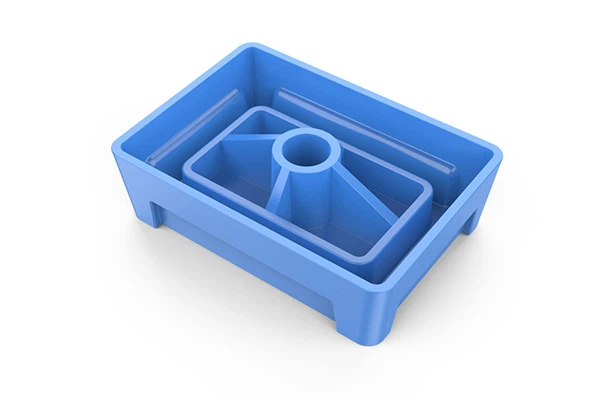
ABS provides impact strength and stability for automotive, electronics, and consumer goods. Process at 220-260°C melt, 40-80°C mold temperature. Low shrinkage (0.4-0.7%) with good flow. Pre-dry at 80°C for 2-4 hours. Accepts painting, plating, and texturing.
Periodic Table of Materials

Find the Right Material

Heat-resistant plastic
Heat-resistant plastics maintain properties at elevated temperatures. PEEK (250°C) for aerospace/medical; PEI (200°C) for electronics; PPS (220°C) for chemical processing. Consider thermal expansion and dimensional stability.

UV resistant plastic
UV resistant plastics prevent sunlight degradation. HDPE with stabilizers for outdoor furniture; ASA for automotive trim; PC with coatings for skylights; Acrylic for windows. Consider UV additives and exposure duration.

Corrosion resistant metal
Corrosion resistant metals withstand chemical attack. Stainless steel 316 for marine use; Titanium for aerospace/medical; Inconel for high-temp environments; Aluminum with anodizing for architecture. Consider environment and compatibility.