





Plastic Injection Mold
-
![Madical Pipe Mold TPU Medical Parts]() Madical Pipe Mold TPU Medical PartsOur company made some kinds of the pipe mold for many customers. welcome to visit us.read more
Madical Pipe Mold TPU Medical PartsOur company made some kinds of the pipe mold for many customers. welcome to visit us.read more -
![Smart Home Parts Plastic Mold]() Smart Home Parts Plastic MoldBasic Info.read more
Smart Home Parts Plastic MoldBasic Info.read more
Runner:Cold Runner
Design Software:UG
Installation:Fixed
Certification:ISO
Standard:HASCO
Customized:Customized
Mold Steel:718h, Nak80,... -
![Motorcycle and automatic Plastic Injection Mould]() Motorcycle and automatic Plastic Injection MouldBasic Info.read more
Motorcycle and automatic Plastic Injection MouldBasic Info.read more
Runner:Cold Runner
Design Software:UG
Installation:Fixed
Certification:ISO
Standard:HASCO
Customized:Customized
Mold Steel:718h, Nak80,... -
![Custom Plastics Value-Added Assembly]() Custom Plastics Value-Added AssemblyCustom Plastics Value-Added Assembly We specialize in processing Engineering grade resins Medical grade resins Food Grade FDA Approved Resins Electrostatic resins Resins with glass fiber,...read more
Custom Plastics Value-Added AssemblyCustom Plastics Value-Added Assembly We specialize in processing Engineering grade resins Medical grade resins Food Grade FDA Approved Resins Electrostatic resins Resins with glass fiber,...read more -
![Plastic Y17 Bracket For Automotive Parts For Hyundai]() Plastic Y17 Bracket For Automotive Parts For Hyundai1)Plastic Bracket for automotive partsread more
Plastic Y17 Bracket For Automotive Parts For Hyundai1)Plastic Bracket for automotive partsread more
2)plastic injection mold
3)Yudo Hot runner
4)Groditz 1.2344 ESR(HRC48-52) -
![Electronical Switch Cover Plate Mold and molding]() Electronical Switch Cover Plate Mold and molding1)switch cover/module part/electrical part moldread more
Electronical Switch Cover Plate Mold and molding1)switch cover/module part/electrical part moldread more
2)plastic injection mold
3)electrical mold
4)connector molds -
![OEM Metal Injection Moulded Parts]() OEM Metal Injection Moulded PartsOEM Metal Injection Moulded Parts Stainless Steel: 304/303/316/420/430/17-4PH Application: electronic parts, auto parts, lock parts, surgical instruments, military parts, and other complex and...read more
OEM Metal Injection Moulded PartsOEM Metal Injection Moulded Parts Stainless Steel: 304/303/316/420/430/17-4PH Application: electronic parts, auto parts, lock parts, surgical instruments, military parts, and other complex and...read more -
![Plastic Injection Moldings For Car Accessories]() Plastic Injection Moldings For Car AccessoriesWe sell Plastic Injection Moldings For Car Accessories.Our customPlastic Injection Moldings For Car Accessories are handmade. If you’re thinking of buying a custom Plastic Injection Moldings For...read more
Plastic Injection Moldings For Car AccessoriesWe sell Plastic Injection Moldings For Car Accessories.Our customPlastic Injection Moldings For Car Accessories are handmade. If you’re thinking of buying a custom Plastic Injection Moldings For...read more -
![Game Wireless Gamepad Plastic Injection Mold]() Game Wireless Gamepad Plastic Injection MoldBasic Info.read more
Game Wireless Gamepad Plastic Injection MoldBasic Info.read more
Runner:Cold Runner
Design Software:UG
Installation:Fixed
Certification:ISO
Standard:HASCO
Customized:Customized
Mold Steel:718h, Nak80,... -
![Infrared Liquid Sanitizer Pump Automatic Soap Dispenser]() Infrared Liquid Sanitizer Pump Automatic Soap DispenserQuick Detailsread more
Infrared Liquid Sanitizer Pump Automatic Soap DispenserQuick Detailsread more
Warranty:1 YEAR
After-sale Service:N/A
Project Solution Capability:N/A, others
Application:HOTEL, Home.Hotel.Bathroom.Shower Room
Design... -
![Automatic Hand Sterilizer/Automatic Soap Dispensers]() Automatic Hand Sterilizer/Automatic Soap DispensersAutomatic Hand Sterilizers/Hand Sterilizer Dispensersread more
Automatic Hand Sterilizer/Automatic Soap DispensersAutomatic Hand Sterilizers/Hand Sterilizer Dispensersread more
We also accept customization of similar products, like Automatic Soap Dispensers, Liquid Soap Dispensers -
![Automatic Hand Sanitizer/hand Sanitizer Dispenser/atuomatic Induction Soap Dispenser]() Automatic Hand Sanitizer/hand Sanitizer Dispenser/atuomat...Automatic hand sanitizer/hand sanitizer dispenserread more
Automatic Hand Sanitizer/hand Sanitizer Dispenser/atuomat...Automatic hand sanitizer/hand sanitizer dispenserread more
Infrared sensor with good interference resistant capacity
(We also accept customization of similar products, like automatic Perfume...


Precision at Scale: The Engineering Behind Our Injection Molding
Look closely at the protective casing on your phone or the dashboard in your car. These components are the silent backbone of modern life. But for us, creating them isn't just about volume—it's about absolute precision.
Below, you'll find our range of molding solutions. But before you choose, it helps to understand the engineering reality behind the parts we produce.
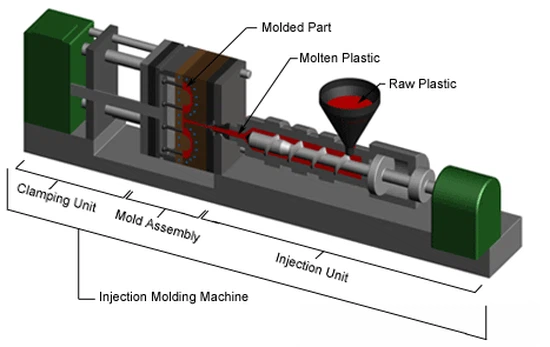
What Is Injection Molding, Really?
Strip away the jargon, and the concept is surprisingly intuitive. We often describe it to clients as a high-precision, industrial-grade waffle iron.
- The "Batter": We swap flour for high-performance thermoplastic granules.
- The "Iron": Instead of a kitchen gadget, we use a durable, precision-machined metal tool.
- The Result: Instead of breakfast, you get thousands of identical engineering components with zero deviation in tensile strength or finish.
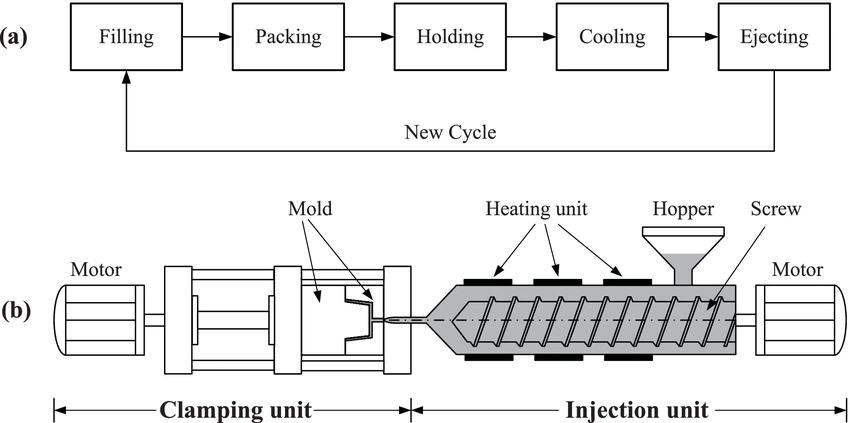
From Pellets to Products: The Process
Understanding the lifecycle of the mold helps ensure we select the right tools for your project. Here is how we turn raw material into your final product:
1. Material Meets Design
Before the machine even starts, the chemistry has to match the geometry. We design the Cavity (fixed) and the Core (moving) specifically to handle how your chosen material behaves.
- ABS: Great for tough, rigid structural parts.
- Nylon (PA): Our go-to for chemical and heat resistance.
- Polycarbonate (PC): Incredible impact strength, though it demands we keep strict temperature controls (usually under 275°F).
- Polypropylene (PP): Perfect for parts needing flexibility and fatigue resistance.
2. The Melt
Granules are fed into the hopper and drawn into a heated barrel. A rotating screw does the heavy lifting here—creating friction and heat to turn solid pellets into a uniform, molten liquid.
3. The Injection (The Balancing Act)
This is the critical moment. We shoot molten plastic into the mold under immense pressure. At the same time, the mold halves must be clamped together with equal force to prevent "flash" (leakage). It's a delicate balance of power that defines part quality.
4. The Hold & Cool
The process doesn't end when the mold is full. We apply a "holding pressure" to pack the material in as it cools, compensating for natural shrinkage. If we eject a part too early, it warps. Patience here is the key to a perfect finish.
5. Ejection & Finish
Finally, the mold opens, and ejector pins push the solid component out. While many parts emerge ready-to-use, we can also handle secondary finishing—removing gates or adding polish—before they are shipped to you.
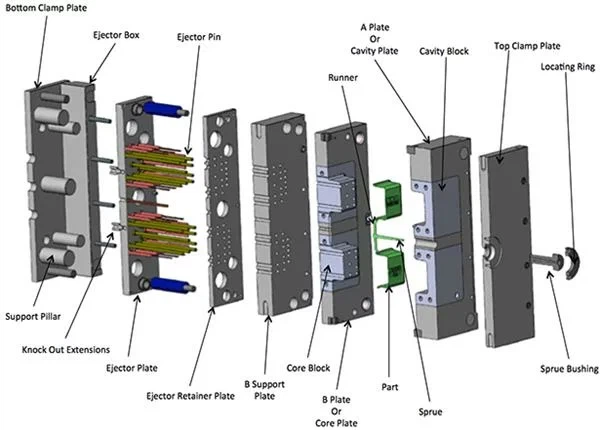
Functional Structure and Components of an Injection Mold
The structure of an injection mold, based on its function, is divided into the molding section, gating system, guiding mechanism, ejection mechanism, side parting and core-pulling mechanism, cooling and heating system, and venting system.
1. The molding section consists of the components that form the mold cavity, mainly including the cavity, core, molding rod, molding ring, and inserts—parts that directly contact the plastic material flow.
2. The gating system refers to the plastic flow channel in the plastic mold, from the injection molding machine nozzle to the cavity. A typical gating system consists of the main runner, branch runners, gate, and cold slug well, distributed in different parts of the mold.
3. The guiding mechanism mainly plays a positioning and guiding role during mold operation, ensuring smooth and accurate mold closing between the moving and fixed molds. The guiding mechanism consists of guide pillars, guide sleeves or guide holes (directly opened on the mold plate), and positioning cones (grippers).
4. The ejection mechanism primarily ejects the molded part from the mold after molding. It consists of ejector pins, ejector tubes, push plates, ejector plates, ejector pin fixing plates, reset rods, and pull rods.
5. The side parting and core-pulling mechanism separates or pulls the core of the side-molded part. It typically includes components such as inclined guide pillars, bent pins, inclined guide grooves, inclined ejector pins, wedge blocks, inclined slides, gears, and racks.
6. The cooling and heating system regulates the molding process temperature and consists of a cooling system (cooling water holes, cooling water tanks, copper pipes) or a heating system.
7. The venting system removes gas from the mold cavity during injection and mainly consists of venting channels and mating clearances.
ABIS Mold Technology Co., Ltd. is one of the most famous plastic injection mold manufacturers and suppliers in Shenzhen, China. Welcome to wholesale high quality plastic injection mold from our factory.
plastic tubes, injection molded part, injection mold on auto parts