What is the heat exchange system of the mold?
Mold heat exchange system
The temperature control capability of injection molds not only affects the quality of plastic parts, but also determines production efficiency.
① Create cooling channels in the mold as large and numerous as possible to increase the heat transfer area, shorten cooling time, and improve production efficiency.
② Select mold materials with high thermal conductivity. Steel is typically chosen for mold materials. In areas where heat dissipation is difficult, copper or aluminum alloys can be used as inserts, provided the mold's rigidity and strength are guaranteed.
③ Use room temperature water as the cooling medium. Ideally, the temperature difference between the inlet and outlet of the cooling water should be less than 5°C. The flow rate should be as high as possible, and turbulent flow is preferred.
④ The thinner the wall thickness of the plastic part, the less cooling time is required. Conversely, the thicker the wall thickness, the longer the cooling time required.
⑤ The distribution of cooling circuits, i.e., the distance between the cooling circuits and the cavity. The spacing between cooling circuit channels should ensure uniform temperature on the mold cavity surface.
⑥ Enhance gate cooling. The temperature near the gate is highest when plastic is filling the mold; therefore, it is best to enhance cooling near the gate.
General principles of cooling water design
Common specifications for cooling water channels
Common pipe sizes include φ6, φ8, φ10, φ12, and φ14. Larger diameter channels should be used in the design to increase heat exchange. Common pipe fitting sizes are 1/8in, 1/4in, and 3/8in (1in = 0.0254m). Cylindrical or tapered pipe threads (tapered external threads are generally represented by R) are used for thread sealing. The threaded hole is machined with a BSPT type tap to produce the corresponding cylindrical internal thread (cylindrical internal threads are generally represented by Rp). Unless otherwise specified, the 1/4in size is preferred. When designing cooling water channels, pay attention to the following:

① A cooling water passage of at least 4 cross-sections is required for effective cooling.
② All cooling water passages within the same circuit must have an equal cross-sectional area.
③ The cooling water passage must form a single circuit to avoid stagnant water.
External cooling water system of the mold
The mold water channel inlet and outlet threaded connections are 1/4in pipe threads, and the water pipe joints are "nylon quick couplings". The intermediate water channel connection lines should be complete, and the specifications are φ12 rubber hoses. When there are more than three sets of cooling water circuits, the cooling water inlet and outlet should be concentrated on the "distributor plate" (the distributor plate is made of non-rusting material). The distributor plate should be set on the non-operating side of the mold, and the cooling water inlet and outlet (including intermediate connections) should be permanently marked on the mold. Marking method:

(1) Inlet and outlet connection markings on the distributor plate
First group of water: (Inlet) IN1, (Outlet) OUT1;
Second group of water: (Inlet) IN2, (Outlet) OUT2;
⋮
And so on.
(2) Markings of holes on each side of the mold
X:Side position: "O" for the operating side of the mold; "N" for the non-operating side of the mold; "U" for the top of the mold; "D" for the bottom of the mold; "S" for the mold slider.
Y:Hole location coding: Use consecutive Arabic numerals starting from "1", that is, all side holes are numbered consecutively.
(3) Cooling water circuit markings (in the "Water Connection" section of "Nameplate 2")
For example, the first cooling water circuit: IN1→N2→U4→O6→D9→OUT1.
Path description: Starting from the first group water inlet "IN1", connect to the non-operating side (N) hole coded "2", then to the upper hole coded "4", then to the operating side (O) hole coded "6", then continue to the lower (D) hole coded "9", and finally to the first group outlet "OUT1".
Cooling water system for special parts of the mold
When the mold core-pulling slider needs cooling, if specially designed water nozzles and water pipe joints are used due to mold structure limitations, in addition to configuring the mold as required, an extra set of special water nozzles and joints must be provided as spare parts.
Water hole arrangement
The optimal cooling range is 25-30 mm from the center of the water hole to the surface of the finished product. Small molds can be appropriately reduced in size to save mold core material. The distance between the two water holes in a general mold is 50-70 mm, and the distance between the two water holes in a large mold can reach 70-90 (100) mm, as shown in Figure 7-15.
Cooling system design principles
① Cooling Channel Layout Principles.
a. When the wall thickness is uniform, the distance between the cooling channels and the cavity surface should ideally be equal. When the wall thickness is uneven, cooling should be intensified at the thicker areas.
b. During the filling of the cavity, the temperature of the molten plastic is generally higher near the gate, so cooling should be strengthened. Cooling water should flow from near the gate to other areas, or a separate cooling water path should be provided near the gate.
c. Cooling water in the mold cavity, core, slider, and ejector should be evenly and uniformly distributed to achieve a continuous and stable mold temperature and minimize production cycle time.
② Cooling channels should be kept away from areas where weld lines may occur.
③ The cooling water circuit structure should be easy to machine and clean, with a typical orifice diameter of 8–12 mm.
④ Straight-through water holes should be simple and convenient, with perforations at both ends. The length of these perforations should not exceed 70 mm. (Perforations are a machining technique used to facilitate processing; water channels are often not tightly fitted.)
⑤ Cooling channels should be as numerous as possible, with the largest possible cross-sectional dimensions.
⑥ Cooling at the gate should be enhanced.
⑦ The temperature difference between the cooling channels (inlet and outlet) should be minimized.
⑧ Cooling channels should be arranged along the direction of plastic shrinkage.
⑨ The distance from the cooling channels to the cavity surface should be appropriate.
⑩ When designing and machining the mold's water flow path, the mold's strength must not be compromised.
⑪ Interference is most likely to occur in the arrangement of water holes, so good sealing of water holes is required to prevent water leakage from the mold.
Mold local temperature control
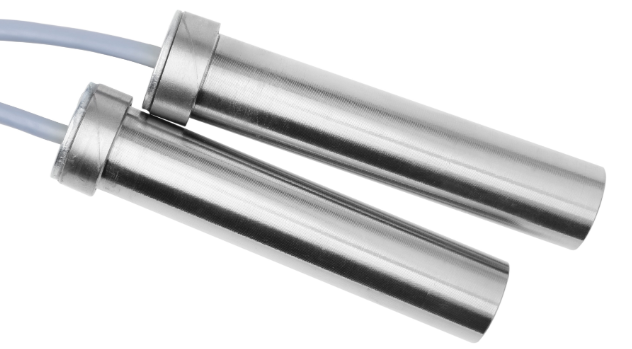
Drill holes in appropriate locations on the mold, insert heating rods, and connect an automatic temperature controller to regulate the local temperature of the mold. This heating method is simple in structure, easy to use, clean, and has less heat loss than electric heating coils. However, care must be taken to prevent localized overheating. Note that electrical components should ideally be located above the water inlet to prevent water from dripping onto them.