





What is Heat Treatment?
Heat treatment is a controlled heating and cooling process that modifies the physical and mechanical properties of metals and alloys without changing their shape. This metalworking technique alters the microstructure of materials to achieve desired characteristics such as increased hardness, improved strength, enhanced ductility, or better wear resistance.
How Heat Treatment Works
The process operates through three fundamental stages that manipulate the crystalline structure of metals. First, materials are heated to specific temperatures where their atomic structure becomes more fluid while remaining solid. The metal is then held at this temperature for a predetermined duration, allowing internal transformations to occur. Finally, the material undergoes controlled cooling at rates that determine the final properties.
During heating, the microstructure of metallic materials-composed of small crystals called grains-undergoes transformation. The size and composition of these grains directly influence the metal's overall mechanical behavior. Heat treatment provides an efficient way to manipulate these properties by controlling diffusion rates and cooling speeds within the microstructure.
Temperature control is critical throughout the process. Most treatments begin by heating an alloy beyond a specific transformation temperature, often called the arrest temperature. At this point, the metal experiences a period where all heat energy causes structural changes rather than temperature increases. This arrest period is essential for achieving the desired microstructural modifications.
The cooling phase determines whether the material becomes harder, softer, or achieves other specific properties. Rapid cooling typically increases hardness and strength but may introduce brittleness. Slow cooling generally produces softer, more ductile materials. The cooling medium-whether air, oil, water, or specialized gases-significantly impacts the final result.
Primary Heat Treatment Methods
Annealing
Annealing softens metals by heating them 30-50°C above the upper critical temperature and cooling them slowly, typically inside a furnace. This process makes materials more ductile and malleable while removing internal stresses from previous manufacturing operations. Steel becomes easier to machine after annealing, and the refined grain structure improves workability.
The technique is particularly valuable before forming operations or when materials have become too hard from work hardening. Annealing temperatures and cooling rates vary depending on the specific metal and desired outcome. For steel, temperatures typically range from 750-800°C, with furnace cooling over several hours.
Hardening and Quenching
Hardening increases surface hardness and strength through rapid cooling after heating to critical temperatures. The material is heated until its crystalline structure transforms, then quickly cooled-or quenched-in oil, water, brine, or gas. This rapid temperature drop establishes a harder, more stable crystalline structure.
For steel, the process creates martensite, an extremely hard microstructure formed when austenite transforms without time for diffusion. The carbon content determines the maximum achievable hardness, with higher carbon steels reaching greater hardness levels. Components like gears, cutting tools, and springs commonly undergo this treatment.
Quenching can make materials brittle, so it's typically followed by tempering to restore some ductility while maintaining most of the gained hardness.
Tempering
Tempering is applied after quenching to reduce brittleness while preserving most of the hardness. The hardened material is reheated to temperatures below the critical point-typically 150-650°C for steel-and then cooled. This process relieves internal stresses caused by rapid quenching and allows the microstructure to reach a more stable configuration.
The tempering temperature determines the balance between hardness and toughness. Lower temperatures maintain higher hardness with some brittleness, while higher temperatures sacrifice hardness for improved toughness and ductility. Automotive suspension components and tool steel parts frequently undergo tempering to achieve optimal performance.
Normalizing
Normalization homogenizes the uneven microstructure that develops during manufacturing, preparing materials for subsequent processing. The metal is heated to 800-900°C and then air-cooled. This produces a more uniform grain structure compared to annealing while achieving slightly higher strength.
The process is particularly useful for castings or forgings that have developed irregular internal structures. Normalized steel exhibits improved machinability and mechanical properties compared to the as-cast or as-forged condition.
Case Hardening
Case hardening creates a hard, wear-resistant surface while maintaining a tough, ductile core. This is achieved through thermochemical diffusion processes where elements like carbon or nitrogen diffuse into the surface layer. The resulting surface hardness typically reaches 58-62 HRC for carburized steel.
Three primary methods accomplish case hardening: gas carburizing, liquid carburizing, and pack carburizing. Low-pressure vacuum carburizing has become increasingly popular for its precision and reduced environmental impact. The process typically operates at 7-13 mbar pressure, exposing parts to carbon-carrying gases that diffuse into the surface.
Nitriding is another case hardening technique that forms a nitrogen-rich surface layer by heating steel in a nitrogen-containing atmosphere at 500-570°C. The advantage lies in the low processing temperature, which minimizes distortion while achieving surface hardness of 1000-1200 HV.
Materials Commonly Heat Treated
Steel dominates heat treatment applications, accounting for approximately 80% of all heat-treated materials. The versatility of steel, combined with its response to various heat treatment methods, makes it indispensable across industries. Both plain carbon steels and alloy steels undergo treatment to optimize properties for specific applications.
Cast iron responds well to heat treatment, particularly for heavy-duty applications like engine blocks and machinery bases. Its high compressive strength and good machinability make it ideal for automotive components when combined with appropriate thermal processing.
Aluminum alloys, particularly the 2xxx and 7xxx series, undergo solution heat treatment followed by aging to achieve optimal strength. The process involves heating to 920°F, rapid quenching, and either natural or artificial aging. Heat-treated aluminum alloys are extensively used in aerospace applications where high strength-to-weight ratios are critical.
Titanium alloys require precise heat treatment to achieve the performance characteristics demanded by aerospace and medical applications. These materials benefit from both annealing for improved ductility and solution treating followed by aging for maximum strength.
Stainless steels, including martensitic precipitation-hardening grades like 17-4 PH, undergo specialized heat treatments. Solution treatment at 1040°C followed by aging at specific temperatures produces the desired combination of strength, hardness, and corrosion resistance.
Industrial Applications
Automotive Industry
The automotive sector represents the largest consumer of heat treatment services, accounting for 33.8-45% of global market share as of 2024. Heat-treated components are essential throughout vehicles, from powertrain elements to suspension systems. Gears, shafts, crankshafts, springs, bearings, and axles all require specific heat treatments to withstand operational stresses.
Electric vehicle production has intensified heat treatment demand, particularly for battery housings, drivetrains, and structural components that must endure high temperatures and mechanical stresses. Lightweight aluminum and titanium alloys increasingly undergo specialized treatments to meet efficiency and performance requirements.
Aerospace and Defense
Aerospace applications demand the highest quality standards, where component failure is not acceptable. Turbine blades, landing gear components, structural elements, and fasteners undergo rigorous heat treatment protocols. Vacuum heat treatment and nitriding are particularly favored for their precision and superior surface properties.
The industry requires components that maintain integrity under extreme conditions-high temperatures, vibration, and cyclic loading. Titanium and nickel-based superalloys receive complex multi-stage treatments to achieve the necessary fatigue resistance and dimensional stability.
Construction and Heavy Equipment
Construction equipment relies on heat-treated steel for durability in demanding environments. Bucket teeth, hydraulic components, structural members, and wear plates undergo hardening treatments to extend service life. The post-COVID-19 resurgence in infrastructure projects, particularly in emerging economies, has increased demand for heat-treated construction materials.
Manufacturing and Tooling
Cutting tools, dies, molds, and machine components require specific heat treatments to maintain dimensional accuracy and resist wear. Tool steels undergo through-hardening or case hardening depending on application requirements. Molds for Metal Injection Molding (MIM) and other forming processes often receive nitriding or other surface treatments to enhance longevity.
Medical Devices
Medical implants, surgical instruments, and diagnostic equipment utilize heat-treated stainless steels and titanium alloys. The biocompatibility requirements combined with mechanical property demands make precise heat treatment essential. Sterilization processes must not compromise the properties achieved through initial heat treatment.
Heat Treatment in Metal Injection Molding
Metal Injection Molding parts typically undergo heat treatment as a secondary operation after sintering to optimize mechanical properties. The sintering process leaves MIM components in an annealed state, which may not provide sufficient hardness for certain applications. Heat treatment adjustments become necessary for high-carbon ferrous alloys and precipitation-hardening stainless steels.
For MIM components made from materials like 17-4 PH stainless steel, solution treatment followed by aging maximizes strength and hardness. The parts are heated to 1040°C for solution treatment, then aged at temperatures between 480-620°C depending on the desired hardness level. This process enhances wear resistance without significantly affecting dimensional accuracy.
Sealed quench furnaces with controlled atmospheres prevent oxidation during treatment of MIM parts. Vacuum heat treatment furnaces offer advantages for high-precision components, using inert gas at high pressure for quenching. These methods ensure consistent quality across small, complex geometries typical of MIM manufacturing.
Low-pressure carburizing has gained traction for MIM steel components requiring surface hardening. The process achieves higher productivity and throughput while maintaining dimensional precision. ECM furnaces with double heating chambers enable simultaneous processing of multiple batches, reducing cycle times.
Equipment and Facilities
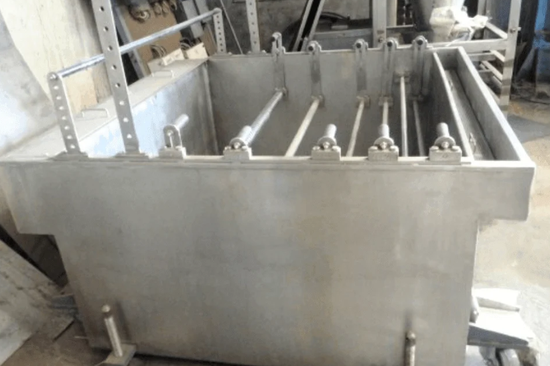
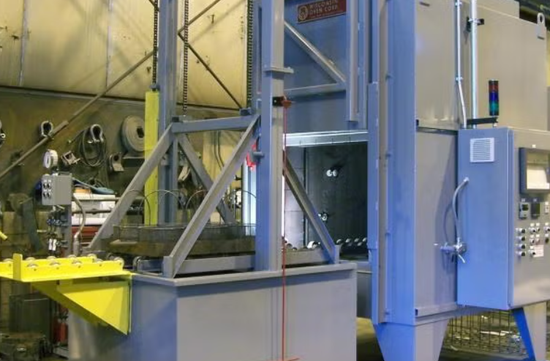
Heat treatment furnaces fall into two categories: batch and continuous systems. Batch furnaces are manually loaded and suited for smaller production volumes or varied part types. They consist of an insulated chamber with heating elements and controlled atmosphere capabilities. Modern batch systems often integrate quench tanks and slow-cool chambers for complete processing cycles.
Continuous furnaces employ automated conveying systems for constant material flow through heating zones. These are ideal for high-volume production of similar parts. Walking beam, pusher, and roller hearth furnaces move parts through precise temperature zones automatically.
Induction heating systems provide rapid, localized heat treatment without contact. They're particularly effective for surface hardening specific areas of components like crankshaft journals or gear teeth. The process offers excellent energy efficiency with heating times measured in seconds rather than hours.
Vacuum furnaces create contamination-free environments essential for reactive materials and high-precision components. Operating at pressures down to 10⁻⁵ mbar, they prevent oxidation and surface contamination. High-pressure gas quenching within vacuum furnaces provides uniform cooling with minimal distortion-typically 50-75% less than oil quenching.
Market Trends and Outlook
The global heat treating market reached USD 110.68-113.33 billion in 2024 and is projected to grow at a CAGR of 3.4-4.9% through 2033-2034. Asia Pacific dominates with approximately 40-43% market share, driven by rapid industrialization in China, India, and Southeast Asian nations.
Technological advancement is reshaping the industry. Vacuum heat treatment, induction heating, and laser surface treatment enable manufacturers to impose precise temperatures, reduce distortion, and improve surface properties. Automation and data analytics streamline processes by optimizing parameters and ensuring consistent quality.
Sustainability initiatives are driving innovation in energy-efficient furnaces and processes. The 2024 IFHTSE World Congress emphasized "Innovations in Heat Treatment and Surface Engineering for a Sustainable Future," reflecting industry-wide commitment to reducing environmental impact. Renewable energy integration and emission reduction technologies are becoming standard considerations.
Industry 4.0 integration brings IoT-enabled furnaces with real-time monitoring and smart sensors. Predictive maintenance replaces preventive approaches, reducing downtime and improving efficiency. Digital transformation enhances sustainability and operational excellence across heat treatment operations.
The renewable energy sector is emerging as a significant growth driver. Wind turbine components, solar panel manufacturing equipment, and energy storage systems require specialized heat treatments. The IEA projects over 5,500 GW of new renewable capacity between 2024 and 2030, directly impacting heat treatment demand.
Quality Control and Standards
Heat treatment processes must meet stringent quality standards, particularly in aerospace and automotive industries. AMS2750 provides requirements for pyrometry and instrumentation used in heat treatment operations. The standard ensures temperature uniformity and accuracy throughout furnaces.
CQI-9 establishes assessment criteria for heat treatment systems in automotive supply chains. Compliance demonstrates capability to consistently meet customer requirements and regulatory standards. IATF 16949 quality management requirements extend to heat treatment as a special process.
Non-destructive testing verifies treatment effectiveness without damaging components. Hardness testing using Rockwell, Brinell, or Vickers methods confirms surface and through-hardness. Metallographic examination reveals microstructural changes and verifies proper phase transformations. X-ray diffraction identifies retained austenite levels in hardened steels.

Challenges and Considerations
Energy consumption remains a primary concern, with heat treatment being inherently energy-intensive. Furnaces operate at temperatures exceeding 1000°C for extended periods, driving significant operational costs. The industry is responding with improved insulation, waste heat recovery systems, and more efficient burner technologies.
Dimensional changes during treatment can affect precision components. Thermal expansion during heating followed by contraction during cooling may cause distortion or warping. Proper fixturing, controlled heating rates, and optimized quenching techniques minimize these effects. High-pressure gas quenching reduces distortion compared to liquid quenching methods.
Environmental regulations increasingly impact operations. Emissions from fuel-fired furnaces, quenching oil disposal, and hazardous materials used in some processes face stricter controls. The shift toward electric furnaces, vacuum systems, and closed-loop quenching systems addresses these concerns while improving process control.
Skilled labor shortages challenge the industry as experienced heat treaters retire. The complex interplay of temperature, time, material composition, and cooling rates requires deep expertise. Training programs and knowledge transfer initiatives are essential to maintain quality as workforce demographics shift.
Frequently Asked Questions
What's the difference between annealing and normalizing?
Annealing uses slow furnace cooling to achieve maximum softness and ductility, while normalizing employs air cooling for a slightly harder material with more uniform grain structure. Annealing is preferred when maximum machinability is needed, whereas normalizing better prepares materials for further heat treatment or machining operations.
Can all metals be heat treated?
Not all metals respond to heat treatment. Ferrous metals like steel and cast iron respond well due to their ability to undergo phase transformations. Aluminum alloys, titanium, and some copper alloys can be heat treated through solution treatment and aging. Pure metals and some alloys lack the microstructural changes necessary for property modification through heat treatment.
How long does heat treatment take?
Duration varies significantly based on the process, material, and part size. Simple stress relieving might take 1-2 hours, while full annealing cycles can extend to 10-20 hours including heating, soaking, and controlled cooling. Induction hardening of a single part takes seconds, but vacuum carburizing of a batch might require 24-48 hours including cooling.
Why is tempering necessary after hardening?
Quench-hardened steel is extremely hard but also brittle and contains high internal stresses. Tempering reduces brittleness by allowing the martensite structure to relax and form tempered martensite, which offers better toughness while retaining most of the hardness. Without tempering, hardened parts are prone to cracking during service.
Closing Thoughts
Heat treatment remains fundamental to modern manufacturing, enabling materials to achieve performance characteristics unattainable through composition alone. The technology continues evolving with digital integration, sustainable practices, and advanced materials pushing capabilities forward. From automotive components experiencing millions of stress cycles to aerospace parts operating in extreme environments, heat treatment ensures metals meet increasingly demanding requirements. The convergence of traditional metallurgical expertise with modern control systems and data analytics positions the industry to address future challenges while maintaining the precision and reliability that make heat-treated components essential across virtually every manufacturing sector.
Data Sources:
Grand View Research, "Heat Treating Market Size, Share & Growth Analysis," 2024
Fortune Business Insights, "Heat Treating Market Analysis," 2024-2032
Straits Research, "Heat Treating Market Outlook," 2025-2033
ASM International, "Heat Treating Society Technical Publications," 2024
International Federation for Heat Treatment and Surface Engineering (IFHTSE), Congress Proceedings, 2024