





Your PA66-GF35 battery housing project is on the table. The tooling quotes have come in: P20 at $28,000, H13 at $42,000. The procurement meeting wants justification for the $14,000 premium. But the real question nobody's asking: at what annual volume does H13 break even against P20 when you're running glass-filled nylon at production pressures?
That calculation, and dozens like it, separates suppliers who help you make better decisions from those who just respond to RFQs.
We're ABIS Mould, a China-based injection molding supplier with 28 years in the business, serving automotive OEMs, Tier-1 and Tier-2 suppliers, and EV manufacturers across Europe and North America. This piece walks through the cost structures, trade-offs, and qualification thresholds we use internally when evaluating program fit, and that we think should inform how you evaluate us and any other supplier you're considering.
P20 versus H13 isn't a simple cost comparison. It's a durability-versus-program-length calculation that depends on your material, annual volume, and tolerance for mid-program re-tooling.
Here's the rough math: H13 handles the higher injection pressures required for glass-filled nylons and typically survives past the million-cycle mark. P20 starts showing wear around 500,000–700,000 cycles under similar conditions. For a battery housing bracket running 1.2 million units annually, H13's $14,000 premium translates to avoided re-tooling and zero mid-program delays. For a 400,000-unit annual volume program, P20 might be the right call.
The break-even point shifts based on material aggressiveness. On glass-filled PA projects, we've seen the crossover point drop to roughly 550,000 cumulative cycles, earlier than most generic estimates suggest. Our engineering team uses Mold Flow simulation before steel cutting to model these wear patterns for your specific geometry and material spec.
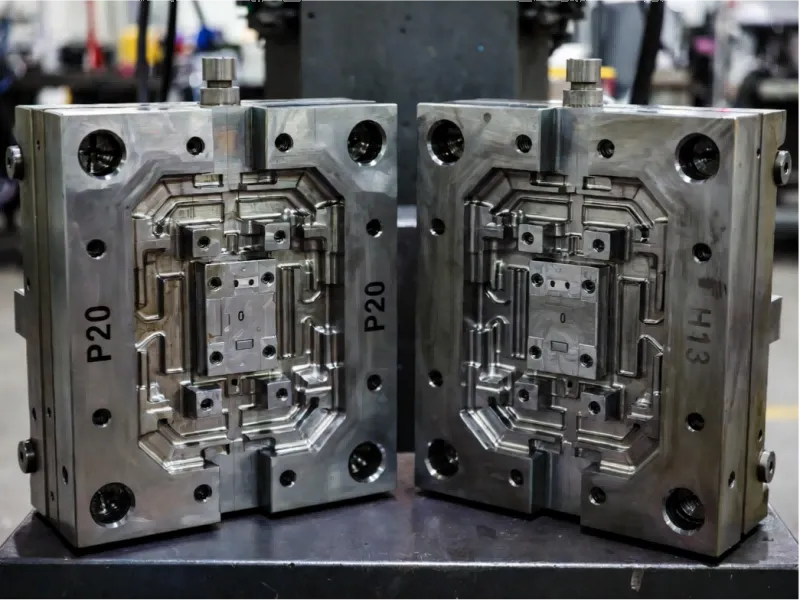
What this means for your decision: If your program's total lifetime volume exceeds 800,000 units and you're running reinforced materials, the H13 premium typically pays for itself. We can run the specific calculation for your project - upload your design files on our site and you'll get a DFM analysis within 2 business days.
Hot Runner Economics: Material Waste is the Hidden Line Item
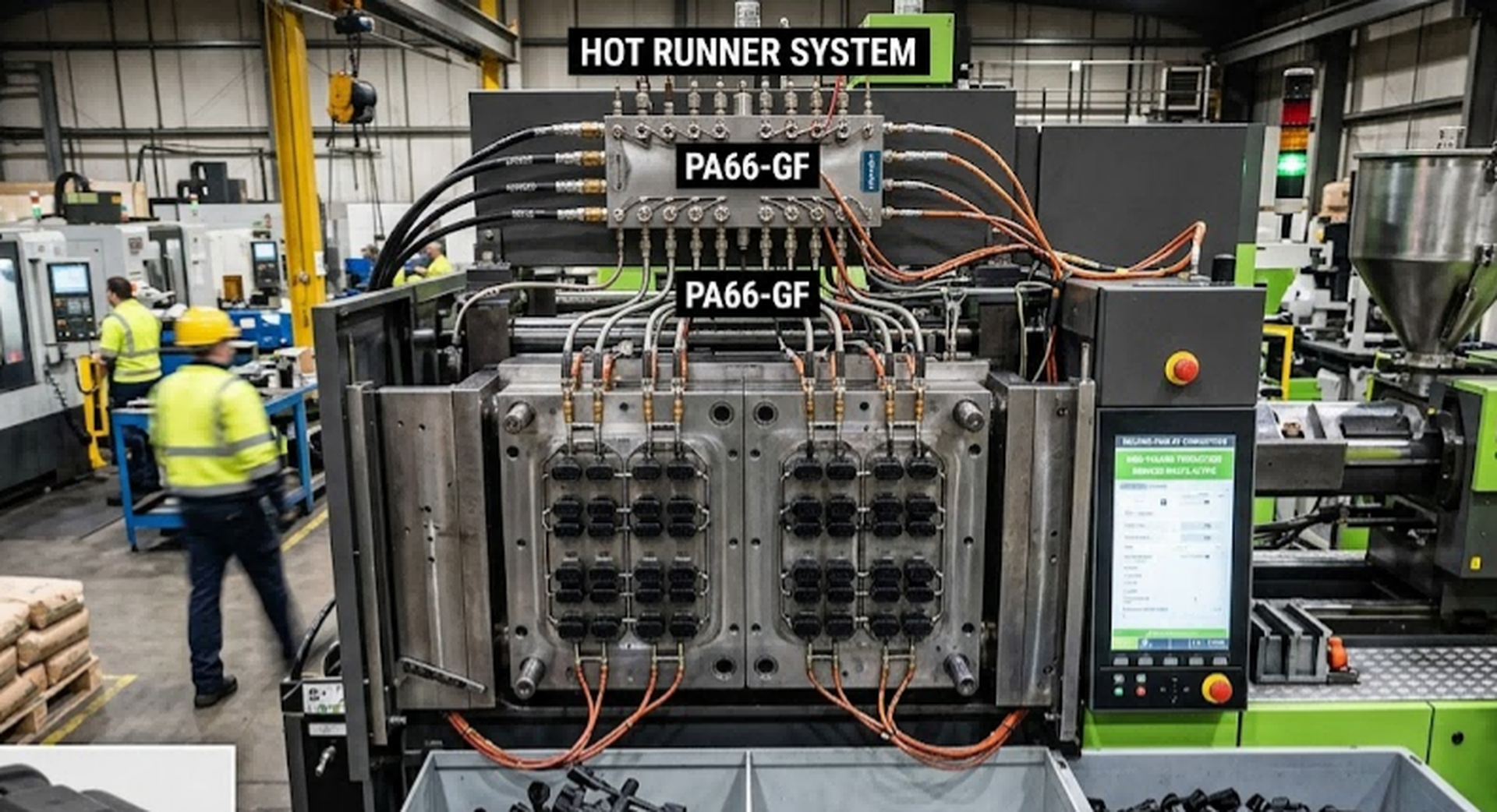
Hot runner systems cost $4,000 to $12,000 more than cold runner setups upfront. That line item draws scrutiny in every procurement review.
What doesn't appear on the quote: cold runners generate 15–20% material waste per shot, while hot runners stay below 5%. On high-volume automotive connector programs, that difference compounds fast.
We work with Mold Master, HUSKY, HASCO, DME, YUDO, INCOE, and Thermoplay hot runner systems depending on application requirements. On a recent PA66-GF connector program running 800,000+ annual units, the hot runner system delivered material savings that paid back the upfront investment in under 9 months. The math works differently for lower-volume programs. Sometimes cold runner is the right call, and we'll tell you that.
For your specific project: The material savings calculation depends on your part weight, shot size, and material cost per kilogram. When you request a quote, we include material waste estimates for both hot and cold runner options so you can make the call with full visibility.
Where We Sit in the Supplier Landscape
The automotive injection molding supplier landscape spans four distinct categories. Understanding where each type of supplier fits, and where we fit, helps you match program requirements to supplier capability.
Tier-1 integrators (Magna, Continental) operate across 28+ countries with dedicated engineering centers. They're built for OEM platform programs requiring injection molding integrated with assembly, painting, and logistics. Lead times run 12–16 weeks; tooling investments start around $50,000 for simple brackets, scaling past $750,000 for large exterior fascia molds. If your annual volumes sit below 500,000 units or your program doesn't require multi-process integration, you may be paying for infrastructure you won't use.
Where we fit: ABIS Mould operates as a China-based specialist with 28 years of mold-making experience and a team of 100+ engineers and technicians. Our facility in Shenzhen runs press machines from 80T to 1600T, with yearly capacity exceeding 400 molds. We're not Magna. We don't have 28 countries and we don't run final vehicle assembly. What we do offer:
- DFM reports delivered within 2 business days
- T1 sample delivery in 3–4 weeks for standard complexity
- Willingness to engage on programs that Tier-1s would consider too small
- 60% of our production already exports to Europe and North America, so we understand Western quality expectations
China-based suppliers still deliver T1 samples faster and at lower tooling costs than domestic alternatives, but 25% tariffs on imported tooling have narrowed the landed cost advantage. For prototype tooling and bridge production, the speed advantage can outweigh the tariff hit. For production tooling on programs with 5+ year horizons, you need to factor the full total cost picture.
Nearshore alternatives (Mexico, Canada) offer 6–8 week tooling timelines, easier site visits, and no duties on USMCA-compliant tooling. The premium over Chinese suppliers runs 20–35%, but that gap closes when you factor tariffs, freight volatility, and IP exposure.
For your program: If you need fast tooling with competitive pricing, automotive-grade quality systems (we hold IATF 16949 and ISO 9001), and a supplier who can scale from prototype through production volumes, we're worth evaluating. Get a capability comparison →
IATF 16949 certification functions as the entry ticket for OEM supply chains. No certification, no approved supplier list.
But the certification is a floor, not a ceiling. What matters is whether the supplier sustains the discipline after the auditor leaves.
A Cpk above 1.67 corresponds to roughly 0.6 parts per million defective, three orders of magnitude tighter than general industrial standards. The question is whether your supplier's actual production data matches their PPAP qualification data twelve months later.
Our status: ABIS Mould holds IATF 16949 certification, ISO 9001 for quality management, and ISO 14001 for environmental responsibility. We implement APQP (Advanced Product Quality Planning) on all new automotive programs, and every project gets assigned a dedicated team that tracks from tool design through your first production run.
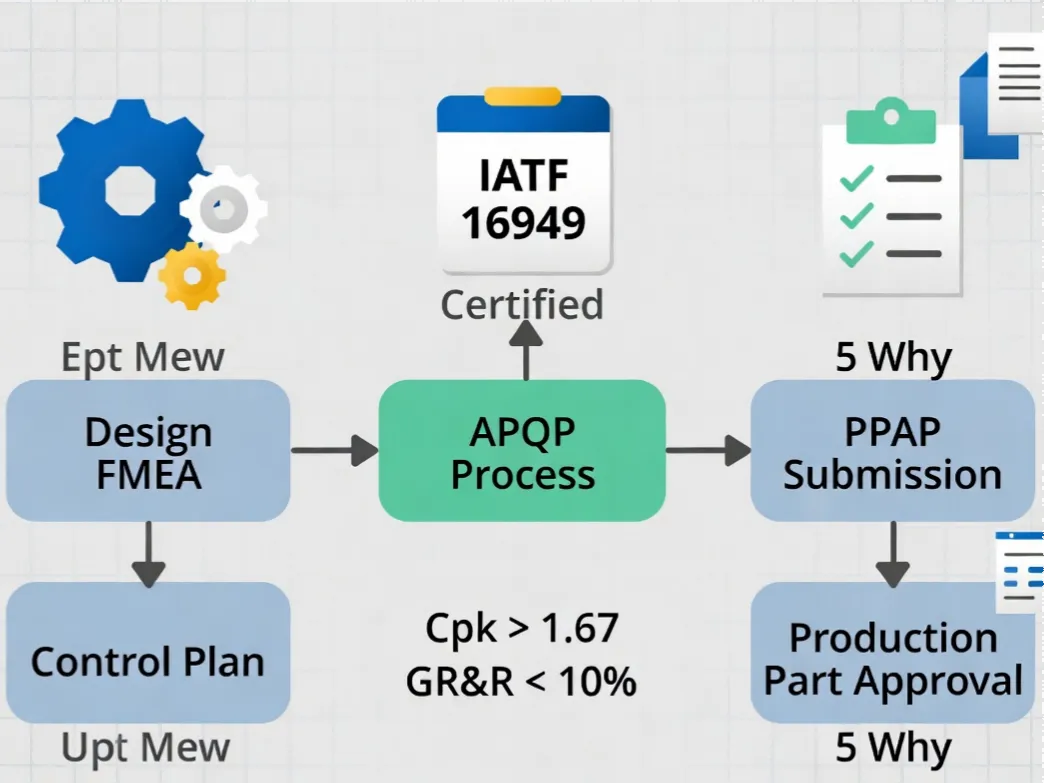
Before mold building, our teams evaluate your part design to provide proactive DFM feedback: cooling, venting, gating, cavity/core sticking concerns, short shot possibility, thin steel conditions. We catch problems in design review, not in T1 samples.
We've seen teams put certification status at the top of their supplier screening criteria, especially for glass-filled material programs where process control directly affects warpage and dimensional stability. For commodity programs with forgiving tolerances, it matters less. The question is where your program sits on that spectrum.
Material Decisions in the EV Transition
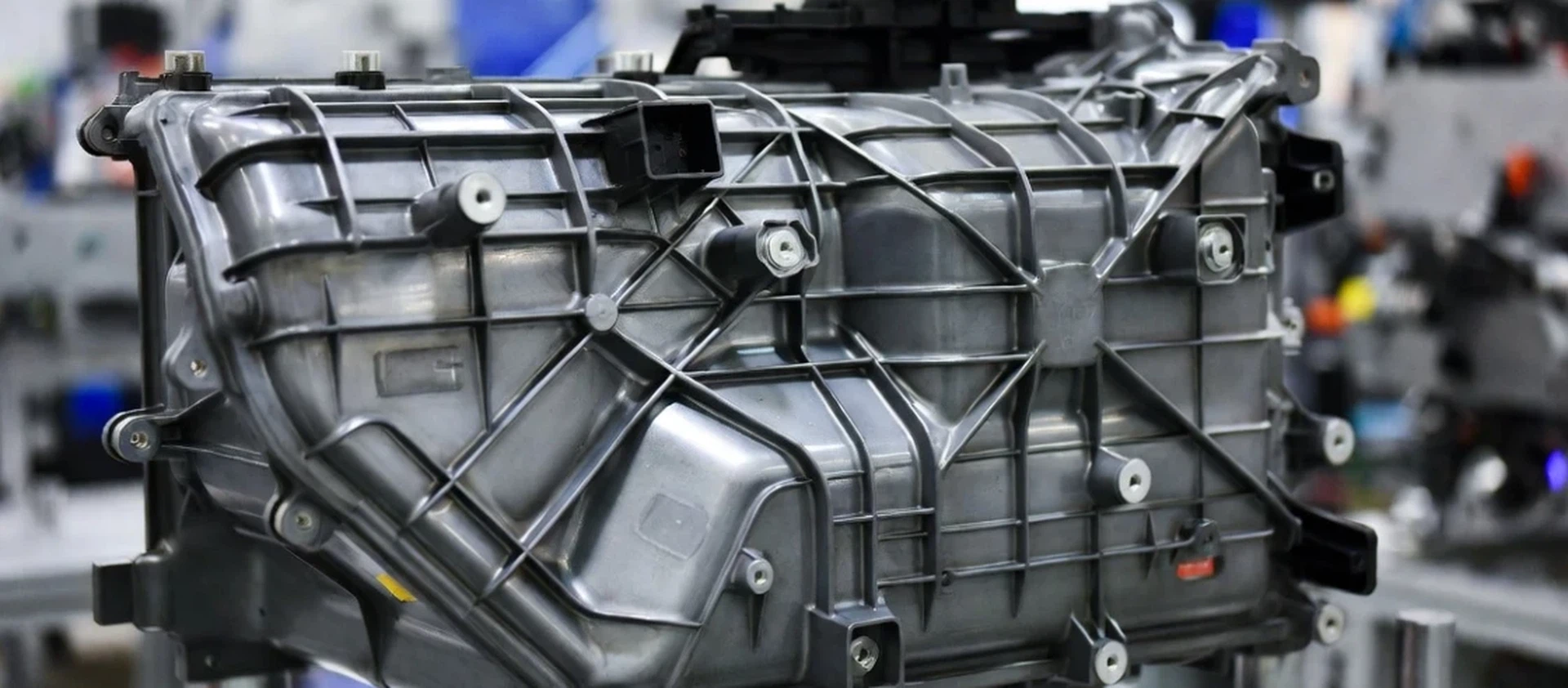
Electric vehicle platforms have reshuffled material selection priorities. Battery pack weight imposes a lightweighting tax on every surrounding component that didn't exist in ICE programs.
For EV-specific applications such as battery enclosures and high-voltage connector housings, PA66-GF35, PBT, and PC have become default choices. Flame retardancy (UL94 V-0), dimensional stability at elevated temperatures, and electrical isolation properties matter more than cost per kilogram.
Our EV material experience: We process the full range of automotive-grade engineering plastics:
ABS for interior trim, dashboard panels, lighting housings
PBT for connectors, housings, sensor enclosures
PEEK for seals and bushings in high-temp environments
PA (Nylon) for mirror housings, gears, bushings, door handles
PC for headlight components, taillight lenses, instrument panels
POM for gears, clips, fasteners, window regulators
PP for bumpers, interior trim, battery housings
We work with steel from ASSAB, DAIDO, FINKL, and LKM. Our cavity/core materials include STAVAX S136, S-7, H13, and NAK80 depending on application requirements.
EU regulations now mandate 25% recycled plastic content in new vehicles by 2030. If your program launches in 2027+ with European market exposure, validated recycled resin supply chains belong in your supplier qualification questionnaire now. We're currently working with customers to establish sourcing channels that meet these requirements.
Defect Prevention: Our Approach

Sink marks, warpage, and weld lines are predictable. The question is whether they're predicted before tooling is cut or discovered during T1 sampling.
How we handle this: We run Mold Flow simulation on every tool design before steel cutting. Our facility includes CNC Machining Centers, CNC EDMs (Electro-Discharge Machining), and precision grinding equipment that achieve tolerances up to ±0.005" (±0.127mm).
On programs where dimensional stability is critical (battery housings, structural brackets), we introduce DFM review immediately after order confirmation, not after design freeze. Our standard process:
- Quotation within 2 business days
- DFM report within 2 days of order confirmation, covering draft angles, gating, cooling, venting
- 3D mold design completed with component details
- Weekly progress updates with photos
- T1 sample sent for customer review
- Adjustments and production
This doesn't guarantee zero defects. It does mean predictable issues get addressed in tool design rather than surfacing as surprises during validation.
Evaluating Us (and Any Supplier): What Actually Matters
Instead of generic evaluation criteria, here's what we think you should ask any injection molding supplier, including us.
Certifications: IATF 16949 is table stakes for automotive work. Ask whether they implement APQP and what their DFM process looks like. We hold IATF 16949, ISO 9001, and ISO 14001.
DFM responsiveness: Ask how long it takes to get substantive DFM feedback. Not "we'll get back to you" but actual turnaround time. Ours is 2 business days.
Capacity and equipment: What's their tonnage range? Can they handle your current bracket and your next program's larger housing? Our range: 80T to 1600T. Yearly capacity: 400+ molds.
Material capability: Do they have experience with your specific material grade? Ask for examples. We process ABS, PA, PBT, PC, PE, PEEK, PMMA, POM, PP, and PVC across automotive, medical, electronics, and consumer applications.
Geographic reach: Where do they ship, and what percentage of production is export? 60% of our production goes to Europe and North America. We understand Western documentation requirements and quality expectations.
End-to-end capability: Can they handle concept-to-production, or will you need to manage multiple vendors? We cover product design, mold creation, injection molding, assembly, and packaging under one roof.
The EV transition, tariff restructuring, and tightening quality expectations are reshaping automotive injection molding supplier relationships. The suppliers worth partnering with are the ones helping you navigate that complexity, not just quoting the next tool.
If your program needs:
- Automotive-grade quality systems (IATF 16949, ISO 9001)
- Fast DFM feedback and transparent communication
- Capacity from prototype through production volumes
- A supplier with 28 years of mold-making experience and proven export track record
We should talk.