





Your DFM report probably shows ejector pin locations. What it likely doesn't show is ejection force simulation for each pin-and that gap is where most scrap cost actually originates.
The tolerance between ejector pin holes and the pins should stay around 0.03mm with strict straightness requirements (boyanmfg.com). That number assumes standard P20 steel mold bases paired with through-hardened SKD61 pins. When suppliers use softer pre-hardened steel to hit lower price points, or when the application calls for H13 pins against stainless cavities, the clearance math changes-and not in ways most RFQs account for.
Holding pressure in the 50-70% range relative to injection pressure reduces internal stress by up to 25%, which translates directly to fewer visible marks on ejection. PC and PP respond to these adjustments in opposite directions-what fixes marks on a polycarbonate housing will make them worse on a polypropylene container. When we run DFM for a multi-material program, the holding pressure spec sheet looks nothing like a single-material job. If your supplier quotes the same process window for both, that tells you something about their engineering depth.

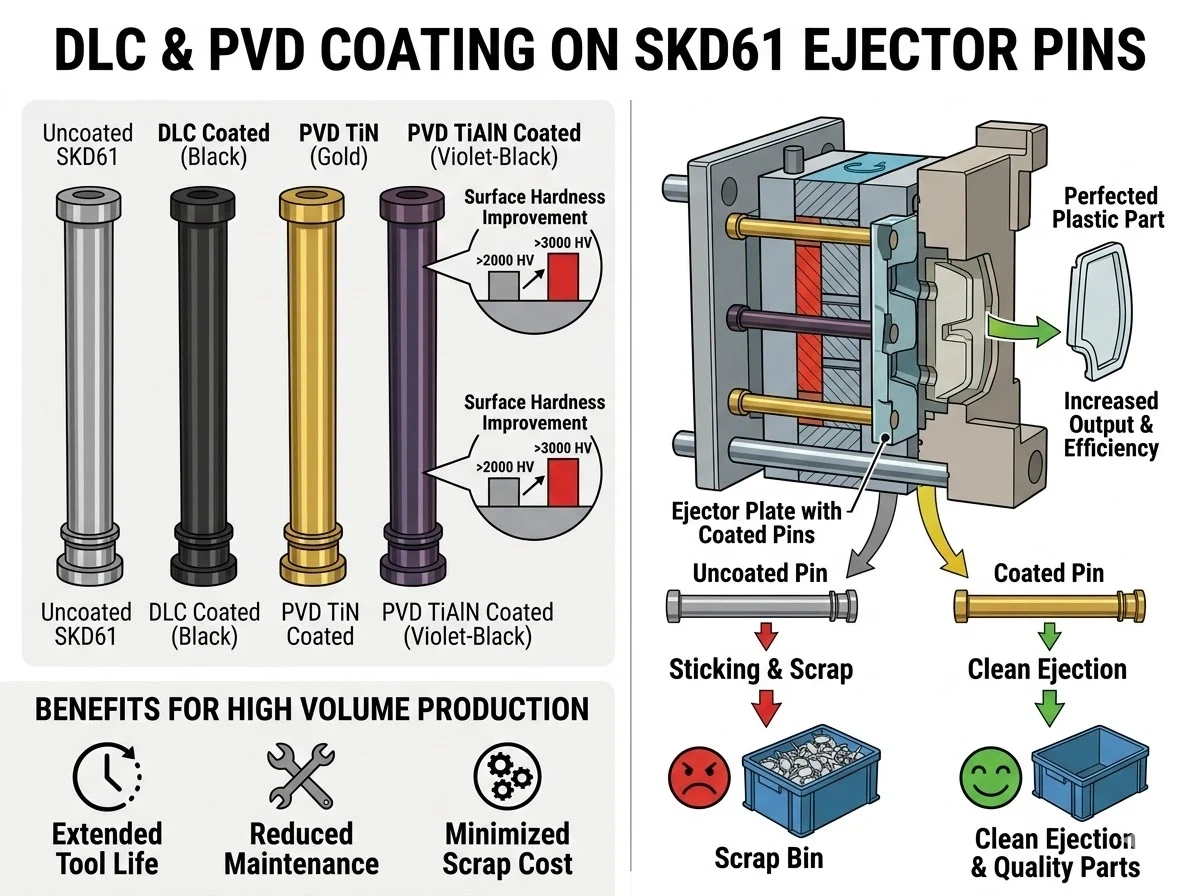
Pin Coating Economics by Production Volume
DLC and PVD coatings run $200-500 per pin with turnaround of 3-5 days. PVD delivers Rc 80-85 surface hardness; DLC costs more but handles abrasive glass-filled materials better (alcadyne.com). The ROI question depends entirely on your production volume.
For runs under 50,000 parts annually, we consider coating upgrades a poor investment for most geometries. The coating typically outlasts the project, which means you're paying for durability you won't use. Above 500,000 cycles with Class-A surface requirements-automotive interiors, consumer electronics housings-the payback period shrinks to 3-6 months through reduced scrap and fewer mid-run stoppages.
Coating longevity depends more on the base pin's surface preparation than on the coating chemistry itself. A DLC layer over poorly ground pin stock will flake within 50,000 shots. We've seen suppliers quote premium coatings on budget pins and call it an upgrade.
The Line Items That Predict Future Scrap
Mold modification to address ejector marks-adding pins, repositioning existing ones-typically costs $500-2,000 and takes 1-3 weeks. Unless your problem traces to uneven cooling around deep ribs, in which case modification costs triple and still might not solve it. A new optimized mold runs $5,000-50,000+ with 8-16 week lead times.

Crescent Industries documented a case where a medical device buyer chose a $12,000 offshore mold over their $49,000 domestic quote. The offshore tool arrived with broken ejector pins, soft steel that couldn't hold tolerance after initial trials, and visible welds on parting surfaces. Total program cost after rework, expedited replacement tooling, and delayed FDA submission: $98,500 (crescentind.com). The failure point wasn't the mold price-it was that the original quote didn't specify steel grade, pin material standards, or trial acceptance criteria.
Holding Pressure Specs: The Number That Tells You Everything
Holding pressure specifications that span 40-90% of injection pressure are functionally meaningless-that range covers "no process control" to "overpacked parts." In practice, when we quote a project, our process sheets show material-specific windows no wider than 15 percentage points. Anything broader means the supplier is leaving room to troubleshoot on your dime.
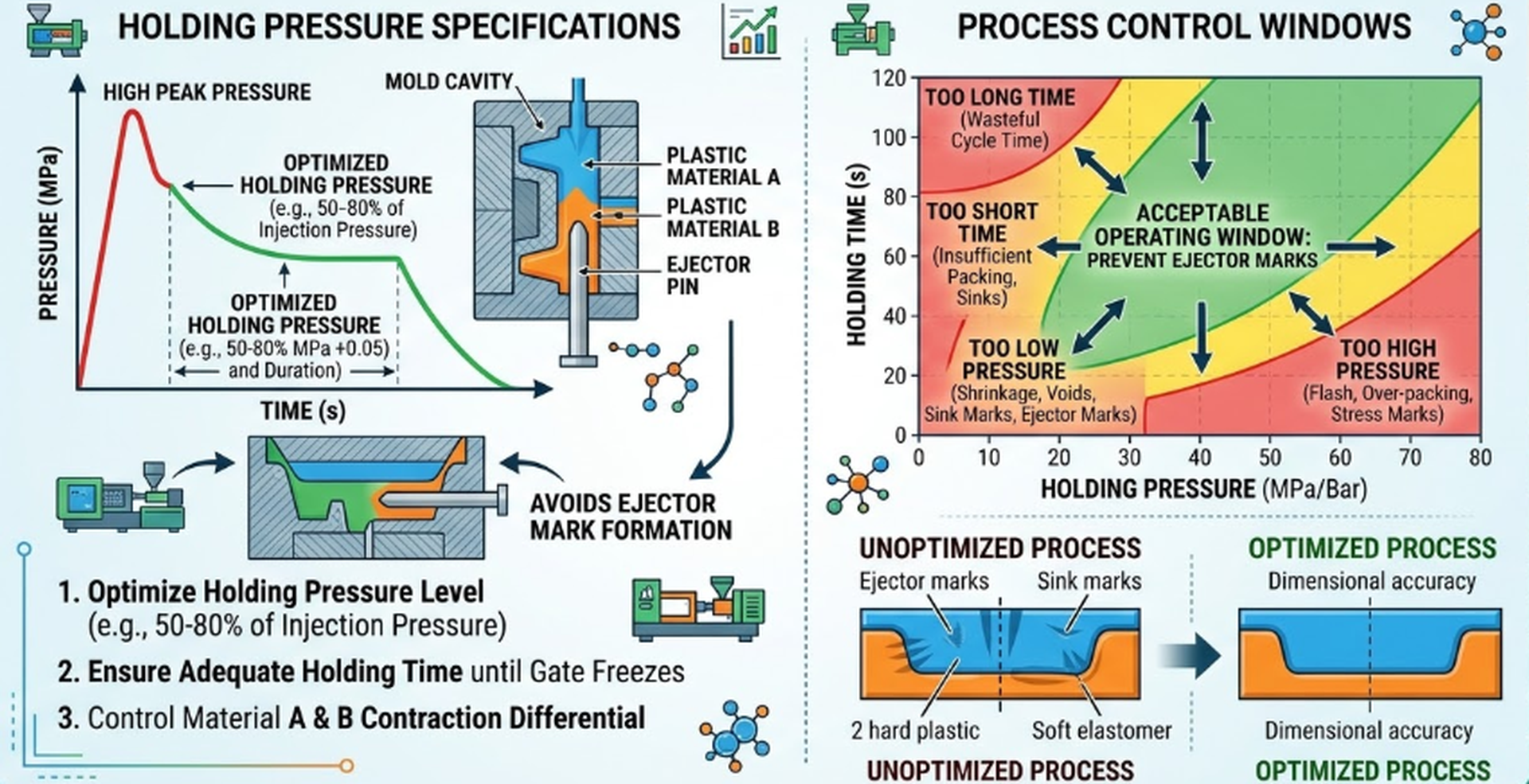
Pin-hole tolerance specs without corresponding measurement records from actual production molds are promises, not evidence. DFM reports that mention ejector pin placement but don't show the simulation run are checkbox exercises.
The questions that surface genuine capability: What's the rejection protocol when marks appear mid-run-do they adjust parameters, or do they call you first? What's the pin replacement frequency on their high-cycle molds? Do they have in-house coating capability, or do they outsource and add markup?
At ABIS, our DFM analysis includes ejection force simulation for every pin location, with holding pressure ranges specified by material family rather than generic windows. We maintain pin-hole clearance records by mold, not by facility average. If you're comparing injection molding quotes and want to see what that documentation actually looks like, bring your current supplier's DFM report-we'll walk through it with you and show you where the gaps typically hide.