





What are Medical Devices?
Medical devices are instruments, apparatus, machines, implants, or software intended for medical purposes such as diagnosis, prevention, monitoring, or treatment of disease and injury. These products range from simple tongue depressors to complex programmable pacemakers and artificial organs.
The World Health Organization estimates approximately 2 million different kinds of medical devices exist globally, categorized into over 7,000 generic device groups. This vast ecosystem includes everything from bandages and stethoscopes to artificial hearts and robotic surgical systems.
Defining Medical Devices
The regulatory definition varies by jurisdiction, but the core concept remains consistent. In the United States, Section 201(h) of the Federal Food, Drug & Cosmetic Act defines a medical device as "an instrument, apparatus, implement, machine, contrivance, implant, in vitro reagent, or other similar article" intended for medical purposes that does not achieve its primary action through chemical means within the body.
This distinction separates medical devices from drugs. While pharmaceuticals work through chemical or metabolic action, devices function through physical, mechanical, or electronic means. A blood pressure monitor measures physical pressure, an X-ray machine uses radiation, and a pacemaker delivers electrical impulses-none rely on chemical reactions to achieve their primary purpose.
Modern definitions have expanded to include software as a medical device (SaMD), recognizing that standalone software applications performing medical functions qualify as devices even without physical hardware components. Mobile apps that analyze patient data, diagnostic algorithms, and clinical decision support systems now fall under medical device regulations.

Classification Systems
Regulatory agencies worldwide classify medical devices based on risk levels, though specific systems differ by region.
United States Classification
The FDA categorizes devices into three classes based on potential patient risk and regulatory control needed:
Class I devices represent the lowest risk category. These products pose minimal potential harm and include items like elastic bandages, examination gloves, and handheld surgical instruments. Approximately 47% of medical devices fall into Class I. Most are exempt from premarket notification requirements, though manufacturers must still follow general controls including establishment registration, device listing, and good manufacturing practices.
Class II devices carry moderate risk and require more oversight than Class I products. This category includes powered wheelchairs, infusion pumps, surgical drapes, and blood transfusion kits. Class II devices typically require 510(k) premarket notification demonstrating substantial equivalence to a legally marketed device. These products represent roughly 43% of all medical devices.
Class III devices present the highest risk-they sustain or support life, are implanted, or could pose unreasonable illness or injury risks. Examples include pacemakers, heart valves, and implantable defibrillators. Only 10% of medical devices fall into Class III, but they undergo the most rigorous premarket approval process requiring clinical data demonstrating safety and effectiveness.
European Union Classification
The EU system uses four risk categories under the Medical Device Regulation (EU) 2017/745:
Class I covers low-risk, non-invasive devices like bandages and walking aids. Class IIa includes moderate-risk devices such as contact lenses and hearing aids. Class IIb encompasses higher-risk devices including ventilators and surgical lasers. Class III represents the highest risk category for life-sustaining or implantable devices.
The classification determines conformity assessment requirements. Class I devices (except sterile or measuring function devices) can be self-certified by manufacturers, while higher classes require assessment by notified bodies-independent organizations authorized to evaluate device compliance.
Types of Medical Devices
Medical devices serve diverse healthcare functions across multiple categories.
Diagnostic Equipment
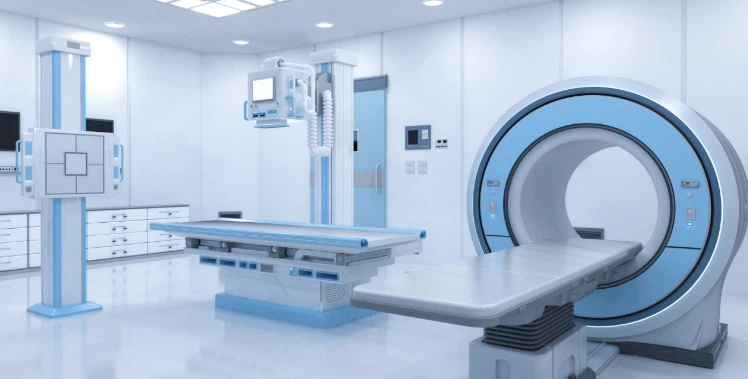
Diagnostic devices help healthcare providers assess patient health conditions. Imaging technologies like X-ray machines, MRI scanners, CT scanners, and ultrasound systems visualize internal structures and detect abnormalities. Laboratory equipment including microscopes, centrifuges, and spectrophotometers analyze blood, tissue, and other biological samples. Point-of-care diagnostic devices such as blood glucose meters, pregnancy tests, and rapid COVID-19 tests enable testing outside traditional laboratory settings.
Therapeutic and Treatment Devices
These devices deliver treatments or therapeutic interventions. Infusion pumps administer controlled amounts of medications, fluids, or nutrients intravenously. Surgical instruments including scalpels, forceps, retractors, and surgical staplers enable precise procedures. Radiation therapy equipment treats cancer patients with targeted radiation doses. Implantable devices like cochlear implants restore hearing, while artificial joints replace damaged hips, knees, or shoulders.
Monitoring Equipment
Monitoring devices track patient vital signs and physiological parameters. Blood pressure monitors, pulse oximeters, cardiac monitors, and continuous glucose monitors provide real-time health data. Wearable devices including fitness trackers and smartwatches increasingly incorporate medical-grade sensors for continuous health monitoring. Remote patient monitoring systems transmit data from home settings to healthcare providers, enabling virtual care.
Life Support Equipment
Critical care devices sustain vital bodily functions. Mechanical ventilators support or replace breathing function for patients unable to breathe independently. Heart-lung machines temporarily assume cardiac and respiratory functions during surgery. Dialysis machines filter blood for patients with kidney failure. Extracorporeal membrane oxygenation (ECMO) devices provide cardiac and respiratory support for critically ill patients.
Assistive Devices
Assistive technology helps individuals with disabilities maintain independence. Mobility devices including wheelchairs, walkers, canes, and braces support movement. Prosthetic limbs replace missing body parts. Hearing aids amplify sound for people with hearing loss. Vision aids including magnifiers and screen readers assist visually impaired individuals.
Manufacturing Technologies
Medical device production requires precision manufacturing techniques that meet stringent quality and safety standards.
Traditional machining methods like CNC milling and turning create components through material removal. These subtractive processes work well for simpler geometries but become costly and time-consuming for complex shapes.
Metal Injection Molding (MIM) has emerged as a valuable manufacturing technique for medical devices. This process combines metal powder with a binder material to create feedstock that's injection molded into complex shapes, then sintered to produce dense metal components. MIM excels at creating intricate surgical instruments, orthodontic brackets, and implantable device components with tight tolerances and excellent surface finishes. The technology particularly benefits production of small, complex parts in high volumes, offering cost advantages over traditional machining while enabling design geometries difficult or impossible to achieve otherwise.
Additive manufacturing (3D printing) builds components layer by layer, enabling patient-specific customization. This technology produces personalized implants, surgical guides, and prosthetics tailored to individual anatomy.
Current Trends and Innovations
The medical device industry continues rapid evolution driven by technological advancement and changing healthcare needs.
Artificial Intelligence Integration
AI and machine learning transform device capabilities. Diagnostic imaging systems now incorporate AI algorithms that detect abnormalities, sometimes with accuracy exceeding human radiologists. Wearable devices use machine learning to predict health events before symptoms appear. Surgical robots employ AI for enhanced precision and autonomous task execution.
The FDA has approved numerous AI-enabled devices, with digital therapeutics using AI algorithms to treat conditions like insomnia, substance use disorders, and chronic pain through software-based interventions.
Connected Medical Devices
The Internet of Medical Things (IoMT) creates networks of connected devices that transmit and analyze health data in real time. Insulin pumps communicate with continuous glucose monitors to automatically adjust delivery based on blood sugar levels. Hospital systems use connected devices to remotely monitor patients, alerting staff to concerning changes.
Connected devices generated over 2.5 billion data points annually as of 2024, enabling population health insights and predictive analytics that improve care delivery.
Miniaturization and Portability
Device miniaturization enables new applications. Ingestible sensors the size of pills monitor internal body conditions. Micro-surgical instruments enable procedures through tiny incisions. Portable diagnostic devices bring hospital-quality testing to remote locations and home settings.
The 2024 market has seen significant growth in at-home diagnostic devices, extending beyond COVID-19 testing to include urinary tract infections, vitamin deficiencies, and hormone levels.
Personalized Medicine Devices
Custom devices tailored to individual patients represent growing opportunities. 3D-printed implants match patient anatomy precisely. Drug delivery devices adjust dosing based on real-time biomarker data. Genetic testing devices inform personalized treatment strategies.

Regulatory Requirements
Medical device regulation ensures patient safety while enabling innovation.
Premarket Requirements
Manufacturers must demonstrate device safety and effectiveness before marketing. The specific pathway depends on classification and risk level. Class I devices often qualify for exemptions. Class II devices typically require 510(k) premarket notification. Class III devices need premarket approval with extensive clinical data.
The process involves documenting intended use, design specifications, manufacturing processes, performance testing, biocompatibility verification, and clinical evidence supporting safety and effectiveness claims.
Quality Management Systems
Manufacturers must establish quality management systems ensuring consistent device quality. FDA regulations require compliance with 21 CFR Part 820 Quality System Regulation. International manufacturers follow ISO 13485, the globally recognized quality management standard for medical devices.
These systems cover design controls, manufacturing processes, supplier management, corrective and preventive actions, and complaint handling procedures.
Post-Market Surveillance
Regulatory oversight continues after market approval. Manufacturers must report adverse events, conduct post-market surveillance studies, and track high-risk devices. The FDA's Medical Device Reporting regulation requires prompt reporting of deaths, serious injuries, or device malfunctions.
Post-market data informs potential recalls, safety communications, and label updates protecting patient safety throughout device lifecycles.
Market Dynamics
The global medical device market demonstrates robust growth driven by demographic trends and technological innovation.
The U.S. medical device market reached $188.68 billion in 2024, with projections to grow to $314.96 billion by 2032 at a compound annual growth rate of 6.8%. Global market forecasts predict $595 billion in revenue for 2024.
Several factors drive market expansion. Aging populations in developed nations increase demand for therapeutic and monitoring devices. Rising chronic disease prevalence-including diabetes, cardiovascular conditions, and cancer-creates need for diagnostic and treatment technologies. Healthcare infrastructure development in emerging markets opens new opportunities. Technological advancement enables novel device capabilities and applications.
The shift toward value-based care models emphasizes outcome improvement and cost reduction, favoring devices that enable earlier diagnosis, less invasive procedures, and home-based care. Remote monitoring and telehealth integration expanded dramatically during the COVID-19 pandemic and continues growing as healthcare systems embrace distributed care models.
Challenges and Directions
Medical device innovation faces several ongoing challenges.
Cybersecurity risks grow as device connectivity increases. Networked devices create potential vulnerabilities requiring robust security measures protecting patient data and device functionality. Regulatory agencies increasingly scrutinize cybersecurity features during approval processes.
Supply chain resilience emerged as a critical concern during the pandemic, exposing vulnerabilities in global device manufacturing and distribution. Companies now focus on diversifying suppliers and regionalizing production to reduce disruption risks.
Interoperability remains challenging as device proliferation creates data silos. Healthcare systems need devices that communicate seamlessly, sharing data across platforms and vendors. Standards development continues addressing integration barriers.
Regulatory harmonization could accelerate global device availability. While international cooperation has increased through efforts like the International Medical Device Regulators Forum, regional requirement differences still complicate multi-market device launches.
Sustainability considerations increasingly influence device design. Single-use devices generate substantial medical waste, driving interest in reusable alternatives, recyclable materials, and design-for-sustainability practices that minimize environmental impact.
Frequently Asked Questions
What differentiates a medical device from a drug?
Medical devices achieve their primary intended purpose through physical, mechanical, or electronic means rather than chemical action. Drugs work through pharmacological, metabolic, or immunological mechanisms. A device might deliver a drug, but the device itself functions mechanically while the drug acts chemically.
Do all medical devices require FDA approval?
Not all devices require the same level of approval. Many Class I devices are exempt from premarket notification. Class II devices typically need 510(k) clearance demonstrating substantial equivalence to existing devices. Class III devices require premarket approval with clinical data. The specific requirements depend on classification and intended use.
Can software qualify as a medical device?
Yes, software intended for medical purposes qualifies as a medical device even without physical hardware. Software as a Medical Device (SaMD) includes diagnostic algorithms, clinical decision support systems, and treatment planning applications. Regulatory agencies worldwide have established frameworks specifically addressing software-based medical devices.
How long does medical device approval take?
Approval timelines vary significantly by device classification and regulatory pathway. 510(k) clearance typically takes 3-12 months. Premarket approval for Class III devices often requires 1-3 years or longer, especially when clinical studies are necessary. De novo classification for novel low-to-moderate risk devices averages 6-12 months.
Data Sources
World Health Organization - Medical Devices Definition and Classification (2020)
U.S. Food and Drug Administration - Medical Device Overview and Classification System
DataM Intelligence - U.S. Medical Devices Market Analysis (2024)
European Commission - Medical Device Regulation (EU) 2017/745
Medical Design & Outsourcing - Innovative Medical Devices Report (2024)
ScienceDirect - Metal Injection Moulding in Medical Applications (2020)