





Understand the core technologies of injection mold design and manufacturing, from basic components to advanced material selection, and master industry-leading engineering solutions.
Optimize production efficiency
Reduce cycle time by 30%

Injection Molding
Injection molding is one of the most versatile and widely used processes in manufacturing, used in a variety of industrial fields from automotive and aerospace to consumer electronics and medical devices.

Process Basics
This precision manufacturing technology transforms thermoplastic and thermoset materials into complex, high-precision parts through a carefully choreographed heating, injection, and cooling process.

The foundation for successful injection molding is the precision design and manufacture of injection molds. These specialized tools are the cornerstone of the entire production process, providing the space for the molten material to form.

Engineering Considerations
Engineers involved in the design and production of injection molds must consider a wide range of factors, including material selection, thermal management, dimensional accuracy, surface finish requirements, and production efficiency.
Injection molding technology is widely used in many industries, providing efficient solutions for the production of various complex parts. From automotive engine parts to precision medical equipment, the design and manufacturing quality of injection molds directly affect the performance and reliability of the final product.
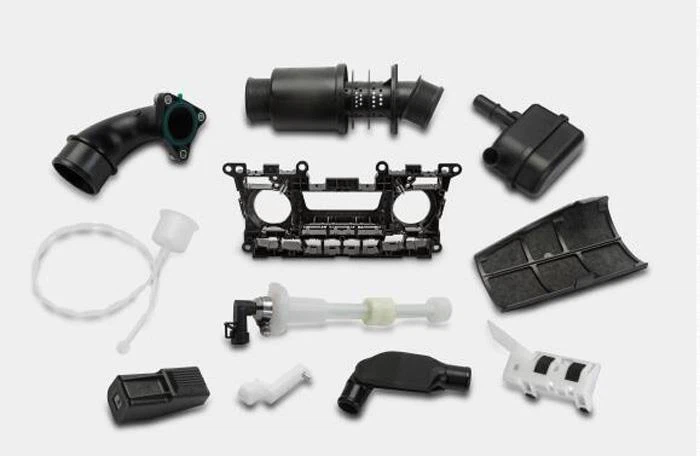
- Automobile Manufacturing
- Aerospace
- Medical Devices
- Consumer Electronics
Each component of an injection mold plays a critical role in ensuring the quality, consistency, and economic viability of the molded part.
The mold base, also known as the injection mold frame or platen system, forms the basic structural foundation of the entire injection molding equipment. This critical component bears the responsibility of withstanding the tremendous forces generated during the injection molding process, which can reach thousands of pounds per square inch of pressure.
Structural integrity
Provide necessary structural rigidity to prevent deformation and ensure part quality and dimensional accuracy
Component integration platform
Serves as an integration platform for all other injection mold components, including feed systems, cooling circuits, etc.


The cavity system is the heart of the injection mold and consists of two main components: the cavity and the core. Together, they define the complete geometry of the molded part, creating external and internal features with extreme precision within the injection mold structure.
Cavity Components

Insert components are specialized elements located within the injection mold cavity system to create specific geometric features or enhance specific characteristics of the molded part. These independent components operate separately from the main injection mold cavity and core system, providing flexibility in design and function.

Gate and Sprue Bushing System
The gate and sprue bushing system is the critical interface between the injection molding machine and the injection mold cavity system. The components control the flow of molten plastic from the machine nozzle into the injection mold runner system and play a vital role in maintaining consistent flow characteristics and part quality.

Runner and Gate Systems
The runner system acts as a sophisticated distribution network that directs molten plastic from the gate to the various cavities within the injection mold. This system is particularly critical in multi-cavity injection molds, where uniform and simultaneous filling of all cavities is essential for consistent part quality and production efficiency.
Hot runners

Ejector system components
After the injection cycle is complete and sufficient cooling time has passed, the ejector system activates to remove the solidified part from the mold cavity. The system must overcome the adhesion between the part and the injection mold cavity surface while avoiding damage to the part and the mold.

Cooling system architecture
Temperature control is one of the most critical aspects of injection mold success, directly affecting cycle time, part quality, dimensional stability and overall production efficiency. The injection mold cooling system consists of a network of channels, pipes and circuits that run through the mold structure.
Material Selection for Injection Mold Components
Selecting the appropriate material for an injection mold component is a complex engineering decision that must balance multiple performance requirements, cost considerations, and manufacturing constraints.
Mold component material comparison
| Component type | Material options | Key benefits | Application scenarios | Cost rating |
|---|---|---|---|---|
| Mold base | Tool steel (P20, H13) aluminum alloy | High strength, good thermal stability, excellent wear resistance, light weight, good thermal conductivity, high processing efficiency | High-volume production applications | Medium and high |
| Cores and cavities | Tool steel (P20, H13) Pre-hardened steel (4140) Aluminum alloys | Durability, good surface finish Pre-hardening, good machinability Thermal conductivity, light weight | High quality parts production | High |
| Special components | Hardened tool steel Nickel or Beryllium copper alloy Ceramic | Excellent thermal stability, wear resistance High temperature performance, thermal conductivity High wear resistance, thermal stability | High temperature applications, precision parts | Extremely high |
Comparative analysis of material properties
Different materials have different performances in terms of strength, thermal stability, wear resistance, etc. Choosing the right material is crucial to the performance and life of the mold. The following is a comparative analysis of the performance of several common materials.
Thermal conductivity W/(m·K)
H13 steel
28
P20 steel
36
Aluminum alloy
175
Beryllium copper
209
Hardness (HRC) Rockwell hardness
H13 steel
48-52
P20 steel
28-32
Aluminum alloy
30-40
Beryllium copper
36-42
Thermal expansion coefficient 10^-6/K
H13 steel
10.4
P20 steel
11.2
Aluminum alloy
23.6
Beryllium copper
17.6
Material Selection Decision Tree

Production batch
High volume: tool steel, low volume: aluminum alloy or pre-hardened steel

Temperature requirements
High temperature applications: H13 steel or beryllium copper alloy

Surface finish
High requirements: polished tool steel or aluminum alloy

Delivery time
Urgent order: Aluminum alloy (fast processing)

Cost constraints
Limited budget: aluminum alloy or pre-hardened steel
Advanced Technology and Future Development
With the advancement of material science, manufacturing technology and design optimization technology, the injection mold industry continues to develop.

Additive Manufacturing Technology
Additive manufacturing technology is influencing the manufacturing of injection molds, especially for conformal cooling channels and complex internal geometries that are difficult or impossible to achieve with traditional machining processes.
Conformal cooling channels
3D printing technology can produce cooling channels that are exactly the same as the mold surface shape, significantly improving cooling efficiency and reducing molding cycle time.
Complex geometries
Additive manufacturing can achieve complex internal structures that cannot be manufactured by traditional machining methods, providing greater freedom for mold design.
Rapid prototyping
3D printing technology greatly shortens the production time of mold prototypes, accelerates product development cycles, and reduces upfront costs.
Material innovation
New 3D printing materials continue to emerge, including metal alloys and composites with special properties, providing more options for injection molds.
Smart mold technology
Smart mold technology that integrates sensors, monitoring systems, and real-time process control is becoming more common, enabling predictive maintenance strategies and enhanced quality control capabilities. These advanced mold systems provide unprecedented insights into mold performance and process optimization.
Embedded sensors
Real-time monitoring of temperature, pressure and wear, providing data to support process optimization.
Data analysis
Use artificial intelligence algorithms to analyze mold performance data and predict potential problems.
Real-time control
Automatically adjust injection molding parameters based on monitoring data to ensure product quality consistency.
Predictive maintenance
Predict mold maintenance needs based on data analysis to reduce unplanned downtime.
Intelligent mold system architecture
Sensor network
Distributed temperature, pressure and vibration sensors
Data acquisition and transmission
Edge computing nodes and wireless communication
Cloud computing platform
Big data storage and processing
Artificial intelligence analysis
Machine learning algorithm predicts mold performance
our services
Lorem ipsum dolor sit amet consectetur adipisicing elit.
Automation and robotics
The degree of automation in the manufacturing and operation of injection molds is constantly improving, and the application of robotics will further improve production efficiency and precision.
- Automatic mold replacement system
- Robotic pick-up and packaging
- Automated quality inspection
Sustainable materials
Enhanced environmental awareness has promoted the application of biodegradable plastics and recycled materials in injection molding, and more innovative materials will be available in the future.
- Bio-based plastics
- Recycling of recycled materials
- Low-energy molding process
Digital twin technology
Digital twin technology combines physical molds with virtual models to achieve real-time simulation and optimization of mold performance and reduce the number of mold trials.
- Virtual mold trial
- Process parameter optimization
- Predictive maintenance
The design and manufacture of injection mold components represents a complex engineering discipline that requires a deep understanding of materials science, thermal management, fluid dynamics, and precision manufacturing techniques.
-
Key Takeaways
Successful injection mold design requires careful consideration of component interactions, material compatibility, manufacturing constraints, and long-term performance requirements.
Selecting the appropriate material and manufacturing process for each injection mold component must balance performance requirements with economic considerations and production batch expectations.
As the injection mold industry continues to evolve, engineers and designers must keep pace with emerging technologies, materials, and design methods to maintain a competitive advantage and provide superior product quality. -
Technology Impact
The integration of advanced simulation tools, smart manufacturing techniques and innovative materials will continue to drive improvements in injection mold performance, production efficiency and part quality.
Investments in proper injection mold design and component selection pay off throughout the production lifecycle, resulting in improved part quality, reduced maintenance requirements, longer mold life and increased overall profitability.