





Comprehensive die casting guide covering processes, materials, and applications. Expert insights on aluminum, zinc, and magnesium die casting with industry solutions.
Die casting represents one of the most versatile and efficient manufacturing processes in modern industry. This precision manufacturing technique enables the production of complex metal components with exceptional dimensional accuracy and surface finish quality. As manufacturing demands continue to evolve, understanding the intricacies of die casting becomes crucial for engineers, procurement specialists, and industry professionals seeking optimal production solutions.
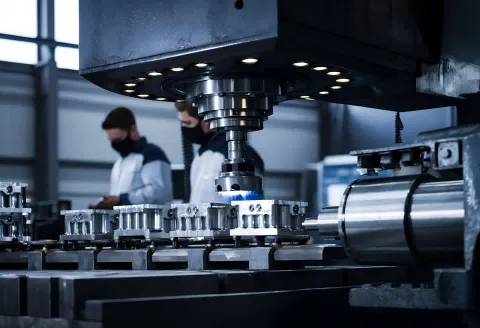
Understanding Die Casting Fundamentals
Die casting is a metal casting process characterized by forcing molten metal under high pressure into reusable steel molds, known as dies. This manufacturing method excels in producing high-volume, complex-shaped components with tight tolerances and excellent surface finishes.
The process begins with heating metal alloys to their molten state, typically ranging from 400°C to 700°C depending on the material. The molten metal is then injected into the die cavity at pressures between 10-175 MPa, ensuring complete mold filling and rapid solidification.
Key Die Casting Advantages
Modern die casting operations offer numerous benefits that make this process attractive across various industries. The technique provides exceptional dimensional accuracy, typically achieving tolerances of ±0.1mm for small components. Additionally, die casting produces superior surface finishes, often eliminating the need for secondary machining operations.
The process demonstrates remarkable efficiency in high-volume production scenarios, with cycle times ranging from 30 seconds to several minutes depending on component complexity. This efficiency translates to cost-effective manufacturing for large production runs.
Die Casting Materials and Properties
| Material | Melting Point (°C) | Typical Applications | Key Properties |
|---|---|---|---|
| Aluminum Alloys | 580-650 | Automotive, Electronics | Lightweight, Corrosion Resistant |
| Zinc Alloys | 380-420 | Hardware, Toys | High Strength, Easy Machining |
| Magnesium Alloys | 580-620 | Aerospace, Medical | Ultra-lightweight, EMI Shielding |
| Copper Alloys | 900-1000 | Electrical Components | High Conductivity, Durability |
Material Selection Considerations
Selecting appropriate die casting materials requires careful evaluation of mechanical properties, environmental conditions, and cost considerations. Aluminum alloys dominate automotive applications due to their excellent strength-to-weight ratio and corrosion resistance. Zinc alloys provide superior casting characteristics and dimensional stability, making them ideal for precision components.
Magnesium alloys offer the lightest option while maintaining structural integrity, particularly valuable in aerospace and portable electronics applications. Each material presents unique advantages that must align with specific application requirements.
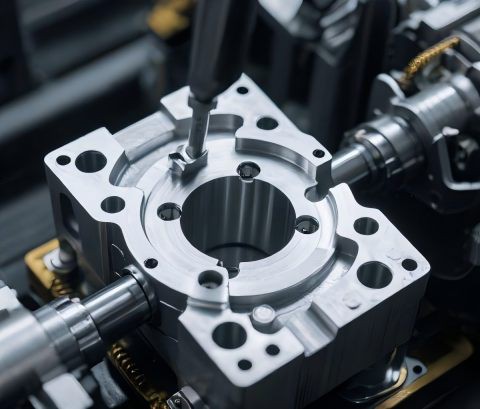
Die Casting Process Types and Applications
Hot Chamber Die Casting
Hot chamber die casting suits materials with low melting points, primarily zinc, tin, and lead alloys. The injection mechanism remains submerged in molten metal, enabling rapid cycling and high production rates. This process excels in producing small to medium-sized components with excellent dimensional consistency.
Cold Chamber Die Casting
Cold chamber die casting accommodates higher melting point materials, including aluminum, magnesium, and copper alloys. The process involves ladling molten metal into the injection chamber for each cycle, providing better control over metal quality and temperature management.
Industry Applications and Performance Metrics
| Industry Sector | Common Components | Volume Requirements | Quality Standards |
|---|---|---|---|
| Automotive | Engine blocks, Transmission cases | 100,000+ units/year | ISO 9001, TS 16949 |
| Electronics | Heat sinks, Housings | 50,000+ units/year | IPC Standards |
| Aerospace | Structural components | 1,000-10,000 units/year | AS9100, NADCAP |
| Consumer Goods | Appliance parts, Tools | 25,000+ units/year | Consumer Safety Standards |
Quality Control and Testing
Implementing comprehensive quality control measures ensures die casting components meet stringent industry requirements. Non-destructive testing methods, including X-ray inspection and pressure testing, identify internal defects without compromising component integrity.
Dimensional measurement using coordinate measuring machines (CMM)* verifies geometric accuracy and tolerance compliance. Statistical process control (SPC)* monitors production consistency and identifies potential process variations before they impact product quality.
Advanced Die Casting Technologies
Modern die casting operations incorporate sophisticated technologies to enhance productivity and quality. Vacuum die casting reduces porosity by evacuating air from the die cavity before metal injection. This technique significantly improves mechanical properties and surface finish quality.
Semi-solid metal (SSM)* processing represents another advancement, involving the casting of metal in a partially solid state. This approach reduces shrinkage porosity and enables thinner wall sections while maintaining structural integrity.
Process Optimization Strategies
Optimizing die casting processes requires systematic analysis of multiple variables, including injection speed, pressure profiles, and cooling rates. Advanced simulation software enables process engineers to predict fill patterns, identify potential defects, and optimize gating systems before physical tooling production.
Temperature management plays a critical role in achieving consistent results. Proper die temperature control prevents premature solidification while ensuring adequate cooling for dimensional stability and cycle time optimization.
Cost Analysis and Economic Considerations
| Cost Factor | Percentage of Total Cost | Optimization Opportunities |
|---|---|---|
| Tooling/Dies | 35-45% | Design optimization, Tool life extension |
| Material | 25-35% | Recycling, Yield improvement |
| Labor | 15-25% | Automation, Process efficiency |
| Energy | 8-12% | Equipment upgrades, Heat recovery |
| Quality Control | 5-8% | In-process monitoring, Prevention |
Die casting economics depend heavily on production volume, component complexity, and material selection. High initial tooling costs require careful amortization across production quantities to achieve competitive unit costs.
Technical Terminology and Definitions
CMM (Coordinate Measuring Machine): Precision measurement device using probe systems to determine geometric dimensions and tolerances of manufactured components.
SPC (Statistical Process Control): Quality control methodology using statistical methods to monitor and control manufacturing processes, ensuring consistent output quality.
SSM (Semi-Solid Metal Processing): Advanced casting technique involving metal processing in a semi-solid state, combining liquid and solid phase properties for improved component quality.
Porosity: Internal voids or air pockets within cast components that can compromise mechanical properties and structural integrity.
Gating System: Network of channels and runners that direct molten metal flow into die cavities, critically affecting fill patterns and component quality.
Common Industry Problems and Solutions
Problem 1: Porosity and Internal Defects
Solution: Implement vacuum die casting systems and optimize gating design to eliminate air entrapment. Conduct regular X-ray inspections and adjust process parameters including injection speed, pressure, and venting systems. Proper degassing of molten metal and maintaining optimal pouring temperatures significantly reduce porosity occurrence rates.
Problem 2: Dimensional Inconsistency
Solution: Establish comprehensive die temperature control systems and implement statistical process control monitoring. Regular calibration of measurement equipment and systematic die maintenance schedules ensure consistent dimensional accuracy. Proper cooling system design and thermal management prevent warpage and dimensional variations across production batches.
Problem 3: Surface Defects and Finish Issues
Solution: Optimize die surface treatments and implement proper release agent application protocols. Regular die cleaning and maintenance prevent buildup that causes surface imperfections. Adjust injection parameters and metal temperature to achieve optimal surface finish quality while minimizing post-processing requirements.
Problem 4: Premature Die Wear and Failure
Solution: Implement predictive maintenance programs using thermal imaging and wear pattern analysis. Select appropriate tool steels and surface treatments based on production volume requirements. Proper die preheating and cooling cycle management extends tool life significantly while maintaining component quality standards.
Authoritative References and Further Reading
ASM International Handbook: Casting - https://www.asminternational.org/ Comprehensive resource covering all aspects of metal casting processes and technologies.
North American Die Casting Association (NADCA) Technical Publications - https://www.diecasting.org/ Industry standards, best practices, and technical guidelines for die casting operations.
International Journal of Cast Metals Research - https://www.tandfonline.com/journals/ycmr20 Peer-reviewed research on advanced casting technologies and process optimization.