





What is Gate Design?
Gate design refers to the engineered opening in an injection mold where molten plastic enters the mold cavity. This small but critical component controls material flow, pressure distribution, and cooling dynamics during the injection molding process. The gate acts as the connection point between the runner system and the part cavity, directly influencing part quality, cycle time, and manufacturing costs.
Understanding Gate Design Fundamentals
Gate design encompasses three primary elements: gate type selection, dimensional sizing, and placement location. Each decision impacts how molten polymer flows into the cavity, affecting fill patterns, pressure requirements, and the final part's mechanical properties.
The gate's size typically ranges from 0.03 to 0.125 inches in diameter, depending on part geometry and material viscosity. This restricted opening serves a dual purpose-it creates enough shear to maintain proper melt temperature while allowing the gate to freeze quickly once the cavity fills, isolating the part from the runner system during cooling.
The Role of Gate Freeze
Gate freeze timing is essential for process efficiency. The gate must remain open long enough to allow complete cavity filling and packing, but freeze before the cooling phase begins. Since gates have smaller cross-sections than the part itself, they cool faster, creating a natural seal. Proper gate freeze prevents backflow and allows the molding machine to begin screw recovery for the next cycle without waiting for the entire part to solidify.

Common Gate Types and Their Applications
Edge Gates
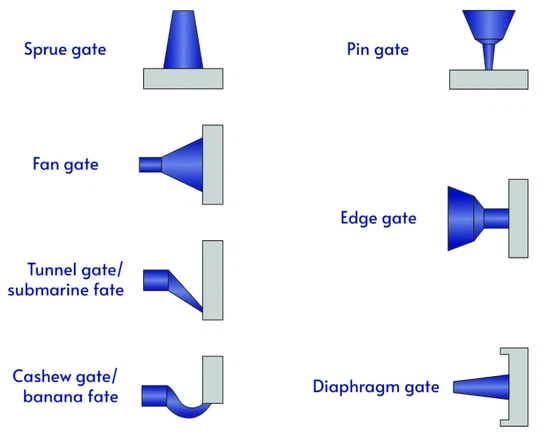
Edge gates represent the most widely used gate configuration in injection molding. Positioned at the parting line where mold halves meet, they feature a rectangular or trapezoidal cross-section that tapers from the circular runner. Their popularity stems from ease of machining and modification flexibility during mold trials.
Edge gates excel in applications requiring larger flow volumes or longer hold times. The gate's larger cross-sectional area compared to other types makes it ideal for thick-walled parts or glass-filled resins that demand reduced shear stress. However, the gate vestige remains visible at the parting line, making placement on non-cosmetic surfaces preferable.
Manufacturing data from 2024 shows edge gates account for approximately 40% of cold runner applications due to their balance of performance and manufacturing simplicity.
Tunnel (Submarine) Gates
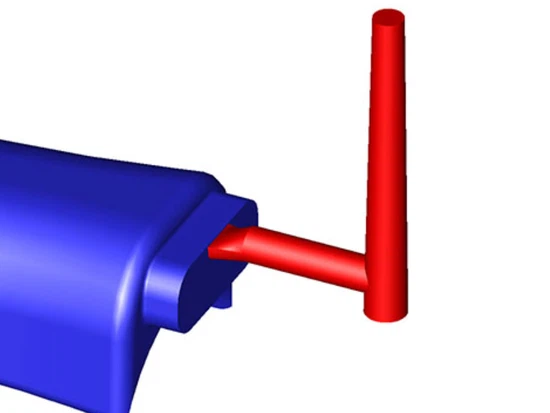
Tunnel gates, also called submarine gates, are machined below the parting line at an angle, typically 20 to 40 degrees. This design enables automatic gate trimming during part ejection-the gate shears cleanly as the part moves away from the cavity. This automatic separation eliminates manual degating operations, reducing labor costs in high-volume production.
The cone-shaped tunnel gate works best for small to medium parts where the gate diameter stays under 0.08 inches. Larger tunnel gates risk incomplete shearing or part damage during ejection. Gate size limitations mean tunnel gates may not suit large parts, as oversized gates can cause cracking or cosmetic issues during automatic shearing, while undersized gates lead to excessive shear heating and incomplete filling.
Hot Runner Valve Gates
The valve gate hot runner market reached $2.8 billion in 2024 and is projected to grow at 3.4% annually through 2033, reflecting increased adoption in precision manufacturing. Valve gate systems use a mechanical pin to control plastic flow with precision. The pin retracts to allow injection, then advances to seal the gate orifice mechanically.
This mechanical shut-off eliminates drool and stringing common in thermal gates, prevents the need for melt decompression, and leaves minimal gate vestige-just a small mark the size of the gate diameter with a slight indentation from the pin. The technology proves particularly valuable for materials prone to drooling like Polyamide (PA).
Recent innovations in 2024 include compact multi-drop manifolds where four valve gates can be arranged on a 30mm bolt circle, enabling installation in machines as small as 7-10 tons. Valve gate systems with waterless actuators, which reduce energy consumption by 15% per cycle, accounted for roughly 20,000 installations globally in 2024.
Tab Gates
Tab gates maintain consistent thickness for a short distance before entering the part cavity. This design distributes shear stress more evenly than edge gates, making them ideal for flat, thin-walled parts. The uniform land section slows material velocity as it enters the cavity, reducing jetting risk.
The tab extends from the part as a flat projection that's trimmed post-molding. While this requires secondary operations, the gate's placement flexibility and ability to contain high-shear zones in the removable tab make it valuable for applications where other gate types would create stress concentrations in the functional part.
Diaphragm Gates
Diaphragm gates form a circular opening around a cylindrical core or large bore. Material flows uniformly around the perimeter, distributing pressure evenly on the core and preventing deflection. This gate type minimizes weld line formation in cylindrical parts by providing balanced flow from all directions, though it leaves noticeable gate marks on the inner edge requiring secondary finishing.
Applications include tubular components, containers with large openings, and parts where concentricity is critical. The even flow pattern promotes predictable shrinkage and reduces warpage in circular geometries.
Gate Selection Criteria
Choosing the optimal gate requires analyzing multiple factors that interact with part design, material properties, and production requirements.
Part Geometry Considerations
Gate placement in the thickest part section is a fundamental guideline-as the part cools, material freezes in thin areas first, so gating into thin sections would leave thicker regions molten after thin geometries solidify. This mismatch prevents proper packing and causes sink marks or voids.
Wall thickness variations across the part dictate both gate size and location. Parts with uniform thickness offer more placement flexibility, while those with significant thickness changes require gates positioned to direct flow from thick to thin sections, following the natural cooling progression.
Gate location should create unidirectional flow with the end-of-fill condition at the parting line, allowing trapped air to escape through venting and preventing air trap defects like surface blemishes, burn marks, and short shots.
Material Properties
Material viscosity, flow characteristics, and thermal sensitivity heavily influence gate design. High-viscosity engineering resins like polycarbonate may need larger gates or fan gate configurations to reduce pressure requirements. Glass-filled materials demand larger gates to minimize shear heating-the abrasive glass fibers generate additional friction as they pass through restricted openings.
Shear-sensitive materials like PVC cannot tolerate the high shear rates of small gates without degradation. These materials often require thermal gates in hot runner systems or larger cold runner gates to keep shear within acceptable limits.
Ideal gate design increases polymer temperature through controlled dissipation to prevent flow marks and weld lines, but excessive shear heating can degrade the material's chemical structure and reduce mechanical strength.
Production Volume Requirements
Production volume significantly impacts gate selection-higher volume applications often cannot accommodate manual gate trimming, necessitating either automatic degating gates like tunnel gates or robotic gate cutting systems. The labor cost of manual trimming becomes prohibitive at volumes exceeding several thousand parts monthly.
Hot runner systems eliminate runner scrap entirely, justifying their higher initial cost in high-volume production. In 2024, the automotive segment represented 35% of the valve gate market, followed by electronics at 25%, driven by high-volume demands for precision components.
Aesthetic Requirements
Cosmetic parts require careful gate placement to minimize visible marks. Gates should be positioned in non-cosmetic areas whenever possible, and when gates must appear in visible locations or with materials requiring larger gates like glass-filled resins, steps can minimize the aesthetic impact.
Tunnel gates and valve gates produce the smallest vestiges, making them preferable for visible surfaces. Edge gates leave rectangular marks at the parting line, while sprue gates create circular vestiges that may protrude from the surface.
Gate Design and Defect Prevention
Improper gate design contributes to approximately 35% of injection molding defects. Understanding the connection between gate characteristics and common defects enables proactive problem-solving.
Weld Lines
Weld lines form when plastic flows from a single gate around obstructions in the mold or when multiple flow fronts from different gates meet and reform on the other side. These visible seams compromise both appearance and mechanical strength.
Gate selection impacts weld line formation-using gates with low pressure loss like side gates and fan gates, designing gate width and thickness as large as reasonable conditions allow, and adjusting gate numbers to balance flow length helps minimize weld line visibility. For large parts with multiple gates, increasing gate count reduces melt travel distance, keeping the flow fronts warmer when they meet.
Sequential valve gating offers the most control over weld line location. By opening gates in a timed sequence, manufacturers can direct flow fronts to meet in predetermined non-critical areas, improving both strength retention and appearance.
Jetting
Jetting occurs when high-velocity molten plastic shoots through a small gate into an open cavity, creating serpentine patterns instead of spreading evenly. The jet solidifies before the cavity fills completely, leaving visible flow marks.
Jetting results from material shooting through an undersized gate at high pressure-the solution involves sizing gates according to material viscosity and flow properties to ensure smooth, even mold filling. Tab gates and fan gates that spread the flow over a wider area reduce jetting tendency compared to small pin gates.
Gate Blush and Vestige Issues
Gate blush appears as discoloration or hazy marks around the gate area when the gate runs too hot, causing localized overheating and material degradation. Proper gate cooling through mold design and process parameter adjustment prevents this defect.
Excessive gate vestige stems from gates sized larger than necessary or improper break-off angles in tunnel gates. While some vestige is unavoidable, optimization of gate size, land length, and break geometry minimizes the marks requiring secondary finishing.
Burn Marks
Black carbonized spots near gates or in deep cavity areas result from trapped air compressed and heated to 300-500°C as melt rapidly fills closed cavities, causing material degradation. The solution involves adding vent channels 0.01-0.03mm deep near end-of-fill locations and ensuring proper gate placement pushes air toward vents rather than trapping it.
Advanced Gate Design Considerations
Gate Sizing Calculations
Gate sizing balances multiple competing factors. Too small, and pressure requirements spike, cycle times extend, and shear heating risks material degradation. Too large, and gate freeze delays, vestiges become prominent, and automatic trimming becomes problematic.
A common starting point for round gates is 0.5-0.7 times the wall thickness, adjusted based on part size, material, and distance from gate to end-of-fill. The gate land-the straight section before the cavity-should typically measure 50% of gate diameter or less to minimize frozen material restricting flow.
Multiple Gate Balancing
Parts requiring multiple gates for complete filling demand careful balancing to ensure simultaneous filling. Coordinating multiple gates to ensure balanced flow and filling requires careful consideration, as interaction between gates impacts structural integrity and visual appeal, with mismatched filling leading to uneven part quality or mold failure.
Flow simulation software like Autodesk Moldflow helps predict fill patterns and optimize gate locations before mold construction. The analysis reveals flow front positions, pressure distributions, and weld line locations, enabling designers to refine gate placement and sizing.
Integration with Injection Molding Service
When working with an injection molding service provider, clear communication about gate design requirements is essential. Provide information about functional requirements, aesthetic specifications, production volumes, and any special material considerations. Experienced injection molding services can recommend gate types and placements based on their process capabilities and past experience with similar parts.
The gate design should align with the service provider's equipment capabilities-hot runner valve gates require specialized molding machines with valve actuation systems, while standard cold runner gates work with conventional equipment. Discussing these requirements early prevents delays and ensures the mold design matches available manufacturing resources.
Recent Developments in Gate Technology
The injection molding industry continues advancing gate technology to meet demands for precision, efficiency, and sustainability.
In August 2024, Ewikon introduced advanced hot runner technologies at Fakuma including the Pro Shot nozzle with improved energy efficiency, Pro Matrix hot halves for high-cavity molds, and the Pro Edge VG valve gate system, bringing better energy efficiency, improved process reliability, and increased flexibility for challenging materials.
Smart thermal management systems now monitor gate temperatures in real-time, adjusting heating zones dynamically to maintain optimal melt conditions. These systems integrate with machine controllers to optimize energy consumption while preventing temperature-related defects.
Compact manifold designs enable closer gate spacing, particularly important for small parts and high-cavity molds. The ability to position four valve gates on a 30mm pitch allows mold makers to create highly efficient multi-cavity layouts without excessive mold base sizes.
Frequently Asked Questions
What is the difference between hot runner and cold runner gates?
Cold runner gates use channels machined in the mold that cool and solidify with each cycle, creating scrap material that must be removed and potentially recycled. Hot runner gates maintain molten plastic in heated channels between the machine nozzle and cavity, eliminating runner scrap. Hot runners cost more initially but reduce material waste and can improve cycle times.
How does gate location affect part quality?
Gate location determines the flow pattern filling the mold cavity. Poor placement causes long flow paths requiring high injection pressures, increases weld line formation where flows meet around obstacles, and can trap air leading to voids or burn marks. Optimal placement creates balanced flow, positions weld lines in non-critical areas, and directs air toward vents.
Can gates be changed after mold construction?
Cold runner gates can often be modified-edge gates can be widened or lengthened, and gate positions adjusted within limits of the runner layout. Hot runner gates offer less flexibility since the nozzle placement is fixed in the manifold design. Significant gate changes may require new inserts or manifold modifications, making initial gate optimization important.
What causes gate strings and how can they be prevented?
Gate strings occur when molten plastic forms thin strands between the gate and part during mold opening, typically in thermal hot runner gates. This happens when the gate doesn't freeze adequately before mold opening or when material drools from the nozzle. Solutions include optimizing gate cooling, adjusting process parameters to ensure proper gate freeze, or switching to valve gate systems that mechanically seal the gate.
Key Considerations for Gate Design Success
Successful gate design integrates part requirements, material characteristics, and manufacturing realities. Start by analyzing part geometry and identifying thick sections suitable for gate placement. Consider the material's flow properties and sensitivity to shear heating. Evaluate production volume to determine whether manual or automatic degating makes economic sense.
Use simulation software to validate gate decisions before committing to mold construction. The investment in flow analysis pays dividends by revealing potential issues while changes remain inexpensive. Collaborate with your injection molding service provider-their practical experience with similar materials and geometries provides valuable insights that complement theoretical analysis.
Gate design represents a convergence point where part design, mold making, and process engineering meet. Getting it right requires understanding how this small opening influences every aspect of the molded part's journey from polymer pellets to finished component. The effort invested in optimizing gate design returns measurable benefits in part quality, cycle efficiency, and manufacturing costs.
Sources:
Basilius Inc. - "Types of Gates for Injection Molding" (basilius.com, July 2025)
WayKen - "Types Of Gates for Injection Molding: A Complete Design Guide" (waykenrm.com, January 2023)
Xometry - "Types of Injection Molded Gates" (xometry.com, June 2025)
The Madison Group - "How to Select the Correct Gate Location" (madisongroup.com, May 2025)
FirstMold - "Injection Molding Gates Advanced Brochure" (firstmold.com, July 2025)
SEAWIN Industrial - "Injection Molding Gate Defects: Identification & Resolution" (seawinindustrial.com, August 2025)
Market Reports World - "Valve Gate Hot Runner Market Share & Trends [2033]" (marketreportsworld.com, 2024)
MoldMaking Technology - "Why Choose a Valve-Gated Hot Runner?" (moldmakingtechnology.com, June 2025)
IMARC Group - "Global Hot Runner Market Report" (imarcgroup.com, 2024)
Star Rapid - "How Gate Design Affects Your Plastic Parts" (starrapid.com, December 2024)