





Most people think "copper alloy" and immediately picture brass or bronze. Which, fair - those are the big ones. But there's like 400+ different copper alloy compositions registered with the Copper Development Association. Nobody uses all of them. Most of the industry runs on maybe 30-40 common alloys. The rest are specialty stuff or legacy alloys that nobody makes anymore but are still technically "registered."
Why alloy copper in the first place?
Pure copper - what we call "commercially pure copper" which is actually 99.9%+ copper - is soft. Really soft. You can dent it with your fingernail if you press hard enough. Great electrical conductivity (second only to silver), great thermal conductivity, excellent corrosion resistance. But the mechanical properties are weak. Tensile strength is only like 200-250 MPa for annealed copper.
For comparison, structural steel is 400-550 MPa. Aluminum alloys can hit 500-600 MPa. So pure copper isn't strong enough for structural applications or anything that needs to handle loads.
Also pure copper work-hardens like crazy when you try to form it. Cold working increases the strength but makes it brittle. Then you have to anneal it (heat treat to soften it) before you can work it more. It's a pain.
So we add alloying elements to:
Increase strength without sacrificing too much conductivity
Improve wear resistance
Improve machinability
Change the color (sometimes aesthetic reasons matter)
Reduce cost (zinc is way cheaper than copper)
The trade-off is always conductivity. Add more alloying elements, conductivity goes down. There's no free lunch.
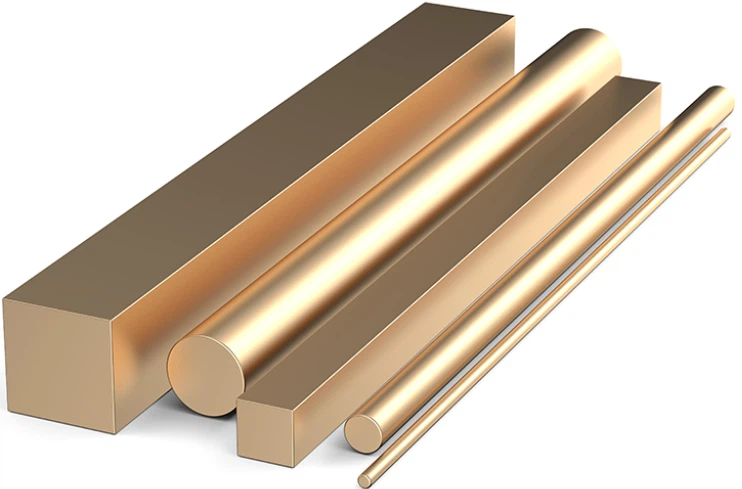
The main families (this gets complicated fast)
Brasses - copper + zinc:
This is probably what most people think of as "copper alloy." The color is that yellowish-gold tone. Zinc content ranges from like 5% up to 40%+.
Low-zinc brasses (under 20% zinc) are called "red brass" or "gilding metal." Still pretty coppery looking. Used for ammunition casings, architectural trim, that sort of thing.
Medium-zinc brasses (20-36% zinc) are the common ones. Cartridge brass is 70% copper, 30% zinc - this is probably the most common brass alloy. Good formability, decent strength, machines okay.
High-zinc brasses (over 36% zinc) are stronger but less ductile. Muntz metal is 60/40 copper-zinc. Used for boat sheathing back in the day because it's cheaper than pure copper but still resists seawater corrosion pretty well.
There's also leaded brasses where they add 1-3% lead to improve machinability. The lead forms tiny particles that act like chip breakers when you're machining. Makes the chips break off cleanly instead of forming long stringy curls that wrap around your cutting tool.
But leaded brasses are getting phased out because of environmental regulations. Lead in drinking water fixtures is banned now in most places. So everyone's switching to lead-free alternatives with bismuth or silicon instead. The machinability isn't quite as good but whatever, regulations are regulations.
Bronzes - copper + tin:
Historically bronze was THE copper alloy. Bronze Age and all that. Tin makes copper way harder and stronger. Ancient smiths figured this out like 5000 years ago.
Modern tin bronzes typically have 4-12% tin. More than that and it gets too brittle. Phosphor bronze adds a bit of phosphorus (0.1-0.5%) which deoxidizes the melt and improves properties.
Phosphor bronze has excellent spring properties. Used for electrical contacts, switches, bearings, bushings. I've worked with C510 phosphor bronze quite a bit - it's 5% tin, 0.2% phosphorus, rest copper. Good stuff for spring applications.
But "bronze" has become kind of a confusing term because now we call lots of non-tin copper alloys "bronze." Aluminum bronze doesn't have any tin - it's copper + aluminum. Silicon bronze is copper + silicon. Manganese bronze is actually a high-strength brass (mostly copper-zinc with some iron and manganese). The terminology is a mess.
Aluminum bronzes:
These are interesting. Copper + aluminum, typically 5-11% aluminum. They have excellent corrosion resistance - better than stainless steel in seawater applications. Also good strength, decent wear resistance.
The problem is they're hard to cast and machine. Aluminum oxidizes readily so you get hard aluminum oxide particles in the microstructure. These particles wear out cutting tools fast. I've burned through carbide inserts machining aluminum bronze. Not fun.
Aluminum bronze is used a lot in marine applications - propellers, pump impellers, valve bodies. Anywhere you need seawater corrosion resistance. Oil and gas industry uses it too.
Copper-nickels (cunifer):
These are copper-nickel alloys, usually 10% or 30% nickel. Excellent seawater corrosion resistance. 90-10 cupronickel (90% copper, 10% nickel) is used for seawater piping on ships and offshore platforms.
70-30 cupronickel was used for U.S. coinage from 1965-present (quarters, dimes, half dollars). The silver got too expensive so they switched to cupronickel clad on a copper core. The coins look silverish but are actually mostly copper and nickel.
Fun fact: the cupronickel in coins work-hardens from all the handling and impacts. Old coins are harder than new ones. You can measure it with a hardness tester.
Beryllium copper:
This is the weird one. Copper + 1.5-2% beryllium. Sounds like nothing right? Wrong.
Beryllium copper can be age-hardened (precipitation hardening) to reach strengths of 1200-1400 MPa. That's stronger than many steels. Plus it retains good electrical conductivity - not as good as pure copper but way better than steel.
So it's used for electrical contacts, springs, tools for explosive environments (beryllium copper is non-sparking), aerospace connectors, all sorts of high-performance stuff.
The downside: beryllium is toxic. Really toxic. Inhaling beryllium dust or fumes can cause berylliosis, a chronic lung disease. So you have to be super careful machining or welding beryllium copper. Need good ventilation, respiratory protection, the whole deal.
Also beryllium is expensive. Like really expensive. Beryllium copper costs 10-20x more than standard brass or bronze. You only use it when you absolutely need the properties.
I've worked with beryllium copper a few times. It machines nicely - kind of like brass. But you're paranoid the whole time about creating dust. Every chip gets collected and disposed of properly. Pain in the ass but necessary.
How the alloying actually works (metallurgy time)
When you add elements to copper, they either:
Dissolve into solid solution - the atoms just mix into the copper crystal lattice. This is what happens with zinc in brass up to about 35-36% zinc. The zinc atoms substitute for copper atoms in the crystal structure. This increases strength (solid solution strengthening) but reduces conductivity because the zinc atoms scatter electrons.
Form second phases - above certain concentrations, new crystal structures form. In brass above 36% zinc, you get beta phase which is harder and more brittle than alpha phase. The microstructure becomes two-phase (alpha + beta) and properties change significantly.
Precipitate out as particles - in age-hardenable alloys like beryllium copper, the beryllium forms tiny precipitate particles when you heat treat it. These particles block dislocation movement which increases strength dramatically. This is precipitation hardening and it's how you get the crazy high strengths.
The exact microstructure depends on composition and processing. Cold working, annealing temperature, cooling rate, all of it matters.
I took a metallurgy class back in… 2007? 2008? One of those years. The professor made us prepare and etch metallographic samples of different copper alloys and look at them under a microscope. Brass was easy - nice grain structure. Aluminum bronze was a mess - all these weird phases and hard particles. Failed that exam question actually. Still annoyed about it.
Properties and trade-offs
Electrical conductivity: Pure copper is 100% IACS (International Annealed Copper Standard). That's the reference point.
Brasses drop to 25-40% IACS depending on zinc content. Aluminum bronzes are like 7-15% IACS. Beryllium copper after age hardening is around 20-25% IACS.
So if you need high conductivity, you stick with pure copper or maybe a copper-silver alloy. If you can tolerate lower conductivity, you can pick an alloy with better mechanical properties.
Thermal conductivity: Similar trade-off. Pure copper is about 390-400 W/m·K. Brass is more like 100-150 W/m·K. Aluminum bronze is 60-80 W/m·K.
Heat sinks and cooking pots use pure copper or high-copper alloys. Structural stuff can use lower conductivity alloys.
Corrosion resistance: Copper alloys generally resist atmospheric corrosion well. They form a protective patina (that green oxidation you see on old copper roofs) that slows further corrosion.
Seawater is trickier. Pure copper corrodes slowly but steadily. Aluminum bronzes and copper-nickels are much better in seawater. Brasses can suffer from dezincification in certain conditions - the zinc leaches out leaving behind porous copper. You need inhibited brass alloys or just avoid brass in seawater.
Machinability: Leaded brasses machine beautifully. Free-cutting brass (C36000 - 61.5% copper, 35.5% zinc, 3% lead) is the gold standard. It's rated 100% on the machinability scale and everything else is compared to it.
Pure copper machines terribly. Too soft, too gummy. You get poor surface finish and built-up edge on your cutting tool.
Aluminum bronze machines badly because of the hard aluminum oxide particles.
Beryllium copper machines well but you have to deal with the toxicity concerns.
Cost: Pure copper is the baseline. Zinc is cheap so brasses are actually cheaper than pure copper per pound even though you're "diluting" the copper.
Tin is expensive so bronzes cost more. Nickel is expensive so copper-nickels cost more. Beryllium is insanely expensive so beryllium copper costs way more.
The 2024-2025 copper price has been bouncing around $8,000-10,000 per metric ton. Zinc is like $2,500-3,000 per ton. So adding zinc saves money. Tin is $25,000-30,000 per ton. Adding tin increases cost.
Material cost drives a lot of alloy selection decisions in commercial products.

Common applications (where you actually see this stuff)
Electrical and electronics:
Wire and cable - pure copper mostly, sometimes copper alloys for strength
Bus bars - pure copper
Printed circuit boards - copper foil on fiberglass
Connectors and contacts - phosphor bronze, beryllium copper
Leadframes for semiconductor chips - copper alloys
Plumbing and HVAC:
Pipes and tubes - pure copper (C12200 - "DHP copper" - deoxidized high phosphorus)
Fittings - brass (C36000 or lead-free equivalents)
Heat exchangers - brass or copper-nickel
Valves - brass, bronze, sometimes aluminum bronze
Marine:
Propellers - manganese bronze or aluminum bronze
Seawater piping - copper-nickel (90-10 or 70-30)
Hull sheathing (historical) - Muntz metal or copper
Fasteners - silicon bronze
Mechanical:
Bearings and bushings - phosphor bronze, aluminum bronze
Gears - phosphor bronze, aluminum bronze
Springs - phosphor bronze, beryllium copper
Welding tips - chromium copper (copper + 0.5-1% chromium for high-temp strength)
Architectural:
Roofing and cladding - pure copper, weathers to green patina
Door hardware - brass, bronze
Decorative elements - various copper alloys depending on desired color and finish
Automotive:
Radiators - brass tubes (used to be, now mostly aluminum)
Electrical wiring - pure copper
Bearings - bronze, bimetal (steel backed with bronze)
Brake lines - copper-nickel
Problems and limitations
Problem 1: Copper is expensive and volatile
Copper prices swing wildly based on global demand. During the 2008 financial crisis, copper dropped from $8,000/ton to $3,000/ton in a few months. Then it came back. During the COVID supply chain mess in 2021-2022, copper spiked to $10,000+/ton.
If you're manufacturing products with copper alloys, these price swings kill your margins. You either have to hedge on commodity markets (complicated and risky) or pass costs to customers (who don't like price changes).
Some industries have switched away from copper because of this. Aluminum replaced brass in radiators. Plastic replaced copper in some plumbing (PEX tubing). Not always for the better - I don't trust PEX long-term - but cost drives decisions.
Problem 2: Weight
Copper is heavy. Density is 8.96 g/cm³. Compare to aluminum at 2.70 g/cm³ or titanium at 4.5 g/cm³.
For aerospace or automotive applications where weight matters, copper alloys are at a disadvantage. Unless you absolutely need the electrical or thermal conductivity, you'll pick a lighter material.
Electric vehicles need tons of copper for the motors and wiring. This adds weight. Engineers are trying to minimize copper use while maintaining performance. Trade-offs everywhere.
Problem 3: Environmental regulations keep changing
Lead in brass used to be standard. Now it's banned or restricted in most plumbing applications. The plumbing industry had to reformulate everything.
There's ongoing discussion about other elements too. Beryllium is tightly regulated because of toxicity. Some people want to restrict nickel in consumer products because of nickel allergies.
Every time regulations change, manufacturers have to requalify materials and potentially redesign products. Expensive and time-consuming.
Problem 4: Galvanic corrosion
When you connect copper alloys to other metals in the presence of an electrolyte (like seawater or even humidity), you can get galvanic corrosion. The less noble metal corrodes faster.
Copper is pretty noble (high on the galvanic series) so it usually causes other metals to corrode. If you bolt copper alloy to aluminum or zinc in a marine environment, the aluminum or zinc will corrode rapidly.
You need insulating washers, coatings, or careful material selection to avoid this. It's a common mistake in design. I've seen aluminum brackets corrode away in months because some engineer bolted them to a bronze component without isolation.
Problem 5: Stress corrosion cracking (SCC)
Some copper alloys are susceptible to stress corrosion cracking in certain environments. Brass can crack in ammonia environments. This is called "season cracking" because it was first observed in brass cartridge cases stored in tropical environments (ammonia from decomposing organic matter).
You have to be aware of the service environment and pick alloys appropriately. Or stress-relieve parts after forming to reduce residual stresses. Or use inhibited alloys with additions like arsenic or tin that reduce SCC susceptibility.
Problem 6: Joining challenges
Welding copper alloys can be tricky. High thermal conductivity means heat dissipates quickly - you need high power input to make a weld. Aluminum bronze is particularly difficult to weld because of the aluminum oxide formation.
Brazing is often easier than welding for copper alloys. But brazing requires specific filler metals and fluxes. And you have to clean everything thoroughly beforehand or the braze joint will be weak.
I've had braze joints fail because someone didn't clean the parts properly. Grease or oil contamination prevents the braze from wetting. The joint looks fine but has no strength. Pain to troubleshoot.
Why we still use copper alloys despite the issues
Because they work. Copper alloys have a proven track record going back thousands of years. We understand their behavior, we have established manufacturing processes, recycling infrastructure exists.
Electrical conductivity is hard to beat - only silver is better and silver is way more expensive. For electrical applications, copper is basically irreplaceable right now.
Corrosion resistance in marine environments is excellent, especially for copper-nickel and aluminum bronze. Better than steel, better than aluminum. If you need seawater resistance, copper alloys are usually the answer.
They're also easy to recycle. Copper and copper alloys can be remelted and reused indefinitely without degradation. The scrap value is high enough that collection and recycling economics work. Contrast with plastics where recycling is often not economically viable.
About 50% of copper used worldwide comes from recycled sources. That's way higher than most other materials.
Alternatives and directions
Aluminum is replacing copper in some applications. Electrical transmission lines use aluminum instead of copper for long distances because weight matters more than conductivity. Radiators switched to aluminum. Less thermal conductivity but lighter and cheaper.
But aluminum will never fully replace copper in electronics or power generation because the conductivity difference is too large.
Carbon materials (graphene, carbon nanotubes) might eventually compete in specialty applications. These can have extremely high electrical and thermal conductivity. But we're not at commercial scale yet and probably won't be for another decade or more.
Advanced alloys are being developed. Copper-chromium-zirconium has high strength plus good conductivity. Some copper-iron-phosphorus alloys offer interesting property combinations. Lots of research into optimizing alloy chemistry for specific applications.
But honestly? The main copper alloys we use today - brass, bronze, copper-nickel - have been around for 50-100+ years. They work. Industry is conservative. Unless there's a compelling reason to switch, we stick with what's proven.
New alloys mostly fill niche applications where the standard alloys don't quite work. Like beryllium copper filled the niche for non-sparking high-strength tools. But the big volume applications use the traditional alloys.

What's actually important
If you're designing something with copper alloys, here's what matters:
What properties do you actually need? Don't over-specify. If you need corrosion resistance but not high strength, don't pick an expensive high-strength alloy. Pick the cheapest alloy that meets requirements.
Can you tolerate lower conductivity? If yes, you have way more alloy options and can optimize for cost or mechanical properties.
What's the service environment? Corrosive? High temperature? Wear? This drives alloy selection more than anything.
Manufacturing method? Some alloys cast well but machine poorly. Some are great for stamping but can't be forged. Match the alloy to your process.
What's the volume? For high volume, optimizing material cost matters. For low volume, use whatever's readily available even if it's not the absolute cheapest option.
Joining method? If you need to weld, that eliminates some alloys or requires special procedures.
Most engineering is about trade-offs and compromises. Copper alloys are no different. There's rarely a "best" alloy - just the one that best fits your specific requirements and constraints.
That ended up longer than I planned. Again.
The short version: copper alloys are copper plus other stuff to make it stronger/harder/cheaper/better for specific uses. Hundreds of alloys exist but most applications use a few dozen common ones. Trade-offs between conductivity and mechanical properties. Works well for electrical, marine, plumbing, mechanical applications. Expensive but recyclable. Not going away anytime soon despite alternatives.
Written while drinking coffee from a copper Moscow mule mug. Which is probably brass with a copper plating. Or maybe just copper-plated steel. I should really check.
Oh, and if you're machining those tough copper alloys I mentioned - especially beryllium copper or aluminum bronze - check out sinker EDM. Way cleaner than conventional machining when you're dealing with hard materials. No dust, no worn-out carbide inserts. Just saying.