





What are Tool Steels?
Tool steels are specialized carbon and alloy steels designed for manufacturing tools, dies, and components that shape other materials. These metals contain 0.4% to 1.5% carbon and carbide-forming elements like tungsten, chromium, vanadium, and molybdenum, giving them exceptional hardness (58-66 HRC), wear resistance, and the ability to maintain sharp cutting edges at temperatures exceeding 760°C.
The six main classifications-water-hardening, cold-work, hot-work, shock-resistant, high-speed, and special purpose-each address specific manufacturing demands based on working temperature, surface hardness requirements, and cost considerations.
Composition and Metallurgical Structure
The performance of tool steel stems from its carefully controlled chemical composition. Carbon content typically ranges between 0.7% and 1.5% by weight, though some specialized grades contain as little as 0.2% or as much as 2.1%. Higher carbon concentrations increase hardness and strength but reduce ductility and weldability.
Carbide-forming elements dominate the alloy composition. Tungsten creates heat-resistant carbides that maintain stability above 1400°F, while chromium provides both hardness and moderate corrosion resistance at concentrations of 10-13% in D-series steels. Vanadium produces fine, hard carbides that resist wear and maintain grain structure during heat treatment. Molybdenum combines with carbon to form carbides that offer excellent high-temperature strength.
Substitutional alloying elements enhance specific properties. Cobalt additions of 5-12% dramatically improve hot hardness, allowing tools to maintain performance at elevated working temperatures. Nickel increases toughness and provides high-temperature strength without promoting excessive carbide formation.
The carbide distribution within the steel matrix determines tool performance more than the carbon content alone. During heat treatment, these carbides dissolve into the austenite phase at different rates-slower dissolution rates produce superior heat-resistant steels. Manganese content is deliberately kept low, typically below 0.5%, to minimize cracking risks during water quenching.
Manufacturing requires controlled conditions to achieve consistent quality. The carbon content must be precisely regulated between 0.5% and 1.5%, with alloying elements introduced according to exact specifications. This precision separates tool steels from commodity steel products.

Six Classifications of Tool Steels
Water-Hardening Steels (W-Group)
W-grade steels represent the most economical tool steel option, essentially high-carbon plain-carbon steel with minimal alloying additions. These steels achieve hardness exceeding 66 HRC after water quenching but carry significant limitations. Above 150°C (302°F), they begin softening noticeably, restricting their use to ambient temperature applications.
Water quenching creates rapid cooling that produces high hardness but also introduces substantial residual stresses. These stresses frequently cause warping and cracking, particularly in complex geometries. The brittleness of W-grade steels makes them unsuitable for impact applications.
Carbon content determines specific applications within the W-group. Steels with 0.60-0.75% carbon serve in machine parts, chisels, and setscrews where medium hardness combines with reasonable toughness. The 0.76-0.90% carbon range suits forging dies, hammers, and sledges. General-purpose tooling requiring balanced wear resistance and toughness uses 0.91-1.10% carbon, while files, small drills, and razor blades benefit from 1.11-1.30% carbon content.
Small additions of manganese, silicon, and molybdenum improve toughness. Up to 0.20% vanadium helps retain fine grain sizes during heat treatment, enhancing mechanical properties.
Cold-Work Tool Steels
Cold-work steels process materials at or near room temperature, divided into three subcategories: oil-hardening (O-series), air-hardening (A-series), and high carbon-chromium (D-series). These steels offer superior hardenability compared to W-grades, reducing distortion during heat treatment.
Oil-hardening steels like O1 contain 0.85-2.00% carbon with moderate alloy additions. The oil quenching process cools material slower than water, producing hardness of 57-61 HRC with minimal distortion. These steels serve in bushings, collets, gauges, and punches where dimensional stability matters.
Air-hardening A-series steels contain higher chromium content, typically 5-8%, enabling them to harden simply by cooling in air. This characteristic dramatically reduces warping and stress-related failures. A2 steel, the most popular grade, provides excellent machinability combined with good wear resistance and toughness. Applications include bending dies, blanking dies, coining dies, embossing dies, and plastic injection molds.
D-series steels contain 10-13% chromium, producing high wear resistance and hardness retention up to 425°C (797°F). D2 tool steel has become the workhorse for applications requiring extreme wear resistance, including shear blades, planer blades, and industrial cutting tools. The high chromium content creates semi-stainless properties, though corrosion resistance remains limited because most chromium precipitates as carbides rather than remaining in solid solution. D2 steels are particularly valuable in Metal Injection Molding tooling, where the abrasive metal feedstock demands exceptional wear resistance.
Hot-Work Tool Steels (H-Group)
Hot-work steels maintain mechanical properties during prolonged exposure to elevated temperatures up to 540°C. These steels contain less than 0.6% carbon but incorporate substantial quantities of carbide-forming elements that create thermally stable carbides.
Three primary alloy systems exist within the H-group. Chromium-based H-steels (H10-H19) contain 3-5% chromium with smaller additions of molybdenum, vanadium, and tungsten. Tungsten-based steels (H21-H26) incorporate 9-18% tungsten with 2-4% chromium, offering excellent heat resistance but notable brittleness. Molybdenum-based grades (H42) provide high wear resistance and thermal stability at extreme temperatures.
H13 tool steel dominates hot-work applications. Its composition of approximately 5% chromium, 1.5% molybdenum, and 1% vanadium provides outstanding toughness, thermal fatigue resistance, and wear resistance. The steel remains stable during constant temperature fluctuations typical of molding cycles. Applications include die casting dies, hot extrusion tools, forging dies, and aluminum die casting components.
Preheating to operating temperature helps circumvent brittleness issues in tungsten-containing hot-work steels. This practice ensures tools perform reliably under thermal cycling conditions.
High-Speed Tool Steels
High-speed steels (HSS) represent the pinnacle of cutting tool technology, retaining hardness at temperatures up to or exceeding 600°C. This property allows faster cutting speeds than conventional high-carbon steels, which lose their temper at such temperatures-hence the name "high-speed" steel.
Two primary series exist: tungsten-based (T-series) and molybdenum-based (M-series). T-type steels contain 12-18% tungsten with 4% chromium and varying amounts of vanadium. They exhibit higher hardness and better wear resistance but cost more than M-type steels. T1 tool steel has been largely replaced in many applications but still serves in specialized cutting operations.
M-type steels, particularly M2, have become the industry standard. These steels contain 6% molybdenum, 6% tungsten, 4% chromium, and 2% vanadium. M2 offers excellent toughness, shorter hardening range, lower hardening temperature, and comparable performance to T-series steels at reduced cost. The shorter hardening range provides manufacturers with greater process control.
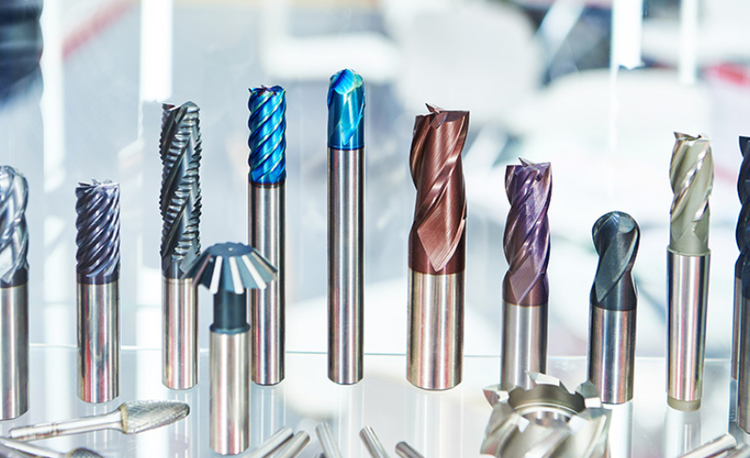
Applications span power-saw blades, drill bits, end mills, taps, reamers, broaches, and lathe tools. The ability to cut faster increases production rates significantly compared to conventional tool steels. Some modern HSS grades achieve part density of 99%, replacing older T-series steels in numerous global applications.
Shock-Resistant Tool Steels (S-Group)
S-series steels are engineered to absorb high-impact loads without chipping or fracturing. These steels contain approximately 0.5% carbon-lower than other tool steels-to maximize toughness. Chromium-tungsten and silicon-molybdenum additions provide the necessary hardenability while maintaining shock resistance.
S7 steel exemplifies this category with its unique combination of toughness, impact resistance, and high strength. This versatility allows S7 to function in both cold and hot work applications. The steel polishes well to a high luster, making it suitable for aesthetic applications requiring glossy finishes.
Applications include jackhammer bits, chisels, shear blades, punches, hammers, and pneumatic tools. In plastic injection molding, S7 serves in slides and large mold components requiring exceptional impact resistance and durability. The steel can be welded successfully, unlike many other tool steel grades.
Special Purpose Tool Steels
This category encompasses specialized alloys designed for unique requirements. P-series (plastic mold steels) address the specific needs of injection molding and die casting. These steels offer excellent machinability, good dimensional stability during heating, easy polishing characteristics, and high impact strength.
P20 steel, a pre-hardened mold steel, dominates plastic injection molding applications. Supplied at hardness levels of 28-32 HRC, P20 machines readily while providing sufficient wear resistance for production volumes up to 50,000 parts. Some P20 grades include enhanced features like improved corrosion resistance, making them suitable for chemically aggressive plastics or food industry applications.
L-code steels possess magnetic properties and often serve in die applications. F-code steels offer unique characteristics like exceptional machinability for specialized forming operations.
Recent developments include pre-hardened tool steels that have undergone quenching and tempering at the steel mill. This eliminates the need for post-machining heat treatment, avoiding dimensional changes and reducing processing time and costs. Pre-hardened steels ensure that final parts maintain precise measurements without additional machining steps.
Manufacturing Processes
Tool steel production demands controlled environments to ensure consistent quality. Several manufacturing methods have evolved to meet different performance requirements.
Electric arc furnace (EAF) melting remains the primary production method. This process melts recycled steel scrap with carefully measured alloying elements in an electric arc furnace. Chemicals remove impurities and prevent oxidation, while precise composition control ensures each grade meets specifications. The molten steel pours into ladles and then into large ingot molds for controlled cooling. EAF methods provide cost-effective production but may require additional refining for premium grades.
Electroslag refining (ESR) creates superior surface quality by melting metal extremely slowly. This process produces non-porous surfaces ideal for critical applications. The slow melting rate allows impurities to float out, resulting in cleaner steel with improved mechanical properties.
Powder metallurgy techniques have gained prominence, especially for very high alloy steels (HATS). Metal powders undergo high-temperature isostatic pressing (HIP), creating materials where long tool life is critical for machining metals. Powder metallurgy eliminates segregation issues common in cast ingots and produces more uniform carbide distribution. In 2024, Sandvik introduced the Osprey HWTS 50, a hot work tool steel powder specifically designed for additive manufacturing applications in die casting and forging.
Annealing follows initial solidification, heating the steel to specific temperatures for controlled periods before slow cooling. This process reduces brittleness and improves machinability, making the steel easier to work with during tool fabrication. Tool manufacturers machine tools from annealed steel, then apply final heat treatment to achieve required hardness.
The global tool steel market demonstrates the industry's scale. Market value reached $6.59 billion in 2024, with projections indicating growth to $11.02 billion by 2032 at a CAGR of 6.64%. Asia-Pacific accounts for over 55% of global consumption, with China alone consuming over 2.5 million metric tons in 2023.
Heat Treatment and Hardening Methods
Proper heat treatment transforms soft, machinable tool steel into hard, wear-resistant tools. The specific heat treatment process depends on the steel grade and intended application.
Water-hardening requires rapid quenching to achieve maximum hardness. Tools heat to austenitizing temperature (typically 760-790°C), then plunge immediately into water. The rapid cooling produces martensite, the hard phase responsible for tool steel's cutting ability. However, the thermal shock from water quenching creates high residual stresses that can cause warping or cracking, particularly in complex shapes.
Oil quenching provides a compromise between cooling rate and distortion. Heating to austenitizing temperature followed by immersion in heated oil (typically 50-60°C) produces slower cooling than water but faster than air. This intermediate rate achieves good hardness with significantly reduced distortion. O-series steels rely on this process to balance performance and dimensional stability.
Air hardening requires the highest alloy content but provides minimum distortion. After austenitizing, tools cool simply by exposure to still air. The high alloy content provides sufficient hardenability to form martensite without rapid quenching. A-series and D-series steels use this method, making them ideal for large parts or components with tight dimensional requirements.
Tempering follows all hardening processes. Reheating hardened steel to temperatures between 150-650°C (depending on desired properties) reduces brittleness while maintaining most of the hardness. Multiple tempering cycles often produce optimal combinations of hardness and toughness. For example, H13 steel typically undergoes double tempering at 540-595°C to achieve its characteristic balance of properties.
Vacuum heat treatment has become standard for premium tool steels. Processing in vacuum prevents surface oxidation and decarburization, maintaining dimensional accuracy and surface quality. This method proves particularly important for complex tools where post-treatment machining is difficult or impossible.
Cryogenic treatment, involving cooling to temperatures below -80°C after hardening, further transforms retained austenite to martensite. This process increases hardness and wear resistance while improving dimensional stability. Many high-performance cutting tools undergo cryogenic treatment to maximize service life.
Critical Applications Across Industries
Tool steels serve essential functions across manufacturing sectors, with applications ranging from massive forging dies to precision surgical instruments.
Manufacturing and Metalworking
Cutting operations consume the largest portion of tool steel production. High-speed steels dominate drill bits, end mills, taps, reamers, broaches, and lathe tools. These tools must maintain sharp cutting edges while removing material at high speeds, generating temperatures that would soften conventional steels. M2 HSS has become the industry standard, balancing performance and cost for general machining operations.
Dies for stamping, punching, and forming require cold-work tool steels. Automotive body panels pass through progressive dies made from D2 or A2 steel, which must withstand millions of cycles while maintaining dimensional accuracy. The dies produce hundreds of thousands of parts before requiring refurbishment, justifying the higher initial cost of premium tool steels.
Forging dies operate at extreme temperatures and pressures. H13 steel dominates this application, providing the thermal fatigue resistance necessary to survive repeated heating and cooling cycles. Aluminum die casting further demands H13's unique combination of thermal stability and toughness, as molten aluminum at 700°C pours into the dies multiple times per minute.
Plastic Injection Molding
Injection molds represent a critical application where tool steel selection directly impacts economics. P20 serves as the workhorse material for general-purpose molds, offering good machinability in the pre-hardened condition. For high-volume production exceeding 50,000 cycles, manufacturers upgrade to H13, which provides superior wear resistance when processing abrasive glass-filled or mineral-filled plastics.
Mold components experience different stress levels. Cavity and core sections contact the plastic directly and require maximum wear resistance. S7 steel often serves in slides and ejector systems where impact resistance matters more than surface hardness. For chemically aggressive plastics, stainless tool steels like 420 or 1.2083 prevent corrosion damage.
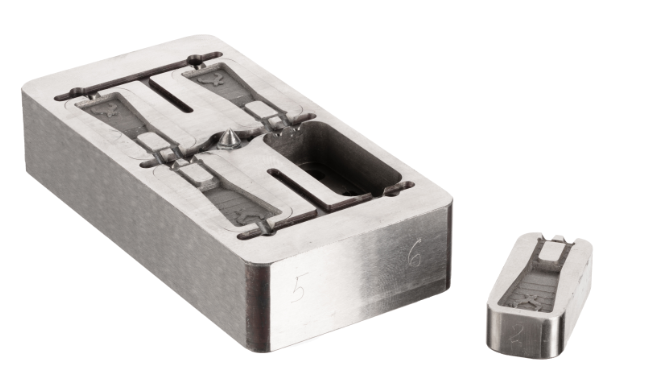
Metal Injection Molding (MIM) demands exceptional tooling performance. The feedstock-90% metal powder with 10% polymer binder-exhibits high abrasiveness compared to conventional plastics. MIM tooling must use high-hardness, high-wear-resistance steels like D2 or A2 in all areas contacting the feedstock, including gates and runners. Flash prevention requires shut-off tolerances within ±0.0001 inches because flash on MIM parts creates potentially harmful knife edges of steel. Venting depths must be controlled to 0.0002-0.0003 inches-significantly tighter than plastic molding-while cavity and core details often receive high-hardness coatings for extended life.
Medical and Dental
Surgical instruments demand tool steels that combine sharpness, corrosion resistance, and sterilizability. Martensitic stainless tool steels like 420 and 440C provide hardness levels of 52-57 HRC while offering moderate corrosion resistance. Scissors, scalpels, clamps, and needle holders benefit from the edge retention and toughness these steels provide.
Orthopedic implant manufacturing relies on tool steels for shaping titanium and cobalt-chromium alloys. These biomedical materials are notoriously difficult to machine, requiring cutting tools made from premium high-speed steels or powder metallurgy grades. The cutting tools must maintain sharpness despite the work-hardening characteristics of implant materials.
Minimally invasive surgical devices incorporate tiny components with precise geometries. Metal Injection Molding using tool steel molds produces these intricate parts with dimensional accuracy unachievable through conventional machining. Endoscopic tools and catheter components manufactured via MIM demonstrate the technology's capability for complex medical devices.
Aerospace and Defense
Aircraft manufacturing consumes significant quantities of tool steel in forming dies and cutting tools. Titanium alloys used in aircraft structures require carbide or premium HSS cutting tools due to their poor machinability and tendency to work-harden. H13 dies form titanium components for critical structural applications, taking advantage of the steel's thermal fatigue resistance.
Turbine blade manufacturing exemplifies precision tool steel applications. Investment casting molds require careful surface finish control, often using premium P-series or corrosion-resistant tool steels. The ceramic cores positioning internal cooling passages in turbine blades are formed using precision dies that must maintain tolerances measured in micrometers.
Defense applications include ammunition manufacturing, where progressive stamping dies produce millions of cartridge cases. These dies use D2 or similar high-wear-resistance steels to achieve the production volumes required. Body armor plates form through hot-working processes using H-series dies capable of shaping hardened steel plates.
Material Selection Criteria
Choosing appropriate tool steel requires systematic evaluation of multiple factors that determine both initial performance and long-term economics.
Working temperature establishes the primary constraint. Applications below 200°C can utilize cold-work steels, while operations between 200-540°C require hot-work grades. Cutting operations generating temperatures above 600°C demand high-speed steels. Using cold-work steel in hot applications results in rapid softening and premature failure, while specifying hot-work steel for cold applications wastes money on unnecessary alloying elements.
Wear resistance requirements guide alloy selection within temperature categories. Light-duty applications with minimal abrasion can use lower-cost W-grades or O-series steels. Moderate wear situations benefit from A-series or lower-alloy D-series steels. Extreme wear environments-such as stamping abrasive materials or machining hardened workpieces-necessitate high-alloy D-series or powder metallurgy grades with maximum carbide content.
Impact loading influences carbon content selection. High-impact applications like punch press tooling or jackhammer bits require shock-resistant S-series steels with their relatively low 0.5% carbon content. Moderate impact conditions can use cold-work steels with balanced toughness. Applications with minimal impact can employ harder, more brittle steels optimized for wear resistance.
Dimensional stability matters for precision tooling. Large dies or molds requiring minimal distortion during heat treatment should specify air-hardening grades. The slow cooling rate of air hardening produces lower residual stresses and better dimensional control. For less critical applications, oil-hardening or even water-hardening steels may suffice.
Surface finish requirements affect both steel selection and processing methods. Tools requiring mirror polishes need fine-grained steels with uniform carbide distribution. S7 polishes exceptionally well for high-gloss plastic parts. Steels with coarse carbide networks or segregation issues cannot achieve superior surface finishes regardless of polishing effort.
Machinability influences production costs significantly. Pre-hardened steels like P20 machine readily, reducing fabrication time and tooling costs. Annealed cold-work and hot-work steels machine well but require subsequent hardening. Fully hardened steels or those with very high alloy content demand EDM, grinding, or hard milling-expensive processes that affect overall tool cost.
Corrosion resistance considerations apply when tools contact moisture, chemicals, or corrosive plastics. Stainless tool steels like 420 or specialized grades with 12%+ chromium resist oxidation better than conventional tool steels. However, corrosion resistance often trades off against achievable hardness and wear resistance.
Economic analysis should consider total cost of ownership rather than material cost alone. Cheaper W-grade or O-series steels may require more frequent replacement, while premium D-series or powder metallurgy grades run longer between maintenance cycles. For high-volume production, the steel cost becomes negligible compared to downtime costs, favoring premium materials with maximum life.
Recent Technological Developments
The tool steel industry continues evolving through materials innovation and advanced processing techniques that expand application possibilities.
Additive manufacturing has emerged as a transformative technology for tool steel applications. Westminster Tool implemented a hybrid 3D printing platform in 2021 using rigorous Design of Experiments on 3D-printed tool steels, enabling production of high-tolerance metal components faster and more cost-effectively with reduced secondary finishing. In October 2024, Sandvik introduced Osprey HWTS 50, a hot work tool steel powder specifically engineered for additive manufacturing in high-temperature applications like die casting and forging. The powder provides improved wear resistance and thermal stability while enabling production of complex geometries impossible through conventional machining.
The additive manufacturing business expanded 18.2% in 2023 to reach $19.5 billion, demonstrating growing importance of these technologies. Powder bed fusion and directed energy deposition techniques now produce tool steel components with mechanical properties comparable to wrought materials, opening new design possibilities for conformal cooling channels, lightweight structures, and integrated features.
Powder metallurgy advances continue refining tool steel microstructures. Very high alloy steels (HATS) produced through powder methods achieve carbide distributions unattainable in cast-and-wrought steels. These materials offer extended tool life in demanding applications, particularly for machining hardened workpieces or abrasive materials. The elimination of macro-segregation in powder metallurgy steels produces more consistent properties throughout large sections.
Surface treatment technologies enhance tool performance without changing base material. Advanced coating systems-including TiN, TiCN, TiAlN, and AlCrN-increase surface hardness to levels exceeding 3000 HV while providing lubricity and oxidation resistance. These coatings extend tool life by factors of 3-10 in cutting applications. DLC (diamond-like carbon) coatings reduce friction in forming operations, decreasing required forming forces.
Cryogenic processing has transitioned from experimental to mainstream. Deep cryogenic treatment at temperatures below -196°C (liquid nitrogen temperature) transforms retained austenite to martensite more completely than conventional tempering. The process also induces precipitation of ultra-fine carbides that enhance wear resistance. Many premium cutting tools now incorporate cryogenic treatment as a standard processing step.
Computer modeling optimizes heat treatment processes. Finite element analysis predicts distortion patterns during quenching, allowing engineers to design preforms that transform into correct dimensions after hardening. This reduces or eliminates expensive post-heat-treatment grinding operations. Simulation software also optimizes tempering cycles to achieve specific property combinations.
Automated process control improves consistency in tool steel production. Internet of Things sensors monitor melt composition, temperature profiles, and cooling rates in real-time. Machine learning algorithms analyze production data to identify optimal processing parameters, reducing variation and improving quality. ArcelorMittal's AI division employs approximately 100 people providing predictive maintenance and quality control support across global operations, with systems achieving 100% success rates in pilot programs for predicting equipment failures.
Recycling and sustainability initiatives address environmental concerns. The steel industry produces tool steel with average recycled content exceeding 77%, reducing energy consumption and carbon emissions compared to primary production. Electric arc furnaces using renewable electricity further decrease environmental impact. Green steel initiatives focus on carbon-neutral production methods.
Performance Specifications and Standards
Tool steels conform to various international standards that specify composition ranges, mechanical properties, and heat treatment responses. The AISI-SAE system provides the most widely recognized classification in North America, using letter-number designations like A2, D2, H13, M2, and S7. European standards employ numerical codes like 1.2344 (equivalent to H13) or 1.2379 (D2 equivalent).
Hardness measurement uses the Rockwell C scale (HRC) for tool steels, with values typically ranging from 58-66 HRC for cutting and forming applications. Shock-resistant steels may specify lower hardness (45-55 HRC) to maintain toughness. Plastic mold steels in the pre-hardened condition typically measure 28-38 HRC, balancing machinability against wear resistance.
Toughness testing employs Charpy or Izod impact tests, measuring the energy absorbed during fracture. S-series steels exhibit superior toughness values exceeding 20 ft-lbs, while high-hardness D-series steels may show only 2-5 ft-lbs. Applications must balance hardness and toughness according to service conditions.
Wear resistance lacks universal standardized tests but various methods assess abrasion resistance. Pin-on-disk testing, block-on-ring methods, and specialized forming tests compare wear rates between grades. D-series steels consistently show lowest wear rates due to high carbide content, while W-grades wear more rapidly.
Dimensional stability specifications address changes during heat treatment and service. Premium tool steels guarantee maximum distortion levels, typically 0.0005-0.002 inches per inch depending on grade and section size. Pre-hardened steels eliminate heat treatment distortion entirely.
Cleanliness standards quantify inclusion content. Premium aerospace-grade tool steels specify maximum inclusion sizes and distributions to prevent premature failures in critical applications. Vacuum melting and electroslag refining produce cleaner steels with improved reliability.
Maintenance and Tool Life Optimization
Maximizing tool steel performance requires proper maintenance practices and understanding of failure mechanisms.
Periodic inspection identifies wear patterns before catastrophic failure. Visual examination reveals surface damage, while dimensional measurement tracks gradual wear. Thermographic inspection during operation detects hot spots indicating cooling system problems or excessive friction.
Lubrication and cooling optimization extends tool life significantly. Proper cutting fluid selection for machining operations reduces friction and heat generation. Flood cooling, through-tool coolant delivery, or minimum quantity lubrication systems apply cooling where most needed. In forming operations, appropriate die lubricants prevent galling and reduce wear rates.
Surface treatments can restore worn tooling. Grinding removes damaged surface layers, though excessive stock removal may alter critical dimensions. Hard-facing with wear-resistant alloys rebuilds worn areas, while coatings applied to refurbished tools extend subsequent service life. These restoration techniques prove economical for expensive dies and molds.
Tool life prediction models incorporate wear rate data, operating conditions, and maintenance schedules. Statistical analysis of historical failure data identifies expected service intervals. Predictive maintenance systems using sensors and AI algorithms detect abnormal wear patterns, scheduling interventions before failures occur. These systems have reduced unplanned downtime by 20% in operations implementing the technology.
Storage conditions affect tool longevity. Humidity control prevents corrosion on stored tooling, while proper handling avoids mechanical damage. Climate-controlled storage rooms maintain tools in ready-to-use condition.
Heat treatment optimization recovers worn tools. Stress-relieving treatments remove residual stresses from service. In some cases, re-hardening and tempering can restore properties after surface damage is ground away, though dimensional changes may limit this option.
Economic Considerations and Market Trends
Tool steel economics extend beyond material purchase price to encompass total cost of ownership throughout the tool's service life.
Initial material costs vary significantly across grades. W-grade steels cost $2-4 per pound, making them attractive for disposable tooling or low-volume applications. Cold-work steels range from $5-12 per pound depending on grade and alloying. Hot-work H13 typically prices around $8-15 per pound. High-speed steels command $15-30 per pound, while powder metallurgy grades may exceed $50 per pound. Premium aerospace grades with special certifications cost even more.
Processing costs often exceed material costs. Machining complex dies may require 40-200 hours of skilled labor at $50-150 per hour. Heat treatment adds $100-500 per tool depending on size and complexity. Surface treatments contribute additional costs but extend life. For a large injection mold costing $50,000-200,000, the base steel represents only 5-15% of total investment.
Tool life multipliers justify premium materials. A powder metallurgy cutting tool may cost 3X more than conventional HSS but run 10X longer before replacement. The net economics favor the premium material despite higher initial cost. Production downtime for tool changes often costs more per hour than the replacement tool, making reliability and longevity paramount.
Market dynamics show strong growth trajectories. The global tool steel market grew from $6.53 billion in 2024 to a projected $6.92 billion in 2025 (6.0% CAGR), with expectations of reaching $8.96-11.69 billion by 2029-2033. Asia-Pacific dominates consumption, accounting for 55%+ of the market, driven by manufacturing expansion in automotive, aerospace, and machinery sectors.
Regional production concentrates in areas with established steel industries. China consumed over 2.5 million metric tons of tool and die steel in 2023, fueled by machinery and shipbuilding applications. The Asian Development Bank reports industrial sector growth of 4.8% in emerging Asia during 2023, accelerating to projected 5.2% in 2024, driving tool steel demand.
Investment trends focus on capacity expansion and technology upgrades. Baowu increased annual tool steel output capacity by 320,000 metric tons with a new plant in Jiangsu operational since October 2023. Major manufacturers invest in additive manufacturing capabilities, advanced coating technologies, and automated quality control systems.
Sustainability pressures influence purchasing decisions. Customers increasingly demand documentation of recycled content, carbon footprint data, and ethical sourcing certifications. Manufacturers respond with transparency initiatives and investments in green steel production using renewable energy and circular economy principles.
Frequently Asked Questions
What makes tool steel different from regular steel?
Tool steel contains significantly higher carbon content (0.4-1.5%) compared to structural steel (0.05-0.3%) and includes substantial additions of carbide-forming elements like tungsten, chromium, vanadium, and molybdenum. These alloying elements create hard carbides within the steel matrix that resist wear and maintain hardness at elevated temperatures. After proper heat treatment, tool steels achieve hardness levels of 58-66 HRC, far exceeding the 20-30 HRC typical of structural steels. This combination of composition and processing enables tool steels to shape other materials without deforming themselves.
How do I choose between water-hardening, oil-hardening, and air-hardening tool steels?
Selection depends on part size, geometry complexity, and distortion tolerance. Water-hardening steels offer lowest cost and maximum hardness but cause significant distortion and cracking risk, limiting use to simple shapes under 1 inch thick. Oil-hardening steels provide balanced economics and performance for moderately complex parts up to 2-3 inches thick, with reasonable distortion control. Air-hardening steels cost more but produce minimal distortion during heat treatment, making them ideal for large dies, complex geometries, or applications requiring tight dimensional tolerances. For parts exceeding 4 inches in any dimension or having intricate features, air-hardening grades prevent distortion-related scrap.
Can tool steel be welded?
Most tool steels present welding challenges due to high carbon content and alloy composition. The heat-affected zone becomes brittle and crack-prone without proper procedures. S7 shock-resistant steel welds most successfully among common grades. When welding is necessary, preheat to 400-600°F, use low-hydrogen electrodes, control interpass temperature, and post-weld heat treat to restore properties. For critical applications, mechanical fastening, brazing, or using weld-compatible inserts often provides better results than fusion welding. Many tool manufacturers avoid welding entirely, designing tools for bolted or pinned assembly.
What is pre-hardened tool steel and when should it be used?
Pre-hardened tool steel arrives from the mill already heat treated to a specific hardness, typically 28-38 HRC. This eliminates the need for post-machining heat treatment, avoiding dimensional changes and additional processing costs. Pre-hardened grades like P20 suit plastic injection molds, die casting dies, and other applications where the supplied hardness provides adequate wear resistance. Use pre-hardened steel when production volumes stay below 50,000-100,000 cycles, when dimensional stability is critical, or when heat treatment facilities are unavailable. For higher volumes or more demanding applications, specify conventional grades that machine soft then harden to 50-62 HRC for maximum tool life.
The versatility and performance of tool steels continue to drive manufacturing innovation across industries. Their unique combination of hardness, wear resistance, and thermal stability enables production of everything from surgical instruments to automotive components. As manufacturing technologies advance, tool steel development follows, with powder metallurgy, additive manufacturing, and advanced coatings expanding application possibilities. Understanding the characteristics, classifications, and proper application of tool steels allows engineers and manufacturers to optimize both tool performance and production economics, selecting the right material for each specific challenge.