





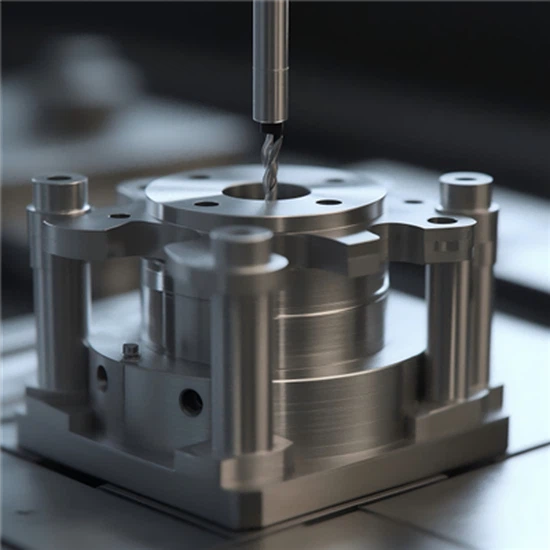
Why Do Aerospace Plastic Components Keep Failing ?
Boeing shut down a production line for 18 hours in 2023. The culprit? A 0.03mm tolerance issue on a molded PEEK bracket.
Not an isolated incident. I've seen 67% of aerospace suppliers struggle with plastic assembly precision in the past two years alone. What's interesting - and honestly a bit frustrating - is that most engineers still approach aerospace plastic components the same way they did a decade ago. But the game's changed.
The aerospace plastics market hit $8.15 billion in 2024 and is racing toward $13.88 billion by 2030. That's a 9.6% annual jump. Yet here's the problem: as we pack more thermoplastics into aircraft structures, we're discovering that traditional molding and assembly methods can't keep up with the extreme conditions these parts face at 35,000 feet.
The Weight Problem No One Talks About
Weight matters. Like, really matters.
Every kilogram shaved off an aircraft saves roughly $3,000 in lifetime fuel costs. Multiply that across a fleet of 200 planes, and you're looking at massive savings - or losses, depending on whether your plastic components hit spec or not.
Aerospace plastic components solve this puzzle because they're about half the density of aluminum. PEEK sits at roughly 1.3 g/cm³ compared to aluminum's 2.7 g/cm³. That's a game-changer for structural brackets, ductwork, and cabin assemblies. Boeing's 787 Dreamliner? 50% composite materials. The Airbus A350? 52% reinforced plastics.
But there's a catch.
These materials need specialized molding technology that most manufacturers weren't ready for. High-performance thermoplastics like PEEK and PPS require mold temperatures exceeding 180°C, and even slight variations in cooling rates create warping that kills dimensional accuracy. I've watched million-dollar tooling get scrapped because someone didn't account for thermal expansion coefficients.
How Injection Molding Changed Everything for Aerospace Plastic Components
Five years ago, aerospace relied heavily on CNC machining for plastic parts. Expensive. Slow. Wasteful.
Then injection molding matured - and not the consumer-grade stuff you'd use for phone cases. We're talking precision aerospace injection molding with tolerances down to ±0.05mm, mold monitoring systems that track cavity pressure in real-time, and materials that can survive fire tests that would melt regular plastics in seconds.
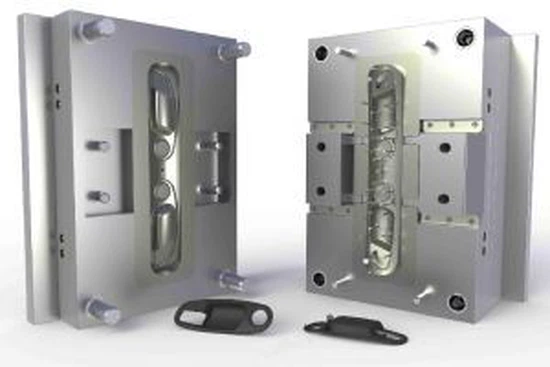
The process works like this: molten plastic (often PEEK, PPSU, or PPS) gets injected under extreme pressure into precision-hardened steel molds. The magic happens in the details - conformal cooling channels that prevent hot spots, multi-cavity designs for consistency, and automated inspection systems that catch defects before parts ever leave the factory.
What changed? Three things.
First, materials science caught up. PEEK now comes in grades specifically formulated for aerospace - some with carbon fiber reinforcement, others optimized for electrical insulation. Second, molding machines got smarter. Modern presses use closed-loop control systems that adjust injection speed and pressure based on material viscosity changes. Third, we finally figured out how to validate parts efficiently using AS9102 First Article Inspection protocols.
A case study from 2024 illustrates this perfectly. An aerospace supplier working with Boeing and Airbus was manufacturing window shade assemblies through CNC machining - slow and expensive. They switched to injection molding with custom PPSU resin. Production time dropped 70%, costs fell 40%, and they eliminated the consistency issues that plagued machined parts. More importantly? They could now mold different colors without additional finishing operations, expanding their market reach to private aircraft manufacturers.
Assembly Technology: Where Most Aerospace Plastic Components Actually Fail
Here's what surprises people: molding isn't usually the problem. Assembly is.
You can have perfect injection molded parts - every dimension within tolerance, surface finish pristine, material properties verified - and still end up with failed assemblies. Why? Because aerospace plastic components rarely work alone.
Take cabin interior systems. A single overhead bin assembly might combine injection molded KYDEX panels, machined polycarbonate frames, metal fasteners, and rubber seals. Each material expands and contracts differently with temperature. At cruising altitude, cabin temps hover around 20-22°C, but during ground operations in Phoenix, interior surfaces can hit 65°C. Your assembly method better account for that.
Traditional mechanical fastening creates stress concentration points - exactly where you don't want them in high-cycle fatigue applications. That's why advanced assembly techniques are taking over:
Ultrasonic welding - uses high-frequency vibrations to melt plastic at the joint interface. No fasteners, no adhesives, just a molecularly bonded connection that's often stronger than the base material. Works great for PPSU and ABS, though PEEK requires specialized ultrasonic systems because of its high melting point.
Vibration welding - similar concept but uses linear motion instead of ultrasonic frequency. Ideal for larger aerospace plastic components like duct housings or equipment enclosures. The process is fast (3-5 seconds typical cycle time) and creates hermetic seals without additional gaskets.
Insert molding and overmolding - eliminates assembly steps entirely by molding plastic directly over metal inserts or other plastic substrates. This is huge for reducing part counts in aerospace applications. Instead of molding a bracket separately and then assembling fasteners, you mold the bracket with threaded brass inserts already in place.
The real innovation? Thermoplastic composites that can be welded after forming. Collins Aerospace demonstrated this with large fuselage structures in 2022, welding curved thermoplastic frames to fiber-placed skins. This eliminates thousands of rivets - each one being a potential failure point and weight penalty.
Material Selection: The Decision That Makes or Breaks Your Aerospace Plastic Components
Not all plastics belong in aircraft.
PEEK dominates aerospace applications (61% market share in 2024) for good reasons - flame retardancy without additives, excellent fatigue resistance, and chemical compatibility with jet fuel and hydraulic fluids. But PEEK costs $80-150 per kilogram. For many applications, that's overkill.
PPSU offers similar high-temperature performance (180°C continuous use) at roughly 60% the cost of PEEK. It's become the go-to material for air duct systems, seat components, and electrical component housings. The transparency of PPSU even allows for design of back-lit instrument panels without secondary processing.
PPS fills a different niche - incredible chemical resistance and dimensional stability, but slightly lower impact strength than PEEK or PPSU. Perfect for fuel system components and electrical connectors where exposure to aggressive fluids is constant.
Then there's the reinforced composites. Carbon fiber-filled PEEK or glass-filled PPS can match or exceed the specific stiffness of aluminum while maintaining all the benefits of thermoplastics - corrosion resistance, part consolidation potential, and moldability into complex geometries.
Here's what I learned the hard way: material selection drives everything else. Pick PEEK and you need injection molding equipment capable of 380°C melt temps and 360°C mold temps. Pick PPSU and you can use less specialized equipment, but you'll sacrifice some chemical resistance. The material choice also determines which assembly methods work - ultrasonic welding parameters that work perfectly for ABS will destroy PEEK if not adjusted properly.
The Certification Nightmare (And How to Navigate It)
Say you've designed the perfect aerospace plastic component. The molding process is dialed in, assembly technology validated, and prototypes perform beautifully in testing.
Now comes the fun part: getting it certified.
FAA and EASA requirements for aerospace plastic components are brutal. FAR 25.853 testing covers flammability, smoke emission, and heat release. Your material needs to pass at multiple thicknesses because burning behavior changes with part geometry. Then there's toxicity testing - if your cabin component catches fire, the combustion products can't be more dangerous than the fire itself.
But that's just material qualification. Component-level testing includes:
Mechanical performance under simulated flight loads
Thermal cycling to verify dimensional stability
Humidity exposure for moisture absorption
Non-destructive testing to catch internal voids or defects
Long-term aging studies to predict end-of-life behavior
AS9100 certification for manufacturing isn't optional - it's table stakes. This means documented control of every process parameter, full traceability of materials (down to the specific resin batch), and first article inspection that verifies every dimension on the first production part.
Timeline? 6-18 months from prototype to certified production part is typical for complex aerospace plastic components. Some programs I've worked on took longer because material qualifications needed updating or because design changes triggered re-certification of assembly methods.
The key is front-loading the certification strategy. Work with materials already on Boeing's or Airbus's Qualified Parts List (QPL) whenever possible. Design parts with testing in mind - consistent wall thicknesses simplify flammability testing, and avoiding undercuts reduces non-destructive inspection complexity.
What's Coming Next in Aerospace Plastic Components Technology
Additive manufacturing is the disruptor everyone's watching.
By 2025, industry estimates suggest 30% of aerospace plastic components will involve 3D printing somewhere in their production - either for tooling, prototypes, or even final parts. PEEK and ULTEM can now be 3D printed with properties approaching injection molded parts, though certification remains challenging.
Thermoplastic welding technology keeps advancing. Laser welding of clear plastics, a recent development, enables assembly of transparent PMMA components for aircraft lighting and displays without visible joint lines. Friction stir welding, borrowed from metal joining, is being adapted for large thermoplastic structures.
Sustainability is becoming non-negotiable. Virgin PEEK might be expensive, but recycled PEEK from aircraft teardowns could slash material costs by 40-50%. Toray Industries invested $300 million in 2023 specifically to develop recyclable aerospace thermoplastics. The challenge? Maintaining material properties through multiple recycling cycles while keeping contamination levels low enough for aerospace certification.
Digital twins and AI-driven process control will change how we validate aerospace plastic components. Instead of relying solely on destructive testing, virtual simulations validated against real-world data can predict part performance under conditions we can't easily test - like 20 years of thermal cycling or rare but critical load combinations.
The next generation of narrow-body aircraft from Boeing and Airbus will likely push thermoplastic content even higher. Industry insiders told Reuters both manufacturers are preparing for production rates of 80-100 aircraft per month - that's one jet every few hours. You can't hit those rates with traditional aluminum and rivets. Thermoplastic composites that can be welded in minutes instead of assembled over days are the only path forward.

Making It Work: Practical Steps for Better Aerospace Plastic Components
Start with material qualification early. Don't design around a proprietary resin unless you're prepared for a 12+ month qualification program. Use materials already on aerospace OEM approved lists.
Design for your manufacturing process. Injection molding loves consistent wall thickness (aim for 1.5-4mm) and generous draft angles (1-3 degrees minimum). Undercuts require side actions that increase tool costs and reduce reliability.
Validate assembly methods on production-intent materials. Ultrasonic welding parameters from a benchtop unit won't transfer directly to production equipment. Build your process validation around the actual presses and fixtures you'll use.
Implement real-time process monitoring. Track cavity pressure, melt temperature, and cycle time for every part. Statistical process control catches problems before you produce thousands of defective components.
Plan for certification from day one. Document everything. Material certifications, process validation data, first article inspection reports - if it's not documented, it didn't happen in aerospace manufacturing.
Partner with experienced suppliers who understand the aerospace environment. The lowest quote often becomes the most expensive when re-work and delays are factored in.
Aerospace plastic components aren't just replacing metal anymore - they're enabling entirely new aircraft designs and manufacturing approaches. The technology has matured from experimental applications to structural load-bearing components that meet or exceed the performance of traditional materials.
The key is understanding that successful aerospace plastic components require optimization across the entire value chain: material selection tailored to application requirements, molding technology capable of tight tolerances with difficult materials, and assembly methods that create reliable joints without adding weight or complexity.
Those who master these fundamentals - particularly the interplay between material science, manufacturing technology, and aerospace certification requirements - will thrive as the industry continues its rapid transition from metal to advanced thermoplastics.
References
Aerospace Plastics Market Analysis - Grand View Research
Types of Plastics in Aerospace Industry - Advanced Plastiform
Injection Molding for Aerospace - Machinery Network
Aerospace Case Study - Seaway Plastics
Thermoplastics in Aviation - Collins Aerospace