





Injection Mold
Injection Mold Technology
An injection mold represents one of the most sophisticated tools in modern manufacturing, serving as the foundation for mass production of plastic components across virtually every industry. This precision-engineered device transforms raw plastic material into complex three-dimensional shapes through a carefully controlled process of heating, injection, cooling, and ejection.
The injection mold itself consists of two primary halves: the cavity side (stationary) and the core side (moving), which together form the negative space that defines the final part geometry.
The fundamental principle behind injection mold operation involves injecting molten thermoplastic or thermosetting polymer into a closed mold cavity under high pressure. The material then cools and solidifies, taking the exact shape of the cavity before being ejected as a finished part. This process enables manufacturers to produce identical parts with exceptional repeatability and dimensional accuracy, making the injection mold an indispensable tool in modern manufacturing.

Core Components and Structure
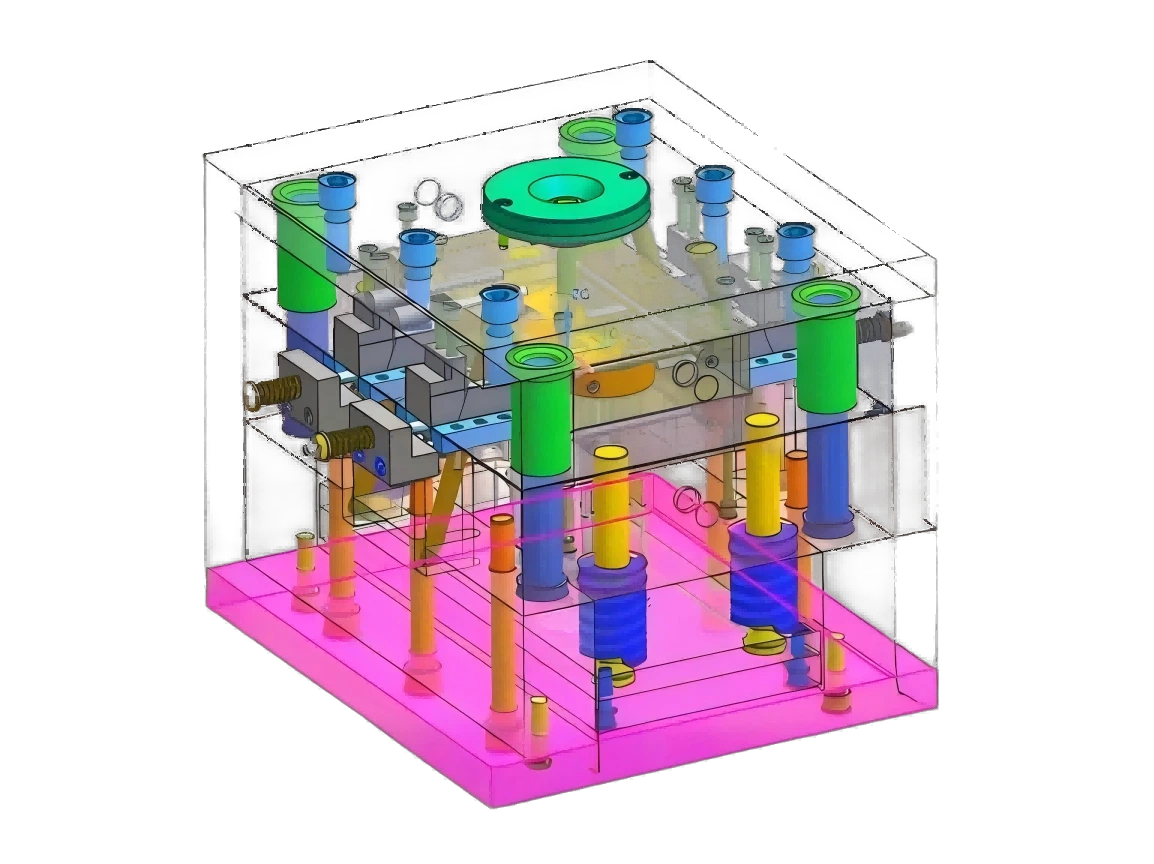
The anatomy of an injection mold reveals multiple interdependent systems working in harmony. The mold base, typically constructed from pre-hardened steel plates, provides the structural foundation. Within this framework, the cavity and core inserts define the part geometry. These inserts, often made from hardened tool steel, must withstand tremendous pressure and temperature cycles while maintaining dimensional stability over millions of cycles.
competitive advantage
The company conducted a competitive advantage analysis to identify its strengths and weaknesses compared to its rivals.
Mold Base
Provides structural foundation, typically constructed from pre-hardened steel plates with precise alignment features.
long warranty
Define part geometry with intricate details, crafted from hardened tool steel to withstand millions of cycles.
24H Online Service
Channels molten plastic from nozzle to cavity through sprues, runners, and gates with precise dimensioning.
Global Shipping
Precisely positioned waterways control cooling rates, preventing warpage and ensuring dimensional stability.
The runner system channels molten plastic from the injection molding machine nozzle to the cavity. In a cold runner injection mold, this system includes the sprue, runners, and gates, all of which solidify with each cycle and must be removed from the finished part. Hot runner systems, alternatively, maintain the plastic in a molten state within heated channels, eliminating waste but increasing the injection mold complexity and initial investment.
Cooling channels represent another critical system within the injection mold structure. These precisely positioned waterways remove heat from the molten plastic, controlling the cooling rate and preventing warpage. The cooling system design significantly impacts cycle time and part quality, with conformal cooling channels following the part contours becoming increasingly common in advanced injection mold designs.
The ejection system ensures reliable part removal after cooling. This typically includes ejector pins, sleeves, or plates actuated by the molding machine's ejector mechanism. The placement and size of ejector pins must balance effective part removal with minimal visible marks on the finished product. Some injection mold designs incorporate more sophisticated ejection methods, such as stripper plates or hydraulic core pulls for complex geometries.

Mold Component Interaction
Cavity and core alignment within 0.002mm tolerance
Runner system pressure drop calculations
Cooling channel proximity to part surface (5-8mm typical)
Ejection force distribution analysis
Material Science and Selection
The selection of materials for injection mold construction directly impacts tool life, part quality, and manufacturing economics. Tool steels dominate injection mold manufacturing, with P20 steel serving as the workhorse material for many applications. This pre-hardened steel offers good machinability and adequate wear resistance for moderate production volumes.
For high-volume production or abrasive materials, hardened steels like H13 or S7 provide superior wear resistance. These materials undergo heat treatment to achieve hardness levels of 48-52 HRC, significantly extending the injection mold lifespan but requiring specialized machining techniques like electrical discharge machining (EDM) for complex features.
Aluminum injection mold components offer advantages for prototype or low-volume production. The superior thermal conductivity of aluminum accelerates cooling cycles, while its machinability reduces manufacturing time and cost. However, aluminum's lower hardness limits its application in high-wear areas of the injection mold.
Material Comparison Chart
| Material | Hardness | Production Volume | Cost | Lead Time |
|---|---|---|---|---|
| P20 Steel | 28-32 HRC | 100K-1M+ | Medium | Medium |
| H13 Steel | 48-52 HRC | 1M+ | High | Long |
| Aluminum | 80-100 HB | 1K-100K | Low-Medium | Short |
| Beryllium Copper | 35-45 HRC | 10K-500K | Very High | Medium |
Surface Treatments
Surface treatments further enhance injection mold performance. Chrome plating improves release properties and corrosion resistance, while nitriding increases surface hardness without dimensional distortion. Diamond-like carbon (DLC) coatings provide exceptional wear resistance and low friction coefficients, particularly beneficial for glass-filled polymers that accelerate injection mold wear.
Chrome Plating
0.0001-0.0003" thickness, 65-70 HRC hardness, improves release and corrosion resistance
Nitriding
0.002-0.010" case depth, 65-70 HRC surface hardness, minimal distortion
DLC Coatings
2-5 μm thickness, 1500-3000 HV hardness, excellent for abrasive materials
Design Principles and Considerations
Successful injection mold design requires balancing numerous competing factors. Draft angles facilitate part ejection, with typical values ranging from 0.5 to 3 degrees depending on surface texture and geometry. Insufficient draft leads to ejection problems and potential injection mold damage, while excessive draft may compromise part functionality or aesthetics.
Key Design Parameters
Draft Angles: 0.5° to 3° typical, more for textured surfaces
Wall Thickness: 0.8mm to 3mm optimal, with gradual transitions
Radius Requirements: Minimum 0.5mm internal, 1mm external
Undercut Allowance: Maximum 15% of wall thickness for standard slides
Critical Design Considerations
Wall Thickness Uniformity
Prevents differential cooling rates that cause warpage and sink marks. The injection mold designer must anticipate how molten plastic flows through varying cross-sections, using flow simulation software to optimize gate locations and predict potential defects. Thick sections cool slowly, potentially creating voids or dimensional instability, while thin sections may not fill completely before the material freezes.
Undercut Management
Undercuts present particular challenges in injection mold design, requiring moving components like slides or lifters to release trapped features. These mechanisms increase complexity and cost but enable production of parts impossible with simple two-plate molds. The injection mold designer must carefully consider the actuation sequence and ensure reliable operation over the tool's lifetime.
Parting Line Strategy
Parting line placement significantly impacts both injection mold complexity and part aesthetics. The parting line, where the two mold halves meet, inevitably leaves a witness mark on the finished part. Strategic placement minimizes visual impact while simplifying the injection mold construction and reducing the likelihood of flash formation.
Manufacturing Processes and Techniques
Modern injection mold manufacturing employs various advanced techniques to achieve the required precision and surface quality. Computer numerical control (CNC) machining remains the primary method for creating mold components, with multi-axis machines enabling complex geometries and tight tolerances. High-speed machining strategies optimize material removal rates while maintaining superior surface finishes.

CNC Machining
Multi-axis machining centers achieve tolerances as tight as ±0.001mm, with high-speed spindles (15,000-40,000 RPM) for superior surface finishes.
3+2 Axis
High-Speed Machining
Tight Tolerances

EDM Processes
Wire EDM cuts complex profiles through hardened materials, while sinker EDM creates intricate cavities with electrode-based shaping.
Wire EDM
Sinker EDM
Hardened Steels

Surface Finishing
Progressive polishing from 120 grit to 8000 grit achieves mirror finishes, with specialized techniques for texture control.
Diamond Polishing
Vapor Honing
Texturing
Precision Requirements Across Manufacturing Stages
| Manufacturing Stage | Typical Tolerance | Surface Finish | Key Quality Metrics |
|---|---|---|---|
| Mold Base Machining | ±0.01mm | 3.2μm Ra | Flatness, parallelism |
| Cavity/Core Machining | ±0.002mm | 0.8-0.025μm Ra | Dimensional accuracy, surface finish |
| EDM Processing | ±0.001mm | 1.6-0.1μm Ra | Corner sharpness, recast layer |
| Assembly & Fit | ±0.005mm | - | Alignment, clamp force distribution |
Thermal Management Systems

Conformal cooling reduces cycle time by 20-40% while improving part quality
Effective thermal management within the injection mold profoundly influences part quality and production efficiency. The cooling system must extract heat uniformly to prevent differential shrinkage and maintain dimensional stability. Traditional drilling methods create straight cooling channels, which may not adequately cool complex geometries or thick sections.
Conformal cooling, enabled by additive manufacturing technologies, revolutionizes injection mold thermal management. These cooling channels follow the part contours at consistent distances, providing uniform temperature distribution. While more expensive to implement, conformal cooling can reduce cycle times by 20-40% while improving part quality, justifying the investment for high-volume production.
The cooling circuit design must consider Reynolds number to ensure turbulent flow, maximizing heat transfer efficiency. Baffles and bubblers direct coolant flow to specific areas, while thermal pins conduct heat from isolated cores. The injection mold designer must balance cooling effectiveness with structural integrity, as excessive cooling channels can weaken the mold structure.
Cooling System Design Parameters
Coolant temperature maintained within +1°C
Channel Design
Diameter 6-12mm typical, 4mm minimum
Flow Dynamics
Reynolds number > 4000 for turbulent flow
Pressure drop 1-3 bar per circuit
Flow rate 3-5 liters per minute per circuit
Monitoring Systems
Thermocouples embedded near cavity surface
Flow meters for each cooling circuit
Pressure sensors to detect blockages
Maintenance and Lifecycle Management
Proper maintenance extends injection mold life and ensures consistent part quality. Preventive maintenance schedules address wear before it impacts production, including regular cleaning, lubrication, and inspection. The frequency depends on production volume, material characteristics, and environmental conditions.
Maintenance Schedule Framework
Daily Maintenance
Clean mold surfaces and vents
Lubricate guide pins and moving components
Inspect for flash or damage
Verify cooling system flow and pressure
Weekly Maintenance
Thorough cleaning of all surfaces
Inspect ejection system for wear
Check alignment and parallelism
Test function of all sensors
Monthly/Annual Maintenance
Disassemble and inspect critical components
Measure wear on cavities and cores
Replace worn components (pins, bushings)
Re-polish cavity surfaces as needed
Cleaning and Preservation
Cleaning procedures remove residue buildup that can cause sticking or surface defects. Ultrasonic cleaning effectively removes contamination from complex geometries, while dry ice blasting provides non-abrasive cleaning without disassembly. Regular application of appropriate mold release agents prevents sticking while protecting injection mold surfaces from corrosion.
Wear monitoring tracks dimensional changes over time, identifying when refurbishment becomes necessary. Critical dimensions should be measured periodically and compared to original specifications. Surface replication techniques capture fine detail changes invisible to conventional measurement methods. When wear exceeds acceptable limits, welding and re-machining can restore the injection mold to original specifications.
Lifecycle Documentation
Documentation throughout the injection mold lifecycle enables informed decision-making. Maintenance logs track all service activities, while production records correlate output with tool condition. This historical data guides replacement timing and identifies recurring issues requiring design modifications.
Key Documentation Requirements
Maintenance Records
Detailed logs of all service, repairs, and inspections
Performance Data
Cycle counts, downtime, and quality metrics by production run
Condition Images
Periodic photography documenting wear patterns and condition
Advanced Technologies and Future Trends
The injection mold industry continues evolving with technological advancement. Simulation software predicts filling patterns, cooling behavior, and potential defects before cutting steel, reducing development time and risk. Multi-physics simulations couple thermal, mechanical, and rheological analyses for comprehensive process understanding.

Simulation Capabilities
Mold flow analysis with pressure drop predictions
Cooling simulation with temperature distribution mapping
Warpage prediction and compensation analysis
Runner system optimization for balanced filling
Emerging Technologies
Smart Mold Technology
Smart injection mold technology integrates sensors and communication capabilities directly into the tool. Pressure transducers monitor cavity pressure profiles, while RFID tags track location and usage. This data enables predictive maintenance and process optimization through machine learning algorithms analyzing patterns across thousands of cycles.
Additive Manufacturing
Additive manufacturing increasingly supplements traditional injection mold manufacturing methods. Beyond conformal cooling applications, 3D printing produces complete injection mold inserts for prototype and low-volume production. Hybrid manufacturing combines additive and subtractive processes, enabling features impossible through either method alone.
Micro Injection Molding
Micro injection mold technology pushes dimensional limits, producing parts with features measured in micrometers. These tools demand exceptional precision in manufacturing and alignment, often incorporating piezoelectric actuators for sub-micron positioning. Applications span medical devices, electronics, and optical components requiring miniaturization without compromising functionality.
Future Development Roadmap
Short-term (1-3 years)
Wider adoption of smart sensors for real-time process monitoring, enhanced simulation accuracy, and increased use of additive manufacturing for conformal cooling inserts.
Mid-term (3-5 years)
Self-monitoring molds with predictive maintenance capabilities, AI-driven design optimization, and widespread implementation of hybrid manufacturing processes.
Long-term (5+ years)
Fully autonomous mold systems with self-healing capabilities, nano-level precision manufacturing, and sustainable materials integration with zero-waste production cycles.
Quality Control and Validation
Comprehensive quality control ensures the injection mold meets specifications throughout its lifecycle. First article inspection validates initial production parts against design requirements, using coordinate measuring machines (CMM) for dimensional verification. Optical comparators and vision systems inspect complex profiles and small features beyond tactile probe capabilities.

Dimensional Inspection
CMM measurements with ±0.0005mm accuracy
3D laser scanning for complex geometries
Optical comparator for profile verification
Blue light scanning for surface detail

Process Validation
Process capability studies (Cpk > 1.33)
Statistical process control implementation
Design of Experiments (DOE) for optimization
Production part approval process (PPAP)

Material Testing
Hardness testing (Rockwell, Brinell scales)
Metallographic analysis for microstructure
Wear resistance and corrosion testing
Thermal conductivity verification
Comprehensive Validation Process
Process capability studies establish the injection mold's ability to consistently produce conforming parts. Statistical process control (SPC) monitors key dimensions across production runs, identifying trends before they result in non-conformance. The injection mold qualification process must consider not only dimensional accuracy but also surface finish, mechanical properties, and aesthetic requirements.
Material testing validates both the injection mold construction materials and the plastics processed through it. Hardness testing confirms heat treatment effectiveness, while metallographic analysis reveals microstructure and potential defects. For the molded parts, tensile testing, impact resistance, and chemical compatibility assessments ensure fitness for intended applications.
The injection mold stands as a testament to precision engineering and materials science, enabling the mass production of plastic components that define modern life. From the microscopic features of medical devices to the large panels of automotive interiors, these sophisticated tools transform raw materials into finished products with remarkable efficiency and consistency.
Understanding the complexities of injection mold design, manufacturing, and maintenance empowers engineers and manufacturers to optimize their processes and push the boundaries of what's possible in plastic part production. As technology continues advancing, the injection mold will undoubtedly evolve, incorporating new materials, manufacturing methods, and intelligent systems while maintaining its fundamental role as the cornerstone of plastics manufacturing.