





Wire EDM Technology in Modern Mold Injection Manufacturing
Advanced manufacturing processes for precision mold components
Wire Electrical Discharge Machining (Wire EDM) represents a cornerstone technology in contemporary mold injection manufacturer operations, enabling the precise creation of complex cavities and intricate geometries essential for high-quality injection molding production. This advanced manufacturing process utilizes a continuously moving thin metal wire as an electrode, generating controlled electrical discharges between the wire and workpiece to achieve material removal through thermal erosion.
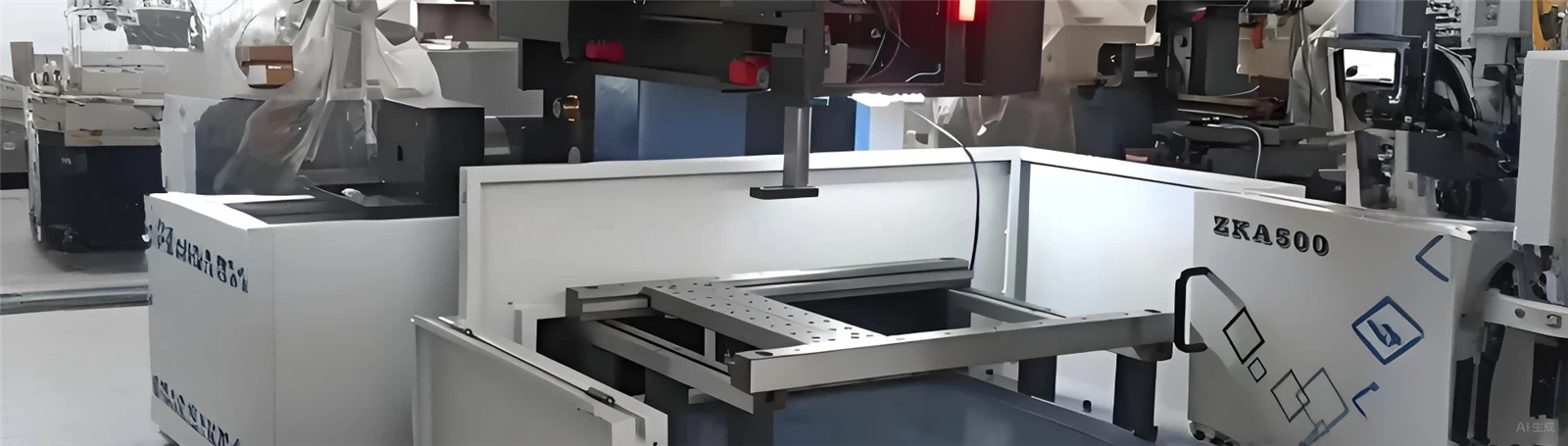
Modern Wire EDM machine demonstrating precision cutting capabilities for complex mold components
Fundamental Principles of Wire EDM Processing
The wire EDM process operates on the principle of controlled spark erosion, where a thin electrode wire, typically made of brass or molybdenum, passes through a pre-drilled starter hole in the workpiece. The wire moves continuously in a vertical direction while being guided along a programmed path to create the desired profile. During operation, a series of rapid electrical pulses creates sparks between the wire and workpiece, with each discharge generating temperatures reaching several thousand degrees Celsius. This intense localized heat vaporizes minute particles of the workpiece material, which are then flushed away by a continuously flowing dielectric fluid.
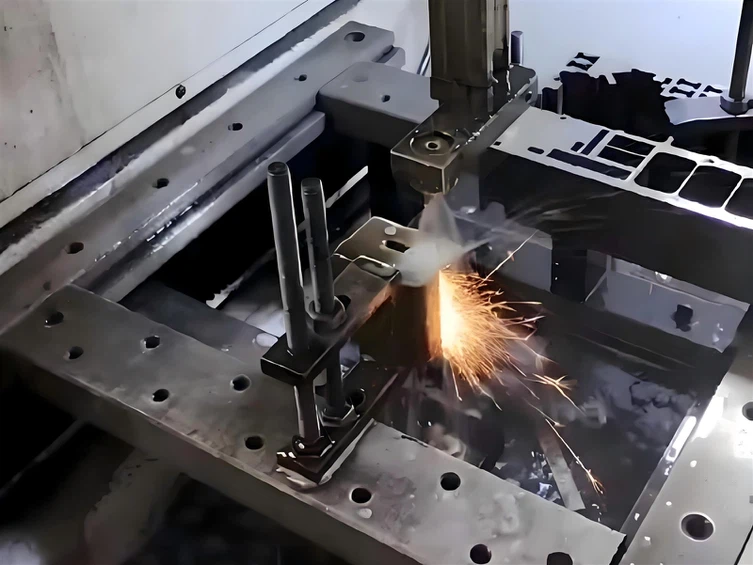
The gap between the electrode wire and workpiece, known as the spark gap, remains constant throughout the cutting process, typically ranging from 0.02 to 0.05 millimeters. This gap is maintained automatically by the machine's servo control system, which continuously adjusts the feed rate based on the electrical conditions in the cutting zone.
The dielectric fluid, usually deionized water in slow-feed machines or specialized emulsion in fast-feed systems, serves multiple critical functions: cooling the cutting zone, flushing away eroded particles, and providing the necessary electrical insulation between discharges.
Classification and Types of Wire EDM Machines
Wire EDM machines are primarily categorized based on their wire feed speed and control mechanisms. The distinction between these categories significantly impacts their application in mold injection manufacturer facilities worldwide.
Fast-feed Wire EDM
Operate with wire speeds typically ranging from eight to ten meters per second, using reusable molybdenum wire.
Offers cost-effective solutions for general precision requirements in mold injection manufacturer operations.
Slow-feed Wire EDM
Operate at wire speeds below 0.2 meters per second with single-direction copper or brass wire.
Represents the pinnacle of precision, enabling surface finishes as fine as Ra 0.8 micrometers or better.
Composite Wire EDM
Combines advantages of both technologies with high-speed roughing and low-speed precision finishing.
Achieves improved surface quality while maintaining reasonable processing speeds and costs.
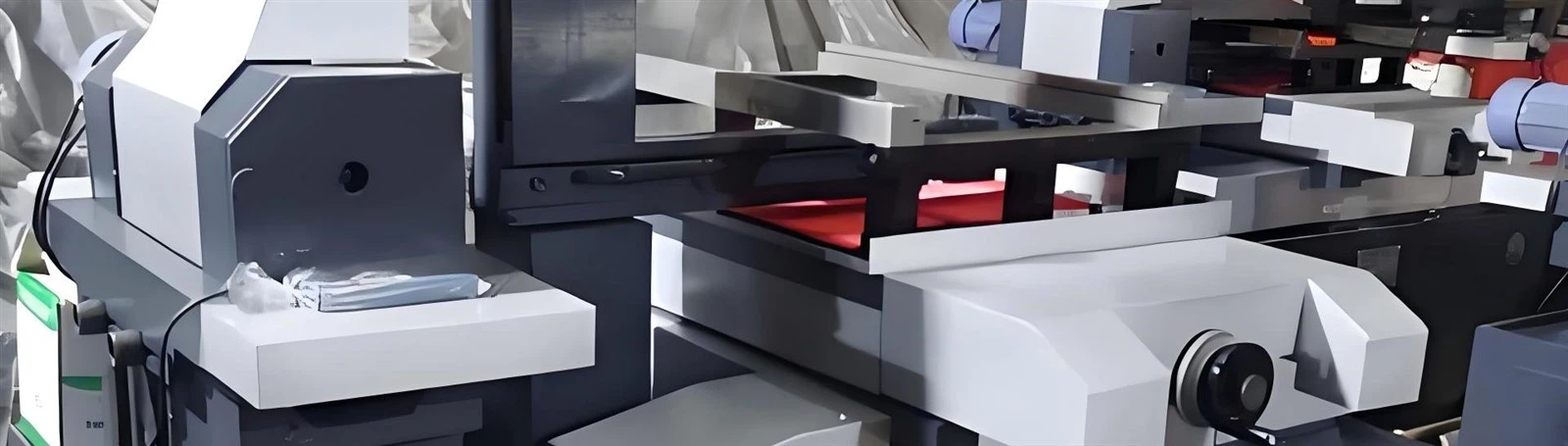
Various Wire EDM machine configurations used in modern mold injection manufacturer facilities
Machine Components and System Architecture
The comprehensive understanding of wire EDM machine components is essential for optimizing their application in mold injection manufacturer environments. The machine structure consists of several integrated subsystems working in harmony to achieve precise material removal.
Machine Bed & Worktable
The machine bed forms the foundation, requiring exceptional rigidity and vibration damping. Modern beds use thermally stable materials. The worktable provides controlled X and Y axis movement through precision ball screws, maintaining positioning accuracies within micrometers.
Wire Transport Mechanism
Critical subsystem influencing cutting quality. Features storage drums, tensioning systems, and precision guides made of synthetic sapphire or diamond. Advanced machines include automatic wire threading to reduce downtime.
Taper Cutting Attachments
Enable controlled wire inclination for draft angles in injection mold cavities. Independent upper and lower guides create precise angular cuts, typically ranging from five to thirty degrees.

Electrical Parameters and Process Control
The selection and optimization of electrical parameters fundamentally determine the success of wire EDM operations in mold injection manufacturer applications. These parameters directly influence cutting speed, surface quality, dimensional accuracy, and wire consumption rates.
| Parameter | Typical Range | Effect on Process |
|---|---|---|
| Pulse Voltage | 70-110 volts | Higher voltages increase spark gap and cutting speed but may reduce surface finish quality |
| Peak Current | Multiple settings via power amplifiers | Determines energy content; lower settings for finer finishes, higher for rapid removal |
| Pulse Duration | Microseconds to tens of microseconds | Shorter pulses produce finer surface textures; longer pulses increase removal rates |
| Pulse Interval | 5-250 microseconds | Allows debris evacuation; insufficient intervals cause instability, excessive reduce efficiency |
Research Insight
According to research published in the International Journal of Machine Tools and Manufacture, "The optimization of EDM parameters through adaptive control systems has demonstrated improvements in cutting efficiency exceeding 30% while simultaneously reducing surface roughness by up to 25% in hardened tool steel applications commonly used in injection mold manufacturing" (Kumar et al., 2023, International Journal of Machine Tools and Manufacture, Vol. 184, pp. 45-62, https://doi.org/10.1016/j.ijmachtools.2023.103982).
This advancement represents a significant leap forward for mold injection manufacturer operations seeking to enhance both productivity and quality through data-driven parameter optimization.

Relationship between electrical parameters and resulting surface finish in Wire EDM processes
Programming and Tool Path Generation
The creation of accurate cutting programs forms the foundation of successful wire EDM operations in mold injection manufacturer facilities. Modern CNC controllers support various programming methods, from manual code generation to sophisticated CAD/CAM integration.
The programming process begins with defining the workpiece coordinate system and establishing reference points for accurate positioning. The selection of threading point locations requires careful consideration of part geometry, material stress distribution, and clamping arrangements.
Tool path compensation accounts for the wire radius and spark gap to ensure accurate final dimensions. This compensation must consider not only the nominal wire diameter but also variations due to wear and electrical conditions.
Multiple cutting strategies have evolved to address the diverse requirements of mold injection manufacturer applications. Single-pass cutting provides maximum productivity for roughing operations or when moderate accuracy suffices, while multi-pass strategies employ successive cuts with progressively reduced discharge energy.

Technical Reference
"Advanced tool path algorithms have revolutionized wire EDM programming, enabling the production of complex 3D contours with accuracies below 5 micrometers. These algorithms optimize cornering strategies and adapt feed rates based on geometry complexity, significantly reducing machining time for intricate mold cavities" (Smith et al., 2022, Journal of Manufacturing Science and Engineering, Vol. 144, Issue 5, https://doi.org/10.1115/1.4053897).
Workpiece Setup and Alignment Procedures
Proper workpiece setup and alignment are crucial for achieving the demanding tolerances required in mold injection manufacturer operations. The selection of appropriate work-holding methods depends on part geometry, size, weight, and required accessibility.

Precision workpiece setup and fixturing for Wire EDM machining of mold components
Mounting Methods
- Cantilever mounting for accessibility
- Bridge-type supports for stability
- Custom fixture plates for repeatability
Alignment Procedures
- Dial indicator methods for precision
- Automatic edge-finding routines
- Electronic verticality verification
Setup Considerations
- Clamping force distribution
- Thermal stability factors
- Access for dielectric flushing
- Part accessibility for wire threading
Dielectric Fluid Systems and Flushing Strategies
The dielectric fluid system plays a vital role in wire EDM performance, significantly impacting cutting speed, surface quality, and process stability in mold injection manufacturer applications. The fluid serves multiple functions: cooling the cutting zone, removing eroded particles, providing electrical insulation between discharges, and preventing oxidation of freshly cut surfaces.
Dielectric Types
Deionized Water
Primary dielectric in slow-feed machines, offering excellent cooling capacity and minimal residue. Resistivity is carefully controlled between 5,000 and 200,000 ohm-centimeters.
Emulsion-based Dielectrics
Used in fast-feed machines, combining oils with water to create stable emulsions that reduce wire wear while maintaining cooling and flushing capabilities.
Flushing Systems
Flushing pressure and flow patterns critically influence debris removal from the cutting zone. Insufficient flushing leads to debris accumulation, causing secondary discharges that degrade surface quality.
Modern machines employ programmable flushing systems that adjust pressure and flow patterns based on cutting depth and workpiece geometry, optimizing debris removal while minimizing wire deflection.

Applications in Injection Mold Manufacturing
Wire EDM technology has become indispensable in modern mold injection manufacturer operations, enabling the production of complex mold components that would be difficult or impossible to manufacture using conventional machining methods. The ability to cut hardened materials with exceptional precision makes wire EDM particularly valuable for producing mold cavities, cores, and inserts after heat treatment.
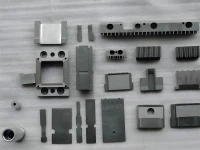
Mold Component Production
Complex cavity geometries with undercuts
Precision cores and inserts after heat treatment
Ejector pin holes and cooling channels
Venting slots and intricate profiles

Specialized Applications
Stamping dies and progressive die components
Precision punch and die profiles with tight clearances
Tapered surfaces for proper draft angles
Single-piece cavity inserts eliminating assembly issues
Surface Integrity and Metallurgical Considerations
The wire EDM process produces unique surface characteristics that distinguish it from conventional machining methods, with important implications for mold injection manufacturer applications. The cut surface consists of a recast layer, also known as the white layer, overlaying a heat-affected zone that transitions to the unaffected base material.
Recast Layer
Typically ranging from 5 to 50 micrometers in thickness depending on cutting parameters, consisting of rapidly solidified material with altered microstructure. This layer often exhibits increased hardness due to rapid cooling rates but may contain microcracks and residual tensile stresses.
Heat-Affected Zone
Extends beyond the recast layer, exhibiting microstructural changes without melting. In hardened tool steels, this zone may show tempering effects that slightly reduce hardness. The extent depends primarily on discharge energy and cutting speed.
Surface Topography
Differs fundamentally from mechanically machined surfaces, displaying a random pattern of overlapping discharge craters. This isotropic texture provides excellent oil retention properties, beneficial for sliding surfaces in mold applications.

Quality Control and Measurement Techniques
Ensuring consistent quality in wire EDM operations requires comprehensive measurement and inspection procedures tailored to mold injection manufacturer requirements. Dimensional accuracy verification typically employs coordinate measuring machines capable of detecting variations within micrometers across complex three-dimensional geometries.
Dimensional Verification
Coordinate Measuring Machines (CMMs) with micrometer-level accuracy for complex 3D geometries. These systems provide detailed reports on dimensional conformity to CAD models.
Surface Finish Analysis
Contact or optical profilometry quantifies roughness parameters. The random nature of EDM surfaces requires adequate sampling lengths and multiple measurement locations.
Geometric Tolerance Checking
Laser interferometry and electronic levels detect minute geometric deviations affecting flatness, perpendicularity, and parallelism.

Advanced Inspection Techniques
The inspection of recast layer thickness and integrity employs metallographic techniques including cross-sectioning, polishing, and microscopic examination. Scanning electron microscopy reveals surface morphology and potential defects at high magnification, while energy-dispersive spectroscopy identifies compositional changes resulting from the EDM process. These analytical techniques prove invaluable for process optimization and troubleshooting in demanding mold injection manufacturer applications where surface integrity directly impacts mold performance and longevity.
Advanced Strategies for Productivity Enhancement
Maximizing productivity in wire EDM operations requires systematic optimization of multiple interrelated factors. For mold injection manufacturer facilities, balancing cutting speed with quality requirements demands careful consideration of economic and technical constraints.
Adaptive Control Systems
Continuously monitor cutting conditions and automatically adjust parameters. These systems detect incipient issues and implement corrective actions, increasing speeds by 20-40% while reducing wire breakage in mold injection manufacturer operations.
Multi-pass Strategies
Optimize the trade-off between speed and quality through strategic use of multiple cutting passes. Roughing passes maximize removal rates while finishing passes achieve required surface quality.
Unattended Operation
Enable continuous production during non-working hours with automatic wire threading and sophisticated monitoring. Integration with robotic handling enables lights-out manufacturing.

Automated Wire EDM production cell enhancing productivity in mold injection manufacturer facilities
Troubleshooting Common Challenges
Despite technological advances, wire EDM operations occasionally encounter challenges requiring systematic diagnosis and resolution. Understanding common problems and their solutions enables rapid response, minimizing production disruptions in mold injection manufacturer facilities.
Wire Breakage
Most frequent operational challenge with multiple potential causes:
- Excessive cutting parameters
- Poor flushing conditions
- Mechanical issues
- Workpiece material problems
Poor Surface Finish
May result from several factors:
- Unstable cutting conditions
- Contaminated dielectric fluid
- Worn wire guides
- Inappropriate parameter selection
Dimensional Inaccuracy
Potential causes include:
- Incorrect compensation values
- Machine geometric errors
- Thermal effects
- Workpiece stress relief during cutting
Development Trends and Emerging Technologies
The evolution of wire EDM technology continues to address the advancing needs of mold injection manufacturer operations worldwide. Several emerging trends promise to further enhance capability and productivity in coming years.

Artificial Intelligence Integration
Machine learning algorithms enable predictive optimization of cutting parameters based on accumulated process knowledge. These systems analyze vast datasets, identifying optimal parameter combinations for specific materials and geometries.
Hybrid Manufacturing Systems
Combining wire EDM with complementary technologies such as milling or grinding in a single platform eliminates multiple setups and reduces production time. Particularly valuable for complex mold components requiring multiple manufacturing processes.
Advanced Wire Materials
Composite wires incorporating high-conductivity cores with wear-resistant coatings enable faster cutting while maintaining superior surface quality. Beneficial for mold injection manufacturer operations processing challenging materials.
Environmental Sustainability
Improved dielectric recycling systems and reduced energy consumption strategies. Advanced filtration enables extended dielectric life while maintaining performance, reducing costs and environmental impact.