





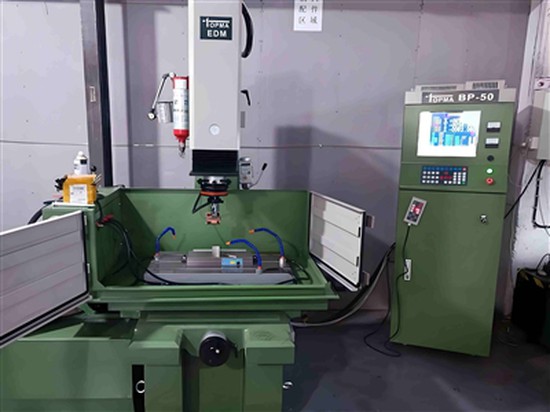
Injection Molding of Plastics: What's Changing in 2025?
You hear people talking about injection molding, but what's actually happening in this space right now? The short answer: a lot more than you'd think.
The injection molding of plastics industry just hit a major turning point. We're looking at a market valued at $382.53 billion in 2025, growing toward $580.44 billion by 2033 (businessresearchinsights.com). But numbers only tell part of the story. What matters more is how companies like yours navigate the changes happening right now-especially when you're trying to figure out if this technology fits your needs.
What's New in Injection Molding of Plastics Technology
Three weeks ago, Stratasys and Ford announced something that caught attention across manufacturing floors. They developed conformal cooling molds that cut injection molding cycles by 20% (worldboundgroup.com). That's not a small improvement. For a production line running 24/7, you're talking about thousands of additional parts per month with the same equipment.
Meanwhile, DuPont introduced self-repairing elastomer materials that extend mold life by 3 times (worldboundgroup.com). This directly addresses one of the biggest headaches in injection molding: mold maintenance costs eating into your margins.
The timing matters because these aren't isolated developments. They're part of a larger shift where the injection molding of plastics is moving away from the "if it works, don't touch it" mentality that dominated for decades.
Why Injection Molding of Plastics Costs Matter Now
Let's get practical. You're probably dealing with at least one of these issues:
The sustainability pressure is real. Clients now ask about recycled content percentages before they ask about price. Polyethylene captured a 36.70% market share in 2024, driven largely by recycled-content mandates (mordorintelligence.com). If you're not tracking recyclability metrics, you're already behind.
ROI calculations got complicated. Traditional payback models assumed stable technology for 10-15 years. Now you're looking at potential obsolescence within 5-7 years as automation and AI integration accelerate. The market is projected to add $54.4 billion in value by 2029, with a 4.5% CAGR (technavio.com), but that growth isn't evenly distributed. Early adopters of new tech capture disproportionate advantages.
Your existing team might not be ready. The skill gap between operating traditional hydraulic presses and managing AI-assisted electric machines is wider than most companies anticipated. Training costs and time investments now factor into every equipment decision.
The Asia-Pacific Factor Nobody Talks About
Here's something you need to understand about global injection molding dynamics. Asia-Pacific held 34.49% of the market in 2024 and is expanding at a 5.38% CAGR through 2030 (mordorintelligence.com).
What does this mean for you? Cost pressure from overseas manufacturers isn't going away-it's intensifying. But there's a counter-trend worth watching. Nearshoring picked up momentum in 2024 as companies realized that shipping delays and quality control issues cost more than the labor savings. You can compete on speed, flexibility, and quality consistency in ways that distant suppliers can't match.
What Actually Works Right Now
After talking to production managers running injection molding operations, patterns emerge. The companies handling this transition well share specific approaches:
They automate in stages. Full lights-out manufacturing sounds great in presentations, but partial automation-starting with material handling or quality inspection-delivers faster ROI and easier staff acceptance.
They obsess over cycle time reduction. Even small improvements compound dramatically. Reducing cycle time from 30 seconds to 27 seconds means 10% more output with zero additional capital expense. That conformal cooling technology from Stratasys-Ford? It's one path, but optimizing cooling channel design on existing molds often yields 5-10% improvements for a fraction of the cost.
They treat sustainability as a competitive advantage, not a cost. The injection-molded plastics market reached $355.9 billion in 2024 and is projected to hit $497.9 billion by 2032, growing at 4.4% CAGR (psmarketresearch.com). The winners in this growth are companies positioning green manufacturing as a differentiator, not responding to it as a burden.
The Real Cost of Injection Molding of Plastics
Let's talk money specifically. Initial equipment investment is obvious-a quality injection molding machine runs $50,000 to $200,000 depending on tonnage and features. But that's not where the surprises hit.
Energy costs are climbing. Electric machines cost 30-60% more upfront but save 20-50% on energy compared to hydraulic systems. With energy prices volatile, this calculation changed dramatically in the past two years. Run the numbers for your specific facility-the payback period might surprise you.
Material waste percentage determines profitability. At 3-5% scrap rates, you're in good shape. Above 8%, you're bleeding money. Advanced process control systems that monitor 100+ parameters in real-time can cut scrap rates in half. That's not marketing talk-that's data from facilities that implemented these systems.
Mold costs are the wild card. Simple single-cavity molds run $3,000-$10,000. Complex multi-cavity molds with hot runners? $50,000-$150,000 or higher. The trap is underestimating mold modification costs. Budget 15-20% of initial mold cost annually for maintenance and updates.
Common Mistakes in Injection Molding of Plastics
Mistake #1: Choosing machines based on initial price alone. You're not buying a machine-you're buying a 15-year relationship with a supplier. What's their response time for technical support? Do they stock spare parts locally? Can they provide application engineering help? The cheapest machine that sits idle waiting for parts costs far more than a reliable one with higher upfront cost.
Mistake #2: Ignoring material certification requirements. Medical, automotive, and food-contact applications require material traceability and lot certification. If your injection molding process can't document material sourcing and processing conditions, you can't serve these high-margin markets. This capability should be built in from day one, not added later.
Mistake #3: Underestimating setup and changeover time. You might achieve 45-second cycle times in production, but if changeovers take 4 hours, your effective efficiency crashes on short runs. Quick-mold-change systems and standardized mold mounting reduce changeover to under an hour. This unlocks profitable short-run work that most shops avoid.
The Automation Decision Tree
Should you automate your injection molding operation? The question misses the point. The real question is which processes to automate first and how fast to move.
Start with post-molding operations. Robotic part removal and placement systems deliver immediate value with minimal disruption. You're not changing the core molding process, just eliminating repetitive manual handling.
Next target is material handling. Automated dryers, blenders, and loaders ensure consistent material conditioning. Inconsistent material moisture content causes more quality issues than any other single factor. Automation here pays for itself through scrap reduction alone.
Only then consider fully automated cells with integrated quality inspection. This final step makes sense when you're running high volumes of relatively stable parts. For job shops running diverse small batches, the ROI often doesn't close.
The Material Science Revolution
The injection molding of plastics isn't just about equipment-it's increasingly about materials. The past 18 months brought breakthroughs that change what's possible.
Bio-based plastics finally achieved cost parity with petroleum-based alternatives for specific applications. You can now offer clients carbon-neutral parts without premium pricing. The catch? Processing parameters differ enough that you need dedicated time for testing and validation.
Fiber-reinforced composites gained traction beyond aerospace and automotive. Glass-filled nylons that once required specialty processing now run on standard equipment with firmware updates. This opens structural applications previously dominated by metal fabrication.
Recycled content plastics improved dramatically in consistency and performance. Post-consumer recycled (PCR) materials used to mean accepting quality compromises. Current generation PCR materials match virgin plastic performance in many applications, and certifications now verify consistent properties batch-to-batch.
What Successful Companies Track
Data separates profitable injection molding operations from struggling ones. But most companies track the wrong metrics or track too many metrics without actionable insights.
Overall Equipment Effectiveness (OEE) combines availability, performance, and quality into a single number. World-class injection molding facilities achieve 85%+ OEE. Below 60% signals serious problems. The average manufacturer sits around 65-70%, leaving substantial room for improvement.
Cost per part sounds obvious but requires detailed tracking. Break it down: material cost per part, labor cost per part, energy cost per part, amortized tooling cost per part, and overhead allocation per part. This granularity reveals where optimization efforts deliver maximum return.
First-run success rate measures your process capability. If you're making adjustments after startup more than 10% of the time, your process isn't repeatable enough. Root causes usually trace to inconsistent material conditioning, inadequate mold temperature control, or poor preventive maintenance.
The Small-Batch Problem Gets Solved
High-volume production always made economic sense for injection molding. But what about runs of 500-5,000 parts? This mid-range volume traditionally fell into a no-man's land-too expensive per part for injection molding, too large for 3D printing.
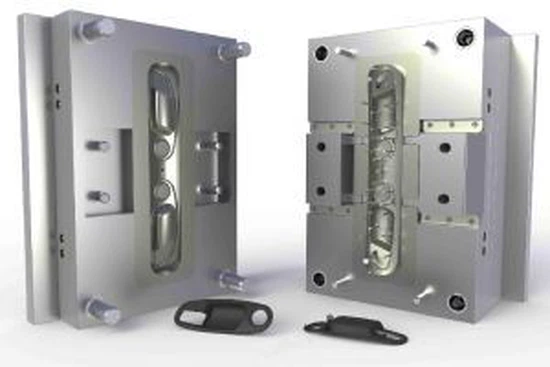
That's changing. Rapid tooling technologies now produce aluminum molds for $2,000-$8,000 that deliver 10,000-50,000 shots before replacement. Combined with contract manufacturing networks offering machine time without long-term commitments, small brands can access injection molding economics that previously required massive capital investment.
This democratization shifts competitive dynamics. Startups can test market response with injection-molded products instead of compromising with 3D-printed prototypes that don't represent final quality. Established companies can launch limited editions and seasonal variations without tooling costs killing profitability.
Regional Variations Matter More Than You Think
Injection molding of plastics isn't a uniform global market. Regional differences in energy costs, labor availability, regulatory requirements, and customer expectations create distinct operating environments.
North American facilities compete on speed and flexibility. Rush orders, engineering support, and design-for-manufacturability consulting justify premium pricing. Asian facilities compete on volume and cost. European operations increasingly differentiate on sustainability credentials and circular economy integration.
Understanding your position in this landscape determines strategy. Trying to compete on cost against overseas mass production is usually futile. Competing on speed, customization, and technical expertise? That's defensible positioning.
The Quality Control Revolution
Injection molding quality control evolved beyond dimensional inspection and visual checks. Modern approaches integrate monitoring throughout the production cycle.
In-mold sensors track cavity pressure, temperature, and fill pattern in real-time. Deviations trigger immediate alerts or automatic adjustments before defective parts are produced. This prevents scrap rather than detecting it after the fact.
Vision systems inspect 100% of parts at production speeds, catching defects human inspectors miss during visual fatigue. Machine learning algorithms identify subtle patterns indicating process drift before statistical process control charts register problems.
The result? Defect rates dropped from typical 2-3% down to 0.1-0.3% for facilities implementing comprehensive in-process monitoring. At high volumes, that difference is substantial profit saved from the scrap bin.
Sustainability Isn't Optional Anymore
Let's address the reality: sustainability requirements are restructuring the injection molding industry whether individual companies want to adapt or not.
Growing focus on sustainability drives innovation in recyclable and bio-based injection molded plastics (globenewswire.com). This isn't aspirational-it's reflected in purchasing decisions. Major retailers now require suppliers to document plastic content sourcing and recycling infrastructure.
What does this mean operationally? You need systems to track material lot numbers, document recycled content percentages, and provide carbon footprint calculations per part. Third-party certifications like UL 2809 (Environmental Claim Validation) become competitive differentiators.
The upside? Sustainability leadership opens doors to premium markets. Brands pay 10-20% premiums for components with verified environmental credentials. This margin improvement often exceeds the cost of implementing tracking and certification systems.
Looking at the Next 24 Months
Predicting technology adoption is tricky, but current trajectories point to several near-term developments worth preparing for.
AI-assisted process optimization moves from research projects to production reality. Systems that automatically adjust dozens of parameters based on environmental conditions and material lot variations will become standard on mid-range equipment, not just high-end machines.
Hybrid manufacturing combining injection molding with additive processes gains traction. You'll see parts with injected structural components and 3D-printed functional elements produced in integrated work cells. This enables design complexity impossible with either process alone.
Distributed manufacturing networks mature. Cloud-based platforms matching design files with available production capacity create an "Uber for injection molding" model. This threatens traditional job shops while opening opportunities for facilities willing to join these networks and meet their quality and scheduling requirements.
FAQ
What's the realistic payback period for new injection molding equipment?
Most facilities see payback in 3-5 years for properly sized equipment. Payback under 2 years usually indicates you're replacing severely outdated equipment or capturing new high-margin work. Beyond 6 years suggests you're overbuying capacity relative to actual demand.
How much does injection molding of plastics cost per part?
Material costs typically run $0.10-$2.00 per part depending on size and resin type. Labor and overhead add $0.15-$1.50 per part. Tooling amortization varies dramatically-$0.01 per part for high-volume runs, $5+ per part for short runs. Total costs range from $0.50 for simple high-volume parts to $20+ for complex low-volume components.
Can you run recycled plastic through standard injection molding equipment?
Yes, with caveats. Most recycled resins process within 5-10% of virgin material parameters. Key differences: recycled materials often require tighter temperature control, may need longer dry times, and can show more batch-to-batch variation. Run trial batches and establish separate process parameters rather than treating recycled materials as drop-in replacements.
How long does injection molding tooling last?
Aluminum tools deliver 10,000-100,000 shots depending on part geometry and material abrasiveness. Steel tools handle 500,000-1,000,000+ shots. Tool life depends on maintenance discipline-regular cleaning, proper storage, and preventive wear part replacement easily doubles effective tool life. Many premature tool failures trace to inadequate maintenance, not inherent limitations.
What's the minimum order quantity for injection molding?
Economic minimums dropped dramatically. Specialized shops now accept runs as low as 250-500 parts using rapid tooling approaches. Traditional production shops typically quote minimums of 5,000-10,000 parts. Your break-even point depends on tooling costs and part complexity-simple parts justify smaller runs than complex multi-cavity molds.
Should I buy or outsource injection molding?
Run the numbers specifically for your situation. Buying makes sense when you have consistent volume exceeding 500,000 parts annually, or when production control and IP protection outweigh cost considerations. Outsourcing works better for variable demand, multiple product lines requiring different equipment, or when you lack injection molding expertise in-house.
How does injection molding compare to 3D printing for production?
Injection molding wins on unit costs above 1,000-5,000 parts, depending on size and complexity. 3D printing offers faster startup, zero tooling costs, and easier design iterations. The crossover point shifted as both technologies improved. Current best practice: 3D print for prototypes and very short runs, transition to injection molding when volume justifies tooling investment.
What certifications do I need for medical or food-contact injection molding?
ISO 13485 for medical devices, FDA registration for food contact, and material certifications (USP Class VI for medical, FDA-approved resins for food contact). Beyond certifications, you need validated clean room procedures, documented material traceability, and regular third-party audits. Budget 15-25% additional operational costs versus commercial injection molding for these compliance requirements.
Making the Decision
The injection molding of plastics sits at an interesting crossroads. Technology is advancing faster than at any point in the past 30 years. Market demand is strong-the global market is climbing from $382.53 billion in 2025 toward $580.44 billion by 2033 (businessresearchinsights.com). But this growth isn't automatic profit for every participant.
You need to evaluate three questions honestly:
Can you compete effectively in your chosen market segment? Geographic location, equipment capabilities, and technical expertise all factor into this answer.
Do you have the capital and patience for a 3-5 year investment horizon? Quick returns are rare in manufacturing capital equipment.
Are you positioned to adapt as technology evolves? What works today might need significant updates in 5 years.
The companies succeeding with injection molding treat it as a continuously evolving capability, not a fixed asset. They invest in training, monitor industry developments, and maintain flexibility to pivot as market conditions change.
Whether you're considering your first injection molding machine or optimizing existing operations, the fundamentals haven't changed: understand your costs, deliver consistent quality, and provide value that customers can't easily replicate elsewhere. The technology might be complex, but the business principles remain straightforward.