





A medical device company asked us to review a competitor's quote not long ago-$127 per part for a titanium surgical guide. Our engineering team looked at the drawings and came back with $89. The gap surprised even us at first. Turns out the other shop was running full 5-axis simultaneous for a part that really only needed 3+2 positioning to hit the ±0.002" tolerance. They probably had newer equipment and defaulted to the fancier process. Happens more than you'd think.
That said, we've lost bids the other way too. Sometimes our process choice costs more and the customer picks the cheaper option. Fair enough-not every application needs our approach.
The point is: CNC machining quotes vary wildly for reasons that aren't obvious from the paperwork. This guide covers what actually drives those costs.

Pricing Models
Hourly Rates
Machine time is how most precision work gets priced. The rates depend heavily on what's running.
For 3-axis vertical machining centers, we're seeing $65-138/hour in the US Midwest and Southeast as of late 2024. Coastal shops run higher. The range mostly reflects tolerance capability-standard commercial work (±0.005") sits at the low end, while holding ±0.001" or tighter pushes you toward $120+/hour because everything slows down.

5-axis is all over the map. I've seen quotes from $95/hour (older equipment, less sophisticated programming) to $285/hour (aerospace-grade simultaneous contouring). The label "5-axis" doesn't mean much by itself-you need to know if it's 3+2 positional or true simultaneous, and whether the shop actually knows how to program it efficiently. Some shops bought expensive machines but their programmers aren't fully up to speed, so cycle times are worse than a good 3-axis setup would be.
Swiss-type lathes for small precision turned parts typically run $125-190/hour. If you're making bone screws, catheter fittings, dental implant components-that's the equipment.
One thing I should mention: comparing hourly rates between shops is almost useless without cycle time data. A shop charging $140/hour that finishes your part in 1.2 hours costs you $168. A shop charging $90/hour that takes 2.1 hours costs $189. The "expensive" shop is cheaper. We see procurement teams get this wrong constantly.
Per-Part Pricing
When you get a quote like "$45 per part," there's a lot buried in that number.
Batch size is the big one. Setup costs-programming, fixturing, first-piece inspection-are basically fixed whether you're making 5 parts or 500. For a moderately complex aluminum component, those fixed costs might be $350-500. Spread across 500 parts, that's less than a dollar each. For a 5-piece prototype run, it's $70-100 per part just in setup before any machining happens.
I've had customers get angry about prototype pricing ("why is it 4x more per part?!") and honestly, it's just math. We're not gouging anyone-the setup takes the same time regardless of quantity.
Tolerances are the other major variable. Going from ±0.005" to ±0.001" doesn't just add a little cost. It can double the machining time because feed rates drop, you're taking lighter cuts, changing tools more often, and inspecting more carefully. Below ±0.0005" you're into grinding or lapping territory, and costs go up steeply from there.
Here's something we run into a lot: drawings with 15 dimensions marked as critical when maybe 4 of them actually matter for function. Engineers specify tight tolerances "to be safe" without realizing the cost impact. If you can identify which dimensions truly need to be tight and relax the others, you might cut 20-30% off the machining cost. It's worth having that conversation with your supplier-good ones will ask about it anyway.
What Drives Cost
Geometry
Simple parts are fast. A rectangular bracket with perpendicular walls and standard hole sizes might take 12 minutes on a 3-axis mill. Nothing fancy.
Add complexity and things change quickly. I remember a part last year-looked almost identical to a simple bracket, but the designer put in one angled pocket at 15°. That one feature forced us to either add a setup (flip the part, re-indicate, run the angle) or move to 4-axis. Either way, we went from maybe 15 minutes to over 40. The customer asked why such a small change mattered so much. Well, it's not about the feature itself-it's about what it does to the process.
Thin walls are another trap. Below about 0.060" wall thickness in aluminum, you start worrying about deflection and chatter. Speeds come down, you might need special workholding, and scrap risk goes up. None of that shows on the drawing, but it shows on the quote.
Material
Everyone knows titanium costs more than aluminum. The less obvious part is how much longer it takes to cut.
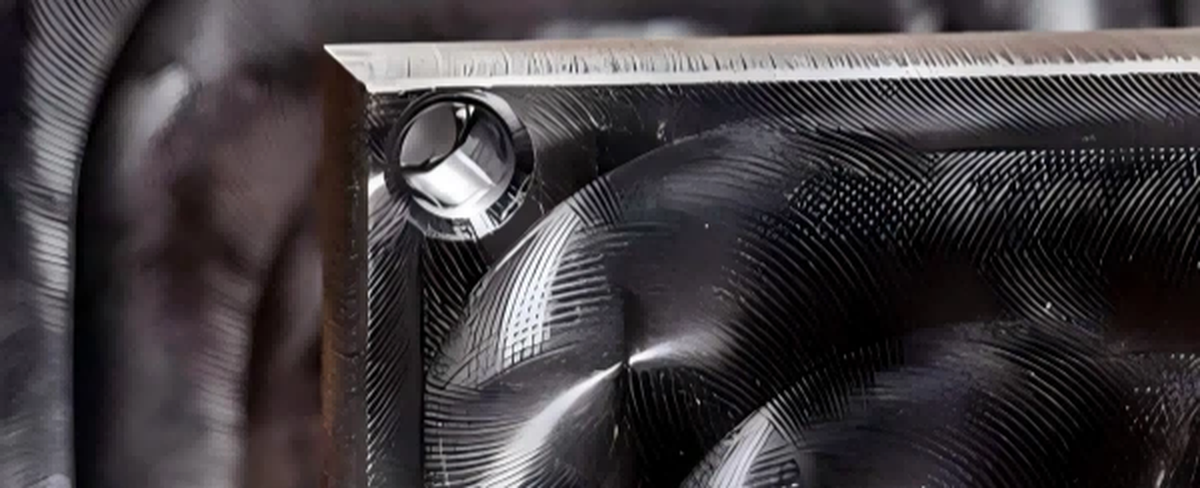
Aluminum 6061-T6 is the baseline everyone uses for comparison. Machines beautifully, tools last forever, you can push parameters hard. 7075 is a bit tougher-figure 15-20% more time, nothing dramatic.
Stainless steel is where it starts to hurt. 304 roughly doubles your cycle time versus aluminum. 17-4 PH is worse-maybe 2.5x, and your tooling costs go up because cutters wear faster. We charge more for stainless not because we're greedy but because we're burning through more carbide.
Titanium is a pain. Slow cutting speeds, specialized tooling, careful coolant management. Plan on 3x the machining time of aluminum at minimum, sometimes more. There's a reason medical device companies are always asking "can we use aluminum instead?"
Inconel and other high-temp alloys-we quote these case by case. They're in a different category. The material is expensive, machining is slow, tool wear is brutal, and there's real risk of scrapping parts. We add margin for that risk.
One story worth sharing: a customer came to us specifying 17-4 stainless for a bracket. Needed corrosion resistance and high strength. We asked some questions and suggested 7075-T6 aluminum with Type III hard anodize instead. Strength was comparable, corrosion resistance actually better, and machining cost dropped by about 60%. The customer was skeptical at first-"aluminum isn't as strong as steel"-but the specific alloy and heat treat got them where they needed to be. Material selection is often the biggest cost lever you have, and it's worth challenging assumptions early.
Surface Finish
As-machined finishes (63-125 Ra) are included in standard pricing. Most functional parts don't need anything better.
If you need 32 Ra, that's a light finishing pass-adds maybe 15-20% to machining time, nothing crazy.
16 Ra usually means grinding or precision boring for critical surfaces. Now you're adding 40-50% or more, plus potentially a secondary operation on different equipment.
Mirror finishes (8 Ra and below) are a different world. Hand lapping, specialized processes, significant cost adders. Make sure you actually need it.
(Side note: I've seen drawings that call out 16 Ra on surfaces that get covered by a gasket. Why? Nobody knows. Ask your engineers what finish is functionally required versus what got copy-pasted from another drawing.)
Lead Time
Normal lead time these days is 3-4 weeks for most shops. Capacity is tight industry-wide, and that's not changing soon.
If you need something faster:
- One week turnaround adds 15-25%. We're rearranging schedules and possibly running overtime.
- Three to five days adds 35-50%. Someone's working late, and other customers are getting pushed back.
- 24-48 hours is emergency territory. Expect 75-100%+ premium, if the shop will even take it.
These aren't arbitrary markups. When you need a rush job, someone else's job gets delayed, and we're paying overtime. The premium reflects real costs.
I'll add: customers who constantly treat everything as urgent eventually find their suppliers less responsive. The shop knows you'll call it "rush" regardless, so the word loses meaning. Build some planning buffer into your programs if you can.
Make vs. Buy
People ask us about this regularly: should they bring machining in-house?
Short answer for most companies: probably not, unless you have very stable, high-volume demand for relatively simple parts.
The math looks straightforward at first. A decent 3-axis VMC costs maybe $180-200K. Add installation, tooling, software, training-call it $280K total to get started. Operating costs (one dedicated operator, tools, maintenance, software upkeep) run $150-170K/year whether you're busy or not.

If your current outsourced cost averages $70/part and your in-house variable cost would be $35/part, you're saving $35 per part. Divide $170K by $35 and you need to produce about 4,800 parts per year just to break even on operating costs-before you've even started paying back the equipment investment.
But here's what the simple math misses. What happens when demand drops to 2,500 parts one year? You're still paying that $170K. What happens when the product gets redesigned and your optimized fixtures become scrap? What happens when your machinist quits and you can't find a replacement for three months?
We've watched several customers try to bring work in-house and then quietly outsource it again two or three years later. The ones who make it work typically have 8,000+ parts per year of very stable demand, simple geometry, and realistic expectations about the management overhead involved.
What outsourcing actually buys you, beyond machine time:
- You can scale up or down without carrying fixed costs
- You get access to whatever equipment fits the job-5-axis, Swiss, EDM, whatever-without owning all of it
- The supplier handles the hiring, training, maintenance headaches
- When a product fails in the market, you're not stuck with dedicated equipment
The smart approach for most companies is hybrid: bring in-house the true high-volume stable work if you have it, outsource everything else.
Domestic vs. Offshore
I'll just say it directly: offshore machining makes sense for some things and not others.
Where it works: high volume (thousands of pieces), frozen designs that won't change, tolerances of ±0.003" or looser, and applications where 8-12 weeks of ocean freight is acceptable. In those situations, you might save 25-40% versus domestic.
Where it doesn't work: anything that needs to iterate, tight tolerances, small batches, or fast response.
We've picked up multiple medical device customers who tried offshore machining and came back. The pattern is similar: quoted prices looked great, first articles took forever to approve, production parts had elevated reject rates, and engineering changes required months instead of days. One customer calculated their "savings" and realized they'd spent more in engineering time managing the relationship than they saved on piece price.
My bias, and I'll own it: for precision work with tolerances under ±0.002", I think domestic or nearshore sourcing generally makes more sense even at higher prices. The communication overhead and quality variability usually eat up the savings. For commodity work with loose tolerances and stable designs, offshore can be genuinely cheaper.
Shop Size
Small shops (under 10 people) can be great-flexible, fast decisions, often very skilled in their niche. The owner picks up the phone. Risk is they have limited capacity and limited redundancy. If their best machinist is out, you might feel it.
Large shops (50+ people) have capacity, diverse equipment, formal quality systems. Trade-off is they're less nimble and small jobs may not get much attention.
What actually matters more than size is the relationship. A supplier who knows your business, understands your applications, and communicates proactively is worth more than whoever quoted $2 less per part. The best procurement people I've worked with have 2-3 core suppliers they work with consistently rather than re-bidding everything every time.
What to Look for in a Supplier
Technical Engagement
A good shop asks questions. What's this part for? What mates with it? What tolerances actually matter for function versus what's specified "just in case"?
If a supplier just takes your drawing and quotes it without any questions or suggestions, that's a signal. Either they don't care, or they don't have the engineering depth to catch problems before they become expensive.
We do free DFM review on quoted work. It's not charity-parts that are easier to make cost us less to produce and have better margins. But it also catches issues before production. A recent example: a customer's housing design had a feature that would have required a secondary operation on different equipment. Moving one hole location by 3mm let us complete it in a single setup. Saved them 25% on part cost with zero functional impact.
Quality Systems
Certificates and inspection reports are baseline. What separates shops is whether quality systems actually prevent problems or just document them after the fact.
Questions worth asking: What's your typical Cpk on ±0.001" features? Do you track that? How often do you review scrap data and implement corrective actions? Can you trace a part back to material lot, machine, and operator?
Shops that can't answer these questions might be fine for non-critical work. For anything going into a medical device, aerospace assembly, or safety-critical application, you want more.
Communication Patterns
Bad suppliers surprise you. Material delays, quality escapes, missed dates-you find out when it's already a problem.
Good suppliers tell you things are going wrong before they're critical. They suggest alternatives when issues arise. They're reachable when you need to talk.
This is hard to evaluate before you've worked with someone, but references help. Ask other customers about communication, not just quality and price.
Working with ABIS

We're a manufacturing company in Shenzhen-precision machining, mold making, injection molding under one roof. Been at it since 1996.
CNC machining capabilities:
- 3 through 5-axis milling, up to 41" × 30" × 24" work envelope
- CNC turning and Swiss-type lathes for precision small parts
- Standard tolerances ±0.002", precision work to ±0.0005" with documented capability
- Aluminum, stainless, titanium, engineering plastics
What we're good at:
- Precision components for molded products-we make the mold and the molded parts too, so there's no handoff between suppliers
- Medical device work with full documentation (AS9100, ISO 13485, IATF 16949 as required)
- Functional prototypes where fast iteration matters
- Projects that benefit from having machining and molding integrated
What's not our strength:
- Ultra-high-volume simple parts-if you need 50,000 identical brackets a month, there are shops better optimized for that
- Artistic or decorative work-we're industrial manufacturing, not craft
For quotes, send drawings or 3D models. We'll turn around preliminary pricing within a couple days and include DFM comments if we see opportunities. For complex projects, we can set up a call to understand requirements before putting together a proposal.
ABIS Mold Technology Co., Ltd. | Shenzhen, China | Est. 1996
ISO 9001 | ISO 14001 | IATF 16949
www.abismould.com