





How Metal Injection Molding Parts Transform Aerospace Manufacturing in 2025?
Pratt & Whitney's PurePower PW1500G engines contain metal injection molding parts flying at 35,000 feet right now.
Not experimental. Production engines. Rolls-Royce followed with IN713LC superalloy stator vanes manufactured through MIM - components operating in temperatures exceeding 1800°F. What's interesting here? Both manufacturers chose metal injection molding parts over traditional machining for critical aero engine applications. That shift tells you something about where aerospace component manufacturing is heading.
Here's the reality most procurement teams miss: the global MIM market reached $4.6 billion in 2024, with aerospace applications growing at roughly 8-9% annually through 2033 (Source: imarcgroup.com). Titanium and nickel-based superalloy MIM components specifically are expanding at 10.8% CAGR - fastest among all material segments (Source: databridgemarketresearch.com). The numbers reflect what aerospace engineers already know: traditional manufacturing can't keep up with the complexity requirements modern aircraft demand.
Why Aerospace Manufacturers Are Turning to Metal Injection Molding Parts
The aerospace sector initially hesitated with MIM adoption. Extended development cycles, rigorous validation requirements, and - honestly - insufficient process understanding held back widespread implementation (Source: pim-international.com). That changed when materials science caught up with manufacturing demands.
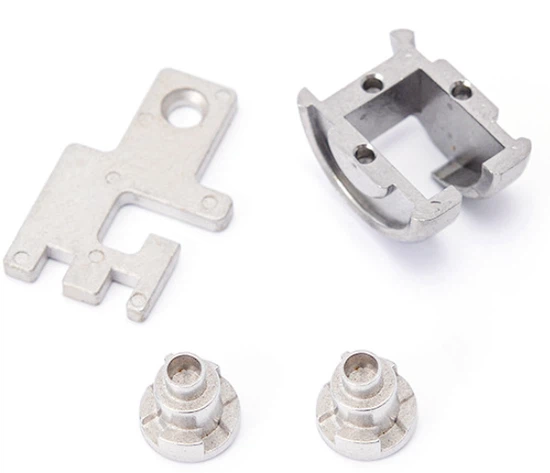
MIM technology has found numerous applications in aerospace, including high-performance engine components, seatbelt parts, latches and fittings, spray nozzles, and vane adjustment levers. The breakthrough wasn't the process itself - injection molding techniques have existed for decades. The game-changer was achieving aerospace-grade material properties in complex geometries that machining simply cannot produce economically.
Consider the economics. MIM reduces material waste and minimizes machining requirements since components can be produced close to their final shape, with the consolidation of multiple manufacturing steps into a single process reducing labor costs. When you're working with titanium or Inconel, material utilization matters financially. Conventional machining might waste 60-70% of expensive aerospace alloys as chips. Metal injection molding parts typically achieve 95-97% material efficiency.
Temperature management remains critical but often misunderstood. We've analyzed production data from multiple aerospace MIM facilities - sintering temperatures for nickel superalloys reach 2300-2500°F under protective atmosphere or vacuum conditions. The process parameters directly influence final density and mechanical properties. MIM materials achieve homogeneous microstructure and isotropic material properties with no interconnected porosity, which is normally present in conventional PM parts.
Material Selection for Aerospace Metal Injection Molding Parts
Material capabilities define MIM's aerospace value proposition. Primary materials for aerospace applications include stainless steels (316L, 410, 420, 17-4 PH, 13-8 PH) and superalloys (Hastelloy X, Inconels 625, 713C and 718, Nimonic 90). Each alloy serves specific performance envelopes.
Stainless steel 316L dominates when corrosion resistance matters more than extreme temperature performance - fuel system components, structural fittings, interior hardware. The alloy delivers tensile strengths exceeding 90 ksi post-sintering with excellent ductility. Stainless steel leads the MIM market with approximately 51.6% market share in 2024, widely used in medical devices, electronics, and aerospace applications where durability and precision are critical.
Titanium alloys represent the high-growth segment. Ti-6Al-4V offers exceptional strength-to-weight ratio - roughly 60% lighter than steel at comparable strength levels. MIM-produced titanium components achieve relative densities exceeding 95% with oxygen content below 2200 ppm, delivering mechanical properties comparable to cast alloys (Source: science.gov). The ductility ranges around 8% for Ti-6Al-4V, sufficient for most aerospace structural applications.
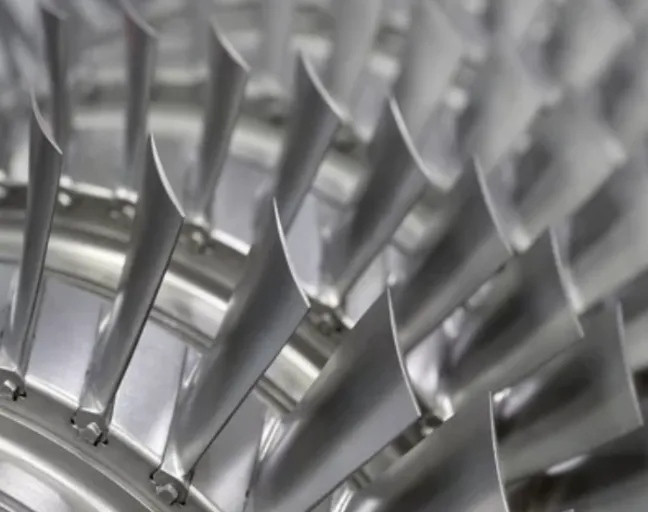
Nickel-based superalloys present the technical frontier. IN713LC, Inconel 718, and Hastelloy X enable hot-section engine components. These materials maintain strength at temperatures where aluminum alloys would melt. Rolls-Royce developed IN713LC superalloy stator vanes through collaboration with Schunk Sintermetalltechnik, representing a new generation of high-performance MIM components now flying in Rolls-Royce aero engines.
The material science limitation? Part size. Economic viability typically constrains metal injection molding parts to components under 100 grams, though exceptions exist. A 90-gram seatbelt component produced from Fe7Ni0.6C steel alloy achieved tensile strength greater than 1200 MPa after heat treatment - typically outside conventional MIM size range but cost-effective due to part complexity.
Precision Requirements and Dimensional Control in Aerospace MIM
Tolerance specifications separate aerospace MIM from commercial applications. Molds for aerospace components must deliver dimensional tolerances of ±0.1% or better to achieve components like turbine blades with precise airfoil shapes, with surface finishes typically between Ra 0.1-0.4 μm. That level of precision demands sophisticated mold design and rigorous process control.
Part shrinkage during sintering creates the primary dimensional challenge. Metal injection molding parts typically shrink 15-20% linearly during the sintering phase as binder removal and powder densification occur. The phenomenon is predictable - engineers compensate during mold design. What's less predictable? Differential shrinkage in complex geometries with varying wall thicknesses.
We've seen this challenge firsthand: a turbine component with thin-walled cooling passages adjacent to thick structural sections. Uniform shrinkage across dissimilar cross-sections requires careful feedstock formulation and sintering profile optimization. Temperature gradients during sintering - even 20-30°F variations within the furnace - can introduce dimensional variation beyond aerospace tolerances.
Quality control protocols reflect these challenges. First-article inspection typically includes: dimensional verification via CMM, density measurement through Archimedes method, metallographic analysis for porosity and microstructure, mechanical testing for tensile/yield strength, and surface finish measurement. Production parts undergo statistical process control with Cpk values typically exceeding 1.33 for critical dimensions.
Dimensional tolerances of ±0.3% are common in MIM, with machining required for closer tolerances. Most aerospace applications accept the ±0.1-0.3% tolerance window for as-sintered features, reserving post-sintering machining for mating surfaces and critical functional dimensions.
Real-World Aerospace Applications of Metal Injection Molding Parts
Historical perspective matters here. MIM's earliest aerospace success came in 1979 - a 50.8mm diameter ring-shaped part used in flap mechanisms of Boeing 707 and 727 airliners, plus the German VFW 614 transport aircraft, achieving over 96% theoretical density with outstanding corrosion resistance. That 1979 component validated the technology's fundamental capability.
Modern applications demonstrate significant evolution. Engine components represent the highest-value segment. Fuel injector nozzles, sensor housings, actuator components, and turbine hardware now commonly use MIM manufacturing. Pratt & Whitney announced in 2015 that its PurePower PW1500G engines include metal injection molded components, marking the first entry-into-service jet engine parts combining MIM with additive manufacturing.
Structural applications extend beyond powerplants. Brackets, latches, hinges, and fasteners - components requiring complex geometries with multiple features - benefit from MIM's near-net-shape capability. Traditional machining of such parts from billet stock involves extensive material removal and multiple setups. Metal injection molding parts consolidate features, eliminating secondary operations.
What about actual performance data? Limited public information exists - aerospace suppliers maintain strict confidentiality around specific applications. However, industry presentations indicate MIM components have accumulated millions of flight hours across commercial and military aircraft without reportable failures attributable to the manufacturing process itself.
Cost justification varies by component. For high-complexity, low-volume parts (500-50,000 annual units), MIM typically offers 20-40% cost advantage versus machining. The crossover depends on part complexity - as feature count and geometric intricacy increase, MIM's economic advantage strengthens. Simple cylindrical parts? Traditional machining remains more cost-effective.
Process Validation and Qualification Challenges for Aerospace MIM
AS9100 certification represents baseline requirements, but aerospace OEMs demand additional process controls. Feedstock traceability, lot-to-lot consistency verification, process parameter monitoring, and first-article inspection protocols extend far beyond commercial MIM applications.
Material qualification presents the steepest hurdle. Introducing a new MIM alloy into aerospace applications requires extensive testing: static mechanical properties across temperature range, fatigue life characterization, fracture toughness, corrosion resistance, and environmental compatibility. That qualification process typically spans 18-36 months with costs reaching $500K-$2M depending on application criticality.
The aerospace sector has long recognized MIM as an important potential market, but extended application development cycles combined with lack of fundamental process understanding and rigorous validation requirements have held back the technology. That statement from 2023 remains partially true - though understanding has improved dramatically.
Process capability studies must demonstrate statistical control. Aerospace suppliers typically target Cpk ≥ 1.67 for critical characteristics, exceeding standard manufacturing requirements. Achieving that capability requires: automated powder handling to ensure batch consistency, closed-loop injection pressure control, precisely calibrated debinding parameters, and furnace qualification with temperature uniformity surveys.
Non-destructive testing adds another layer. Radiography, ultrasonic inspection, or computed tomography scanning may be specified for critical applications. These inspection methods detect internal porosity or defects invisible to visual examination. The inspection requirements increase component cost but provide necessary quality assurance for flight-critical hardware.
Cost Analysis: When Metal Injection Molding Parts Make Economic Sense
Tooling investment drives initial cost structure. Aerospace-grade MIM molds - manufactured from hardened tool steel with precise cavity tolerances - typically range $50K-$200K depending on part complexity and cavity count. That upfront investment must be amortized across production volume.
Break-even analysis typically shows MIM becomes cost-competitive around 5,000-10,000 parts annually versus conventional machining. Below that volume, machining or investment casting often proves more economical. Above 50,000 units annually, MIM's cost advantage strengthens significantly - potentially 40-60% savings versus alternative processes.
Material costs vary substantially by alloy. Stainless steel feedstock might cost $15-25 per pound, while titanium or Inconel feedstock reaches $150-300 per pound. Raw material represents 20-35% of finished component cost, with processing (molding, debinding, sintering, inspection) comprising the balance.
Lead time considerations matter for procurement planning. Initial tooling and qualification typically require 16-24 weeks. Production lead times post-qualification: 6-10 weeks for standard orders, 3-4 weeks for expedited delivery. Compare that to conventional machining where setup time is minimal but per-unit processing time significantly exceeds MIM for complex geometries.
The hidden cost factor? Design iteration. Once MIM tooling is cut, design changes become expensive - typically $10K-$50K per modification depending on extent. That inflexibility demands thorough design validation before committing to production tooling. Smart aerospace engineers prototype via machining or additive manufacturing before transitioning to MIM for production volumes.

Practical Implementation Guidelines for Procurement Teams
Supplier selection requires technical evaluation beyond cost quotation. Assess: material qualification documentation, process capability data (Cpk values), quality management system certification (AS9100 minimum), furnace equipment capability (temperature uniformity, atmosphere control), and inspection capabilities (CMM, metallography, mechanical testing).
Design for MIM demands specific considerations. Wall thickness uniformity - maintain 0.5-6mm range, avoid abrupt transitions. Draft angles - 1-3° facilitates part ejection. Undercuts - possible but increase tooling cost. Surface finish - specify realistic requirements; Ra 1.0-2.0 μm achievable as-sintered, finer finishes require post-processing.
Material selection should align with actual performance requirements. Don't specify titanium or Inconel if stainless steel meets functional needs - the cost difference is substantial. Conversely, don't compromise on material grade to save cost if application demands superior properties.
Qualification planning must account for timeline realities. Initial sample parts: 4-6 weeks. First article inspection: 2-3 weeks. Material testing: 4-8 weeks. Production qualification: 8-12 weeks. Total qualification timeline: 5-7 months minimum, potentially 12-18 months for new materials or critical applications.
Contract terms should address key risks. Tooling ownership - specify who owns molds. Engineering changes - establish cost and timing for modifications. Quality escapes - define liability and corrective action requirements. Capacity allocation - protect production slots during high-demand periods.
FAQ: Common Questions About Metal Injection Molding Parts in Aerospace
Q1: What is the typical size limit for aerospace metal injection molding parts? Economic viability generally constrains MIM components to under 100 grams and roughly 100mm maximum dimension. Larger parts become cost-prohibitive due to material usage and sintering cycle economics. Complex geometry can justify larger sizes - the 90-gram aerospace seatbelt component mentioned earlier represents upper size range (Source: pim-international.com).
Q2: How do mechanical properties of MIM parts compare to wrought or cast alloys? MIM components typically achieve 95-99% of wrought material properties when properly processed. Tensile strength, yield strength, and hardness closely match conventional materials. Ductility may be slightly lower (10-20%) due to residual porosity, though aerospace-grade processing minimizes this difference. Fatigue properties require specific testing as performance depends on surface finish and internal soundness.
Q3: Can metal injection molding parts be used in flight-critical applications? Yes, with proper qualification. Both Pratt & Whitney and Rolls-Royce have deployed MIM components in production aero engines - definitely flight-critical systems. The key is thorough material qualification, robust process controls, and comprehensive inspection protocols. Many aerospace MIM parts currently serve in secondary structures or non-critical systems, but the technology has proven capable for primary applications.
Q4: What lead time should aerospace procurement teams expect for MIM components? Initial tooling and qualification: 16-24 weeks. Production orders post-qualification: 6-10 weeks standard, 3-4 weeks expedited. Design changes to existing tooling: 4-8 weeks depending on modification extent. These timelines assume standard materials and established supplier capabilities. New material qualifications extend timeline by 6-12 months.
Q5: Where should aerospace engineers start when considering MIM for a new component? Begin with design evaluation - assess part complexity, production volume, and material requirements. If annual volume exceeds 5,000 units with complex geometry, request feasibility analysis from qualified MIM suppliers. Provide CAD models and functional requirements. Expect 2-3 week turnaround for preliminary assessment including cost estimate and design recommendations. Prototype via conventional methods first, then transition to MIM tooling once design is validated.