





CNC Turning process
Master the art and science of precision machining with our comprehensive resource on CNC turning technology.
Introduction to CNC Turning
Discover the fundamental concepts behind CNC turning, one of the most essential processes in modern manufacturing.

What is CNC Turning?
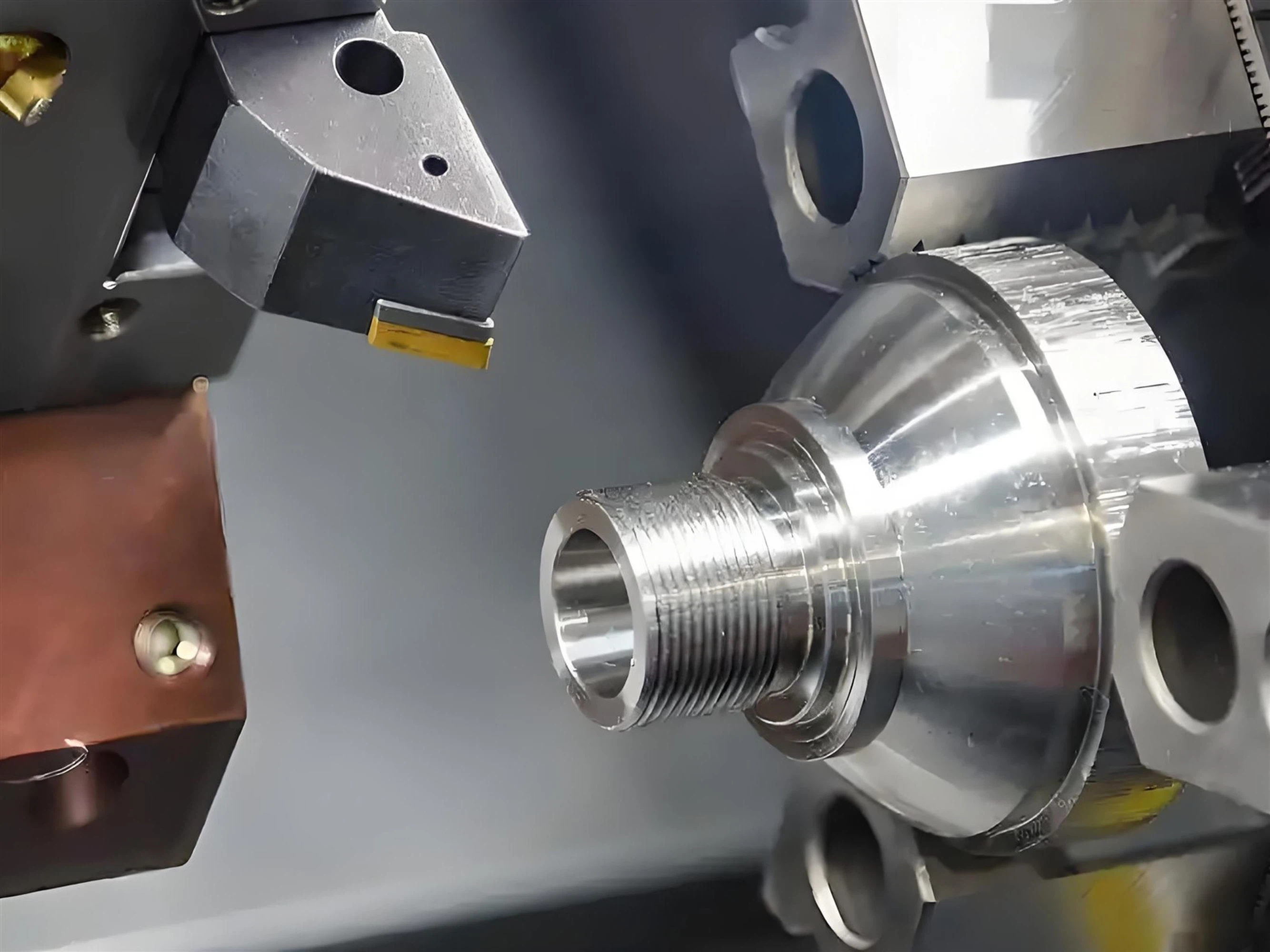
CNC turning is a manufacturing process that involves rotating a workpiece while a cutting tool shapes it into the desired form. The term "CNC" stands for Computer Numerical Control, which means the process is automated and controlled by computer programs.
In turning, the workpiece is held in a chuck or collet and rotated at high speeds. A cutting tool, mounted on a turret, moves along multiple axes to remove material from the rotating workpiece, creating cylindrical or conical shapes with high precision.
This process is ideal for producing parts with rotational symmetry, making turning indispensable in industries ranging from aerospace to medical device manufacturing. The precision and repeatability of turning make it a cornerstone of modern production.
Key Benefits of CNC Turning
Exceptional precision and accuracy (up to ±0.0001 inches)
High repeatability for consistent production
Ability to produce complex geometries efficiently
Reduced setup times compared to manual turning
Automation capabilities for lights-out manufacturing
History and Evolution of CNC Turning
Early Beginnings
The concept of turning dates back to ancient times with manually operated lathes. The Industrial Revolution brought mechanized lathes, significantly improving productivity.
Numerical Control Era
In the 1940s and 1950s, the first numerical control (NC) machines emerged, using punched tape for programming, laying the foundation for modern CNC turning.
Computerization
By the 1970s, computers replaced hardwired controls, giving birth to CNC turning as we know it today, with continuous advancements in precision and capabilities.
Principles of CNC Turning
Understanding the core principles that make CNC turning such a precise and efficient manufacturing process.
CNC turning operates on several key principles that distinguish it from other machining processes. At its core, CNC turning is a subtractive manufacturing method where material is removed from a rotating workpiece using cutting tools.
The primary principle of turning is the rotation of the workpiece, which allows for symmetrical machining around a central axis. This rotational movement, combined with precise linear movements of the cutting tool, enables the creation of complex cylindrical shapes with high accuracy.
Another fundamental principle of turning is the use of computer-aided design (CAD) and computer-aided manufacturing (CAM) software. These tools convert design specifications into machine-readable code (typically G-code), which directs the turning machine's movements with exceptional precision.
CNC turning also relies on the principle of automated tool changing, which allows for multiple operations to be performed on a single workpiece without manual intervention, reducing setup times and improving consistency.

Axes of Motion in CNC Turning
CNC turning machines operate along multiple axes to achieve complex geometries. Understanding these axes is crucial for mastering CNC turning programming and operation
X-Axis
Controls the radial movement of the cutting tool relative to the workpiece, determining the diameter of the turned part.
Z-Axis
Manages the axial movement parallel to the workpiece's rotation, controlling the length of the turned features.
C-Axis
Rotates the workpiece itself, enabling milling operations and complex contouring on CNC turning centers.
Y-Axis
Found on advanced CNC turning machines, allowing off-center operations and complex 3D geometries.
CNC Turning Process Flow
Design and Engineering
Creating a 3D model of the part using CAD software, specifying dimensions and tolerances for CNC turning.
CAM Programming
Converting the CAD model into machine instructions (G-code) that control the CNC turning machine's movements.
Machine Setup
Preparing the CNC turning machine with appropriate fixtures, workholding devices, and cutting tools.
Material Loading
Securing the raw material (typically bar stock) in the chuck or collet of the CNC turning machine.
Machining Operation
Executing the CNC turning program, with the machine automatically performing the required cuts and tool changes.
Inspection and Quality Control
Measuring the finished part to ensure it meets specifications, making adjustments to the CNC turning process if necessary.
Precision Factors
Several critical factors influence the precision of CNC turning operations:
Machine Calibration
Properly calibrated axes ensure accurate movements during CNC turning.
Spindle Accuracy
Minimizing runout in the rotating spindle is crucial for concentricity in turning.
Tool Selection
Choosing appropriate cutting tools for material and finish requirements in CNC turning.
Workholding
Secure gripping prevents workpiece movement during CNC turning operations.
Cutting Parameters
Optimal speed, feed, and depth of cut settings for turning materials.
Thermal Stability
Controlling temperature fluctuations that can affect CNC turning precision.
CNC Turning Machines
Explore the different types of CNC turning machines and their capabilities in modern manufacturing.

Types of CNC Turning Machines
CNC turning machines come in various configurations to suit different production requirements. The right machine selection depends on factors like part size, production volume, material type, and complexity of the features to be machined.
Horizontal CNC Lathes
The most common type of turning machine, with a horizontal spindle orientation. Ideal for long workpieces and high-production environments. Available in bench-top models for small parts and large industrial models for heavy-duty CNC turning.
Vertical CNC Lathes (VTL)
Feature a vertical spindle with the workpiece held in a rotating chuck below the tooling. Excellent for large, heavy workpieces where horizontal mounting would be impractical. Vertical CNC turning machines provide better chip evacuation for certain materials.
CNC Turning Centers
Advanced machines that combine turning capabilities with milling functions. Equipped with live tooling and C-axis functionality, these versatile centers can perform complex machining operations in a single setup, eliminating the need for multiple machines
Key Components of CNC Turning Machines
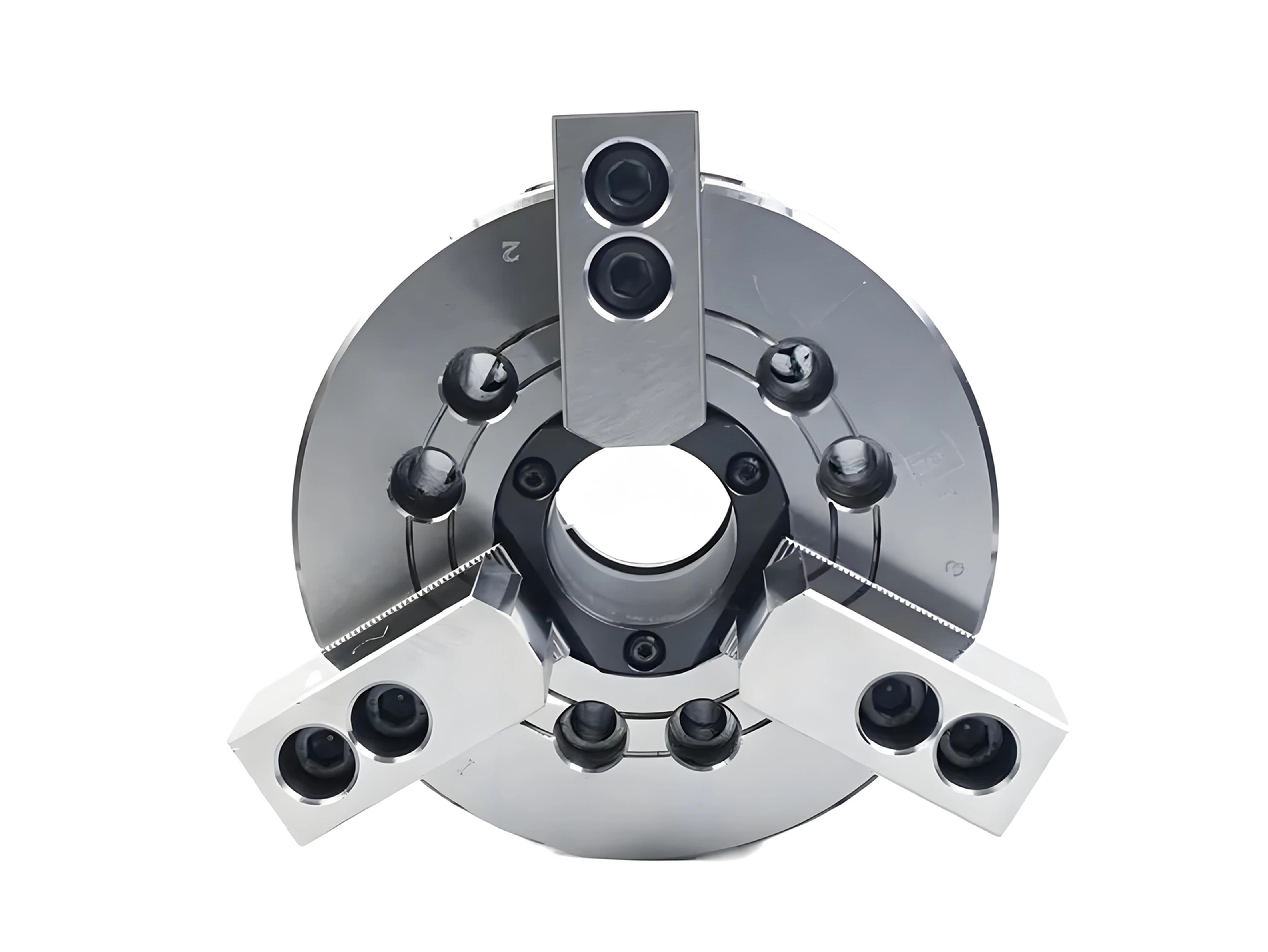
Spindle and Chuck
The spindle rotates the workpiece at precise speeds, while the chuck securely holds it in place during CNC turning operations. High-precision spindles minimize runout for accurate machining.

Tool Turret
Holds multiple cutting tools that can be automatically changed during CNC turning operations. The number of tool stations varies, with some turrets accommodating 12 or more tools for complex jobs.

Control System
The computer interface that runs the CNC turning program, allowing operators to monitor and adjust machining parameters. Modern controls feature user-friendly interfaces and advanced simulation capabilities.

Guideways and Axes
Precision linear guides that enable smooth, accurate movement of the tool turret along the X and Z axes in CNC turning machines. High-quality guideways minimize friction and ensure consistent positioning.

Coolant System
Delivers cutting fluid to the machining zone during turning to reduce heat, lubricate the cutting process, and flush away chips. Proper cooling improves tool life and surface finish quality.

Bar Feeders & Loaders
Automated systems that supply raw material to CNC turning machines, enabling unattended operation. Bar feeders handle long stock, while robotic loaders manage chucking operations for larger workpieces.
Machine Specifications and Capabilities
When selecting a CNC turning machine, several key specifications determine its capabilities and suitability for specific applications:
Maximum Swing Diameter
The largest diameter workpiece that can be rotated in the machine without hitting the bed or other components during turning.
Maximum Turning Length
The maximum length of workpiece that can be machined in a single setup on the CNC turning machine.
Spindle Speed Range
The range of rotational speeds (in RPM) that the spindle can achieve, critical for optimizing CNC turning parameters for different materials.
Number of Tool Stations
Determines how many different cutting tools can be loaded into the turret, affecting the complexity of parts that can be produced in a single turning cycle.
Rapid Traverse Rates
The maximum speed at which the tool can move when not cutting, affecting overall CNC turning cycle times and productivity.
Machine Selection Considerations
Choosing the right CNC turning machine requires careful consideration of several factors:
Part Size and Geometry
The dimensions and complexity of the parts you'll be producing dictate the minimum size and capabilities required in a CNC turning machine. Consider both diameter and length requirements.
Production Volume
High-volume production may justify more expensive CNC turning machines with automation features like bar feeders or robotic loaders, while low-volume work can often be handled with simpler machines.
Material Type
Harder materials like titanium or Inconel require more robust CNC turning machines with higher torque and rigidity, while softer materials can be machined with less powerful equipment.
Budget and Total Cost of Ownership
While initial purchase price is important, consider long-term costs including maintenance, tooling, energy consumption, and required operator skills when evaluating CNC turning machines.
Cutting Tools for CNC Turning
An in-depth look at the cutting tools that make precise CNC turning possible.
Types of CNC Turning Tools
The selection of appropriate cutting tools is critical to achieving optimal results in turning. Different tools are designed for specific operations, materials, and finish requirements.
External Turning Tools
Used for machining the outer surfaces of workpieces in CNC turning operations.
- Straight turning tools for cylindrical surfaces
- Profile tools for complex external shapes
- Threading tools for creating external threads
- Grooving and parting tools for cutting grooves or separating parts
Internal Turning Tools
Designed for machining the inner surfaces of holes and bores during turning.
- Boring bars for enlarging existing holes
- Internal threading tools for creating threads inside holes
- Internal grooving tools for creating grooves inside bores
- Chamfering tools for beveling hole edges
Specialty Tools
Specialized tools for unique CNC turning applications and complex geometries.
- Form tools for creating specific profiles in one pass
- Live tools for performing milling operations on turning centers
- Knurling tools for creating textured surfaces
- Drills and reamers for creating precise holes


Tool Materials and Coatings
Cutting Tool Materials
The material of the cutting tool significantly impacts performance in CNC turning, affecting wear resistance, hardness, and heat resistance:
High-Speed Steel (HSS)
Affordable option for low-speed turning of soft materials. Offers good toughness but limited heat resistance compared to other materials.
Carbide
Most common material for CNC turning inserts. Available in various grades for different materials, offering excellent wear resistance and heat resistance.
Cermets
Combinations of ceramics and metals, providing good surface finish capabilities in turning with higher wear resistance than carbide but lower toughness.
Ceramics
For high-speed CNC turning of hard materials. Excellent heat resistance but lower toughness, requiring rigid machine setups.
Cubic Boron Nitride (CBN)
Ultra-hard material for CNC turning of hardened steels and superalloys. Provides exceptional wear resistance but at a higher cost.
Tool Coatings
Coatings enhance tool performance in CNC turning by reducing friction, increasing wear resistance, and improving heat dissipation:
Titanium Nitride (TiN)
Gold-colored coating that improves wear resistance in general-purpose turning applications.
Titanium Carbonitride (TiCN)
Gray coating with higher hardness than TiN, suitable for high-speed CNC turning.
Titanium Aluminum Nitride (TiAlN)
Blue-gray coating with excellent heat resistance for high-temperature CNC turning operations.
Aluminum Titanium Nitride (AlTiN)
Purple coating with higher aluminum content, ideal for high-speed CNC turning of steels.
Diamond Coatings
Exceptional for turning of non-ferrous materials like aluminum and composites, providing superior wear resistance.
Tool Geometry and Selection
Insert Geometry
The shape and angles of cutting inserts significantly impact CNC turning performance:
Shape: Round, square, triangular, diamond for different CNC turning applications
Clearance angles: Determine effective cutting action and tool strength
Rake angles: Affect chip formation and cutting forces in CNC turning
Nose radius: Influences surface finish and tool strength
Selection Criteria
Key factors to consider when selecting tools for CNC turning:
Workpiece material: Hardness, machinability, and reactivity
Operation type: Roughing vs. finishing in CNC turning
Desired surface finish: Influences nose radius selection
Machine capabilities: Power, speed, and rigidity
Cost considerations: Tool life vs. initial cost balance
Tool Maintenance
Proper maintenance extends tool life in CNC turning:
Proper clamping: Ensure inserts are securely fastened
Correct alignment: Maintain precise tool positioning
Monitoring wear: Replace tools before excessive wear
Cleaning: Regularly remove chips and debris
Storage: Protect tools from damage when not in use
Materials for CNC Turning
Understanding the properties and machining characteristics of materials used in CNC turning.
Common Materials in CNC Turning
CNC turning can process a wide range of materials, each with unique properties that affect machining parameters, tool selection, and final part characteristics. Understanding these materials is essential for successful CNC turning operations.

Metals
Steels
The most common materials in CNC turning, available in various grades. Carbon steels offer good machinability, while alloy steels provide enhanced strength. Stainless steels offer corrosion resistance but can be more challenging in CNC turning due to work hardening.
Medium to high machinability Moderate tool wear

Metals
Aluminum Alloys
Popular in CNC turning due to excellent machinability, lightweight properties, and good strength-to-weight ratio. Aluminum turns easily with high speeds and feeds, producing good surface finishes. Proper chip control is important for efficient CNC turning.
Excellent machinability Low tool wear

Metals
Brass and Copper
Non-ferrous metals with excellent machinability for CNC turning. Brass produces continuous chips that require proper management, while copper can be somewhat gummy. Both materials can achieve excellent surface finishes in CNC turning operations.
Excellent machinability Moderate chip control needed

Metals
Titanium Alloys
High-strength, lightweight metals used in aerospace and medical applications. Titanium presents challenges in CNC turning due to low thermal conductivity, causing heat buildup at the cutting edge. Requires specialized tools and parameters for successful CNC turning.
Low machinability High tool wear
Specialty Materials
Superalloys

Nickel, cobalt, and iron-based alloys designed for high-temperature strength and corrosion resistance. These materials are extremely challenging for CNC turning due to their high strength, work hardening tendency, and poor thermal conductivity.
Common applications: Aerospace engines, gas turbines, chemical processing equipment.
Plastics and Composites

Polymers and composite materials require specialized approaches in CNC turning. Challenges include chip control, avoiding melting, and preventing material deformation. Proper tool geometry and cutting parameters are critical for successful CNC turning of these materials.
Common types: Acetal, nylon, PEEK, phenolic, and glass-reinforced composites.
Exotic Materials

Materials like zirconium, tantalum, and Inconel require specialized CNC turning techniques. These materials are often used in extreme environments and demand precise machining with minimal contamination.
Common applications: Nuclear industry, medical implants, chemical processing.
Material Properties and CNC Turning Considerations
| Material Property | Impact on CNC Turning | Recommended Approach |
|---|---|---|
|
Hardness |
Harder materials increase tool wear and require more power |
Use harder tool materials (CBN, ceramics), reduce cutting speeds |
|
Toughness |
Tough materials require higher cutting forces and generate more heat |
Use positive rake angles, ensure rigid setup, adequate cooling |
|
Thermal Conductivity |
Low conductivity causes heat buildup at cutting edge |
Increase coolant flow, reduce cutting speeds, use heat-resistant tools |
|
Work Hardening |
Material hardness increases during machining, causing tool wear |
Use higher feeds, maintain consistent cutting, sharp tools |
|
Ductility |
Ductile materials produce long, stringy chips that are hard to control |
Use chip breakers, appropriate rake angles, coolant directed at chip formation |
|
Abrasive Content |
Abrasive particles (e.g., in composites) cause rapid tool wear |
Use carbide with tough substrates, diamond coatings, reduced speeds |
Material Selection Guidelines for CNC Turning
When selecting materials for CNC turning, consider these key factors:
Availability of material in suitable forms for CNC turning
Compatibility with required surface finishes and tolerances
Machinability and its impact on production costs and lead times
Post-machining requirements (heat treatment, plating, etc.)
CNC Turning Processes & Techniques
A detailed exploration of the various processes and advanced techniques used in modern CNC turning.
Fundamental Turning Operations
CNC turning encompasses several basic operations that can be combined to create complex parts. Each operation requires specific tooling, parameters, and programming techniques to achieve optimal results.
Facing
The process of creating a flat surface on the end of a workpiece. Facing is typically the first operation in turning to establish a reference plane.
Technique: Tool moves radially across the rotating workpiece, perpendicular to the spindle axis.
Straight Turning
Creating a cylindrical surface by moving the cutting tool parallel to the rotating workpiece. This basic turning operation reduces the diameter of the workpiece.
Technique: Tool maintains constant radial position while moving along the Z-axis.
Taper Turning
Producing a conical surface where the diameter changes uniformly along the length of the workpiece in CNC turning.
Technique: Simultaneous movement of X and Z axes at a calculated ratio to achieve the desired taper angle.
Grooving and Parting
Cutting narrow channels into the workpiece (grooving) or separating a completed part from the stock (parting) during CNC turning.
Technique: Specialized tools move radially into the workpiece, often with oscillating motion to break chips.
Threading
Creating helical grooves on internal or external surfaces to enable screw connections. turning provides precise control over thread parameters.
Technique: Synchronized movement of tool along Z-axis with workpiece rotation, matching thread lead.
Advanced Turning Techniques
Modern turning machines offer advanced capabilities that extend beyond basic cylindrical machining, enabling complex part production in a single setup.

Live Tooling
Turning centers equipped with rotating tools that can perform milling, drilling, and tapping operations while the workpiece is indexed using the C-axis. This eliminates the need for secondary operations, reducing setup time and improving accuracy in CNC turning.
Y-Axis Machining
Advanced turning centers with a Y-axis (perpendicular to both X and Z) can machine features off the centerline, creating complex geometries like eccentric diameters, slots, and flat surfaces that would otherwise require a milling machine.
Subspindle Operations
Machines with a second spindle (subspindle) can pick up the part from the main spindle after front-side machining, allowing back-side operations to be performed without manual handling. This enables complete part machining in a single turning cycle.
Bar Pullers and Part Catchers
Automation accessories that extend the capabilities of CNC turning machines. Bar pullers advance material from the bar feeder, while part catchers safely remove completed parts, enabling extended unattended operation.
Multi-Axis Contouring
Advanced turning centers can perform simultaneous multi-axis movements to create complex contours and shapes that combine turning and milling operations. This capability is essential for producing intricate components in industries like aerospace and medical manufacturing.
CNC Turning Parameters and Optimization
Key Cutting Parameters
Optimizing these parameters is crucial for achieving high-quality results in turning while maximizing productivity and tool life:
Cutting Speed (SFM or m/min)
The speed at which the workpiece material passes by the cutting edge, typically measured in surface feet per minute. Determined primarily by the workpiece material and tool material in CNC turning.
Spindle Speed (RPM)
The rotational speed of the workpiece, calculated based on cutting speed and workpiece diameter. turning machines allow precise control of RPM for optimal cutting conditions.
Feed Rate (IPR or mm/rev)
The distance the cutting tool advances per revolution of the workpiece. Affects surface finish, chip formation, and cutting forces in CNC turning operations.
Depth of Cut (DOC)
The radial distance the cutting tool penetrates into the workpiece. Roughing operations use larger DOC to remove material quickly, while finishing uses smaller DOC for precision in turning.
Optimization Strategies
Effective optimization of CNC turning processes can significantly improve productivity, quality, and profitability:
Tool Path Optimization
Minimize non-cutting movements between operations
Use contouring rather than incremental steps for complex shapes
Optimize entry and exit points to reduce tool engagement shock
Parameter Optimization
Balance cutting speed and feed rate for material removal rate
Adjust parameters based on tool wear to maintain consistent quality
Use high-pressure coolant systems to enable higher speeds
Process Monitoring
Implement force monitoring to detect tool wear and breakage
Use vibration analysis to optimize cutting parameters
Monitor temperature to prevent workpiece and tool damage
Quality Control in CNC Turning
In-Process Inspection
Implementing checks during the CNC turning process to catch issues early:
Using touch probes for automatic dimension verification
Monitoring surface finish with in-machine sensors
Checking critical dimensions after key operations
Statistical process control for consistent quality
Post-Process Verification
Comprehensive inspection after CNC turning completion:
Coordinate Measuring Machine (CMM) for complex parts
Calipers, micrometers, and gauges for dimensional checks
Surface roughness testing with profilometers
Visual inspection for surface defects and finish
Tolerance Management
Ensuring CNC turning parts meet specified tolerance requirements:
Understanding geometric dimensioning and tolerancing (GD&T)
Compensating for thermal effects in precision turning
Machine calibration and periodic verification
Tool wear compensation in turning programs
Applications of CNC Turning
Explore how turning is used across various industries to create essential components.

Aerospace Industry
CNC turning plays a critical role in producing high-precision components for aircraft and spacecraft. The industry demands exceptional accuracy and reliability, making an ideal manufacturing method.
Common Turning Applications:
- Engine components (shafts, bushings, fittings)
- Landing gear parts and hydraulic system components
- Avionics housings and instrument components
- Turbine parts from high-temperature alloys

Automotive Industry
The automotive sector relies heavily on CNC turning for both mass production and custom components. turning provides the perfect balance of precision, speed, and cost-effectiveness for automotive applications.
Common CNC Turning Applications:
- Transmission components and axle parts
- Engine valves, pistons, and crankshafts
- Brake system components and hydraulic fittings
- Suspension parts and steering components

Medical Industry
Medical device manufacturing requires the highest precision and material quality, making turning an essential process. The ability to work with biocompatible materials is crucial in this sector.
Common CNC Turning Applications:
- Surgical instruments and tool components
- Implantable devices (hip joints, bone screws)
- Medical device housings and fittings
- Diagnostic equipment components

Industrial Machinery
CNC turning is fundamental to the production of industrial machinery, where durable, precise components are required for reliable operation. The versatility of turning supports the wide variety of parts needed.
Common CNC Turning Applications:
- Gear shafts, bearings, and bushings
- Hydraulic and pneumatic components
- Valves, fittings, and connectors
- Driveshafts and transmission parts

Oil & Gas Industry
The oil and gas sector requires robust components that can withstand extreme conditions. turning produces parts with the required strength, precision, and material properties for these demanding applications.
Common Turning Applications:
- Drill bits and downhole tool components
- Valve bodies and fittings for high-pressure systems
- Pump components and seals
- Flanges and connectors for pipelines

Electronics Industry
Precision is paramount in electronics manufacturing, and CNC turning delivers the tight tolerances required for electronic components. Miniaturization trends have increased the demand for precise turning capabilities.
Common CNC Turning Applications:
- Connector pins and terminals
- Housings for sensors and transducers
- Heat sinks and thermal management components
- Precision shafts for small motors
Common Turning Components
Shafts and Axles
Rotating components used in machinery, motors, and mechanical systems, requiring precise concentricity achievable through CNC turning.
Bushings and Bearings
Sleeve-like components that reduce friction between moving parts, demanding tight tolerances and smooth surfaces from turning.
Fittings and Connectors
Components that join or connect other parts, often featuring threads and complex geometries created through CNC turning.
Nuts and Bolts
Fastening components with precise threads, where CNC turning ensures consistent fit and function across production runs.
Valve Components
Parts that control fluid flow, requiring precise seating surfaces and dimensional accuracy achieved through CNC turning.
Collars and Spacers
Components that position or separate other parts, relying on turning for precise thickness and parallelism.
Gear Blanks
Precursors to finished gears, with outer diameters and bores created by turning before teeth are cut.
Custom Fasteners
Specialized fastening components with unique heads, drives, or threads, produced efficiently through CNC turning.
Case Studies: CNC Turning Applications
Aerospace Engine Component
A leading aerospace manufacturer needed precision turbine shafts for jet engines, requiring tight tolerances on concentricity and surface finish.
CNC Turning Solution: Using a multi-axis turning center with live tooling, the manufacturer produced the complex shafts from Inconel 718 in a single setup, achieving the required 0.0005" tolerance on critical dimensions.
Result: 30% reduction in production time compared to previous methods, with 100% inspection pass rate and improved consistency across production runs.
Medical Implant Component
A medical device company required custom bone screws with specialized threads designed for improved osseointegration, made from titanium alloy.
CNC Turning Solution: Using a precision turning center with micro-threading capabilities and in-process probing, the company produced screws with consistent thread geometry and surface finish.
Result: Components met all biocompatibility requirements with 99.7% dimensional accuracy, supporting successful clinical trials and regulatory approval.
Design Considerations for Turning
Designing parts specifically for turning can significantly improve manufacturability, reduce costs, and enhance quality:
Geometry Considerations
Design with radial symmetry where possible to leverage CNC turning's strengths
Avoid sharp internal corners that require special tooling
Use consistent wall thicknesses to prevent distortion during turning
Design for standard tool sizes to reduce costs and setup time
Tolerance and Finish Specifications
Specify tolerances based on functional requirements, not just "best possible"
Understand achievable surface finishes for different materials in CNC turning
Consider secondary finishing processes that may be required after turning
Use geometric dimensioning and tolerancing (GD&T) for complex features
Material and Process Considerations
Select materials based on both functional requirements and machinability
Consider part fixturing and how the workpiece will be held during turning
Design for efficient material utilization to minimize waste
Consider how CNC turning can be combined with other processes for complex parts
Trends and Future of CNC Turning
Explore the emerging technologies and trends shaping the future of turning.
Industry 4.0 and Smart Manufacturing
The integration of CNC turning into the Industry 4.0 framework is transforming manufacturing through connectivity, data analytics, and automation. Smart turning machines are becoming key components of interconnected production systems.
Machine Connectivity
Modern turning machines feature industrial IoT (IIoT) capabilities, enabling real-time data collection and remote monitoring. This connectivity allows for predictive maintenance, performance optimization, and integration with manufacturing execution systems (MES).
Data-Driven Optimization
Advanced analytics platforms process data from turning operations to identify inefficiencies, optimize cutting parameters, and improve overall equipment effectiveness (OEE). Machine learning algorithms can even suggest optimal settings for specific turning applications.
Digital Twins
Virtual replicas of CNC turning machines and processes allow manufacturers to simulate production, test new programs, and optimize processes before physical implementation. This reduces setup time and minimizes scrap in turning operations.

Advanced Technologies in CNC Turning
Artificial Intelligence & Machine Learning
AI-powered CNC turning systems can adapt to changing conditions in real-time, optimizing cutting parameters for varying material properties and tool wear. Machine learning algorithms analyze historical turning data to continuously improve performance.
Adaptive control for consistent surface finish
Predictive tool wear monitoring and replacement
Automatic parameter optimization for new materials
Robotic Automation Integration
Robotic systems are increasingly integrated with CNC turning machines to enable fully automated production cells. These systems handle material loading/unloading, part inspection, and even tool changes in turning operations.
24/7 unattended turning operation
Consistent part handling and reduced operator error
Flexible manufacturing cells handling multiple part types
High-Precision and Micro-Machining
Advancements in CNC turning technology are enabling unprecedented precision, particularly in micro-machining applications. These capabilities are driving innovation in medical device manufacturing, electronics, and aerospace.
Nanometer-level positioning accuracy in turning
Micro-tools for turning features smaller than 0.1mm
Specialized spindles for ultra-high-speed CNC turning

Sustainability in CNC Turning
Environmental considerations are increasingly influencing CNC turning practices, with manufacturers adopting sustainable approaches to reduce waste, energy consumption, and environmental impact.
Energy Efficiency
Modern turning machines feature energy-efficient designs with variable frequency drives, regenerative braking, and smart power management. These systems reduce energy consumption during idle periods and optimize power usage during turning operations.
Coolant Management
Advanced coolant recycling systems allow for the filtration and reuse of cutting fluids in CNC turning, reducing waste and environmental impact. Minimum quantity lubrication (MQL) systems are also gaining popularity, using tiny amounts of lubricant instead of flood cooling.
Material Efficiency
Optimized nesting and cutting strategies in turning reduce material waste, while better chip management systems facilitate recycling of metal chips. Some manufacturers are also exploring more sustainable material options for turning applications.
Tool Life Extension
Advanced tool materials, coatings, and optimization software extend tool life in CNC turning, reducing the environmental impact associated with tool production and disposal. Predictive tool management systems ensure tools are used to their maximum potential.
The Future Workforce for CNC Turning
As turning technology advances, the skills required of machinists and programmers are evolving, demanding a combination of technical expertise, digital literacy, and problem-solving abilities.
Digital Skills
Proficiency with CAD/CAM software, digital twins, and data analytics platforms will be essential for CNC turning professionals.
Technical Expertise
Deep understanding of advanced materials, cutting tools, and turning processes for optimal performance.
Automation Skills
Ability to program, operate, and maintain robotic systems integrated with turning machines.
Problem-Solving
Advanced troubleshooting abilities to optimize CNC turning processes and resolve complex manufacturing challenges.