





Mastering CNC EDM Technology
Explore the complete world of Computer Numerical Control Electrical Discharge Machining – from fundamental principles to advanced applications of CNC EDM.

85%
Of precision molds use EDM
0.0001"
Precision capability of EDM
12M+
Parts produced yearly via EDM
35%
Growth in EDM adoption (5yrs)
Introduction to CNC EDM
Understanding the fundamentals of Computer Numerical Control Electrical Discharge Machining and its role in modern manufacturing.

What is CNC EDM?
CNC EDM, or Computer Numerical Control Electrical Discharge Machining, is a non-traditional machining process that uses electrical discharges (sparks) to remove material from a workpiece. Unlike conventional machining that uses cutting tools, EDM relies on thermal energy to shape materials, making it ideal for hard metals and complex geometries.
The CNC aspect of EDM refers to the computerized control system that precisely guides the machining process, ensuring极高的 accuracy and repeatability. This combination of electrical discharge technology with computer control has revolutionized manufacturing across numerous industries.
CNC EDM works on the principle that material is removed from a workpiece by a series of rapidly recurring electrical discharges between an electrode and the workpiece, submerged in a dielectric fluid. These controlled sparks generate intense heat (up to 10,000°C) that melts and vaporizes the material, creating the desired shape.
The development of CNC EDM has been pivotal in advancing manufacturing capabilities, allowing for the production of parts with intricate details, tight tolerances, and complex shapes that were previously impossible or extremely difficult to achieve.
CNC EDM Full Form and Meaning in Machining
The CNC EDM full form is Computer Numerical Control Electrical Discharge Machining. In machining, EDM stands for Electrical Discharge Machining, which means material is removed by controlled sparks instead of a rotating cutting tool. When CNC control is added, the machine can follow programmed paths, control discharge parameters, and repeat the same cut or cavity with stable accuracy. This is why many engineers use the terms CNC EDM machining, EDM CNC processing, and electric spark machining when describing the same family of non-contact metal removal methods.
For buyers asking what CNC EDM machines are, the practical answer is simple: they are precision machine tools used to cut, drill, or form conductive materials when milling, drilling, or grinding cannot easily reach the required shape. A CNC EDM machine is especially useful for hardened mold steel, carbide inserts, titanium alloys, copper electrodes, thin ribs, narrow slots, fine holes, and detailed mold cavity areas where cutting force would cause tool wear or part deformation.
History and Evolution of CNC EDM
1940s
Discovery of EDM Principles
Russian scientists B.R. Lazarenko and N.I. Lazarenko discovered that electrical discharges could erode metal surfaces while studying electrical erosion of switch contacts. This laid the foundation for EDM technology.
1950s
First Commercial EDM Machines
The first commercial EDM machines were developed, primarily for tool and die making. These early machines were manually operated and limited in precision and capability.
1970s
Introduction of CNC EDM
Computer Numerical Control (CNC) systems were integrated with EDM machines, revolutionizing precision and repeatability. EDM technology began gaining widespread adoption in manufacturing.
1990s
Advancements in CNC EDM
Significant improvements in control systems, servo mechanisms, and power supplies enhanced the performance of CNC EDM machines, allowing for finer finishes and more complex geometries.
2000s+
Modern CNC EDM Technology
Contemporary EDM systems feature advanced software, adaptive control, high-speed machining capabilities, and integration with CAD/CAM systems, making EDM an indispensable technology in modern precision manufacturing.
How CNC EDM Works
The fundamental principles and processes behind Electrical Discharge Machining with computer numerical control.
Fundamental Principles
At its core, CNC EDM operates on the principle of controlled electrical discharge erosion. The process involves creating a series of rapid electrical sparks between an electrode and the workpiece, both of which are submerged in a dielectric fluid.
In CNC EDM, the electrode and workpiece are connected to a power supply, creating an electrical circuit. As the CNC-controlled electrode approaches the workpiece, the dielectric fluid between them breaks down, allowing an electrical discharge (spark) to jump across the gap.
Each spark in the EDM process generates extremely high temperatures (between 8,000°C and 12,000°C), which melts and vaporizes a small amount of material from the workpiece. The dielectric fluid then flushes away the molten material, and the process repeats thousands of times per second.
The CNC system in EDM precisely controls the movement of the electrode relative to the workpiece, ensuring accurate replication of the desired shape. The shape of the final part is determined by the shape of the electrode (in sinker EDM) or by the controlled path of a wire electrode (in wire EDM).

CNC EDM Machine Working: From Spark Gap to Finished Geometry
CNC EDM machine working depends on three controls happening at the same time: the electrode path, the spark gap, and the discharge energy. The electrode does not touch the workpiece. Instead, the CNC system maintains a small controlled gap, the power supply creates pulsed sparks, and the dielectric fluid cools the cutting zone while removing eroded particles. If the gap becomes unstable, the machine adjusts feed movement or discharge conditions to prevent short circuits, arcing, or poor surface finish.
Compared with conventional EDM, modern EDM CNC systems are more repeatable because they can store machining programs, compensate for electrode wear, and manage roughing and finishing passes more consistently. Conventional EDM may still be suitable for simple tool room work, but CNC-controlled spark machining is preferred when mold inserts, die components, and high-precision parts require repeatable depth, position, and surface quality across multiple cavities.
The Spark Erosion Process
The CNC EDM system positions the electrode at a precise distance from the workpiece.
A high voltage is applied across the gap, ionizing the dielectric fluid.
An electrical discharge (spark) jumps across the gap, generating intense heat.
Material from the workpiece (and to a lesser extent, the electrode) melts and vaporizes.
The dielectric fluid flushes away the molten material, creating a small crater.
The CNC EDM controller adjusts the gap and repeats the process thousands of times per second.
Key Components of CNC EDM
CNC Control System: Manages all machine movements and process parameters
Power Supply: Generates and controls the electrical discharges
Electrode: Tool that shapes the workpiece (varies by EDM type)
Workpiece Fixture: Holds the material being machined
Dielectric Fluid System: Delivers and filters the insulating fluid
Servo Mechanism: Maintains optimal gap between electrode and workpiece
Operation Process of the Mold and Electric Spark Machine
In mold manufacturing, the operation process between the mold and the electric spark machine usually starts with checking the 2D drawing, 3D model, steel grade, hardness, and the area that cannot be finished by milling. The electrode is then designed with the correct undersize allowance, machined from copper or graphite, inspected, and mounted in the holder. After the mold insert is clamped and aligned, the operator sets the workpiece zero point, confirms the burn depth, selects roughing or finishing parameters, and starts the controlled discharge process.
During EDM burning, the operator monitors spark stability, flushing condition, electrode wear, and cavity depth. For a mold cavity with deep ribs or narrow corners, several electrodes may be used in sequence: roughing electrodes remove most of the material, semi-finishing electrodes correct the geometry, and finishing electrodes improve the final surface. This workflow helps keep the molded part dimension stable while reducing hand polishing in critical shut-off, rib, logo, and texture areas.
The dielectric fluid is a critical component in CNC EDM, serving multiple essential functions throughout the machining process. It acts as an insulator between the electrode and workpiece until the spark gap voltage is sufficient to break it down.
In CNC EDM, the dielectric fluid also cools both the electrode and workpiece, flushes away the eroded material particles, and helps extinguish each spark after it has occurred. The choice of dielectric fluid can significantly impact CNC EDM performance, surface finish, and material removal rate.
Common Dielectric Fluids
Deionized water (primarily used in wire EDM)
Hydrocarbon oils (commonly used in sinker EDM)
Synthetic fluids with specialized additives
Water-based emulsions for specific applications
Types of CNC EDM Machines
Exploring the primary classifications of Electrical Discharge Machining systems and their unique applications.
Wire EDM (Electrical Discharge Wire Cutting)

Wire EDM, a specialized form of EDM, uses a thin metallic wire as the electrode to cut through the workpiece. This EDM variant is particularly well-suited for producing complex 2D and 3D shapes with high precision.
In wire EDM, the wire electrode (typically brass, copper, or coated wires) is fed continuously from a spool, passing through the workpiece, which is submerged in deionized water. The CNC system precisely controls the movement of the workpiece relative to the wire, following a programmed path to create the desired shape.
One of the key advantages of wire EDM is that it can cut intricate shapes through thick materials with minimal taper. The wire in EDM does not make physical contact with the workpiece, eliminating tool wear concerns and allowing for extremely tight tolerances.
Key Features of Wire CNC EDM:
• Wire diameters ranging from 0.02mm to 0.3mm
• High cutting speeds up to 300mm²/min
• Sub-micron positioning accuracy
• Automatic wire threading capabilities
• Multi-axis configurations (4-axis, 5-axis)
Sinker EDM (Ram EDM)
Sinker EDM, also known as ram EDM, is another primary type of CNC EDM where a shaped electrode is used to create a reverse image in the workpiece. This CNC EDM process is ideal for producing complex cavities, molds, and intricate 3D shapes.
In sinker CNC EDM, the electrode (typically made of copper, graphite, or copper-tungsten) is mounted on a ram that moves vertically. The CNC system controls the movement of the electrode as it is lowered into the workpiece, which is submerged in a hydrocarbon-based dielectric fluid.
Sinker EDM is particularly valuable for creating blind cavities and complex internal geometries that would be difficult or impossible to produce with wire EDM or conventional machining methods. The process allows for excellent surface finishes and can produce fine details with high precision.
CNC EDM for Mold Making: Where It Adds the Most Value
CNC EDM for mold making is most valuable after CNC milling has removed the bulk material but cannot reach deep, narrow, or sharp internal features. In plastic injection molds, EDM is commonly used for deep ribs, thin slots, sharp internal corners, logo details, textured cavity areas, lifter pockets, insert details, and shut-off surfaces. These features often need hardened steel and stable dimensions, so spark erosion becomes a safer option than forcing a small cutting tool into a difficult area.
For die-casting molds and precision tooling, sinker EDM can also improve consistency in complex cavity zones where tool deflection or cutter access would create risk. The mold maker can adjust electrode material, spark gap, discharge current, pulse time, and orbit movement according to the required accuracy and surface finish. A well-planned EDM process does not replace milling; it works with milling, grinding, polishing, and inspection to complete the mold features that mechanical cutting cannot finish efficiently.
Key Features of Sinker EDM:
• Various electrode materials for different applications
• Multiple-axis configurations for complex shapes
• Advanced jump and orbit functions
• High material removal rates for certain applications
• Excellent surface finish capabilities (down to Ra 0.05μm)

Other CNC EDM Variants

Small Hole EDM
Small hole EDM, also known as hole popper EDM, is specialized for creating small, deep holes in hard materials. This CNC EDM variant uses a tubular electrode through which dielectric fluid flows, enabling the production of holes with high aspect ratios (depth to diameter).
Common applications include cooling holes in turbine blades, fuel injector nozzles, and mold vents. Hole sizes typically range from 0.3mm to 6mm, with depths up to 300mm.

EDM Grinding
EDM grinding combines principles of EDM with conventional grinding, using a rotating electrode wheel to achieve precise surface finishes and tight tolerances. This CNC EDM technique is particularly effective for hardened materials and complex surfaces.
EDM grinding offers advantages in producing sharp edges and thin sections that might be damaged by conventional grinding forces, making it valuable in tool and die manufacturing.
CNC EDM Processing for Complex Holes
CNC EDM processing for complex holes is used when a hole is too small, too deep, too hard, or too close to a delicate feature for conventional drilling. A tubular electrode creates the hole by spark erosion while dielectric fluid flows through the electrode to flush away debris. This method is suitable for starter holes before wire EDM, deep vent holes in mold inserts, cooling-related holes in hard steel, micro holes in precision components, and small passages in conductive alloys.
For mold projects, hole EDM is not only about making a round hole. It helps solve manufacturing problems such as broken drill risk, burr control, poor chip evacuation, and tool access limitations. When the mold steel has already been heat-treated, EDM drilling can create accurate through holes or blind holes without applying mechanical cutting force to the insert. The final result still depends on electrode diameter, hole depth, flushing pressure, material conductivity, and the required surface condition.
CNC EDM Applications
Exploring the diverse industries and applications where EDM technology plays a critical role.
Aerospace Industry
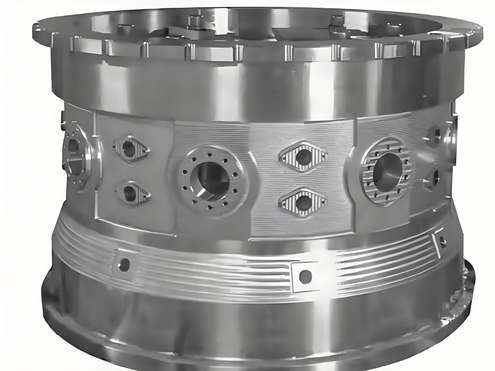
CNC EDM is indispensable in aerospace manufacturing for producing complex components from high-strength alloys. Applications include turbine blades, fuel system components, and structural parts requiring tight tolerances and complex geometries that can only be achieved with CNC EDM technology.

Medical Manufacturing
The medical industry relies on CNC EDM for producing precision components such as surgical instruments, orthopedic implants, and dental fixtures. EDM's ability to machine biocompatible materials with exceptional accuracy makes it ideal for these critical applications where precision can impact patient safety.

Automotive Sector
CNC EDM plays a vital role in automotive manufacturing, particularly for tooling, dies, and high-performance components. From fuel injection nozzles to transmission parts, EDM enables the production of complex shapes in hardened materials that withstand the extreme conditions of automotive operation.

Mold & Die Making
CNC EDM is a cornerstone of modern mold and die manufacturing. Both wire and sinker EDM processes are used to create complex cavities, cores, and details in mold components. CNC EDM allows for the production of intricate shapes and textures that would be impossible with conventional machining methods.
Electronics Industry
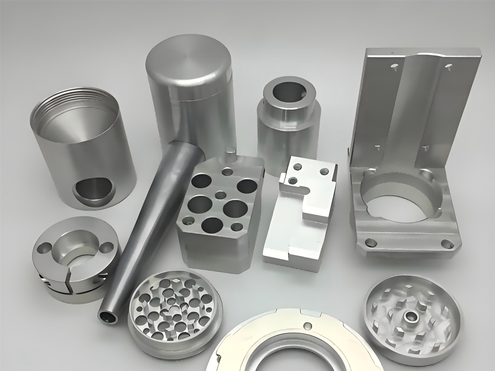
In electronics manufacturing, CNC EDM is used for producing precision components such as lead frames, connectors, and heat sinks. The ability of EDM to create fine features and micro-holes in conductive materials makes it invaluable for miniaturized electronic devices and high-density interconnect components.

Tool & Die Manufacturing
CNC EDM is essential for producing high-precision tools, dies, and gauges. From stamping dies to extrusion tools, EDM allows manufacturers to create hardened tooling with complex shapes and tight tolerances. This results in longer tool life and better performance in production environments.
One of the key advantages of CNC EDM is its ability to machine materials regardless of their hardness, as long as they are electrically conductive. This makes EDM particularly valuable for working with materials that have been heat-treated to high hardness, which would quickly wear out conventional cutting tools.
While CNC EDM can process any conductive material, the efficiency and results vary depending on the material's properties. Materials with higher melting points typically require more energy and time to machine with CNC EDM but can produce excellent results when proper parameters are used.
Metals & Alloys
• Tool steels
• Stainless steels
• Titanium and alloys
• Aluminum alloys
• Copper and copper alloys
• Nickel-based superalloys
Specialty Materials
• Tungsten and molybdenum
• Carbides
• Conductive ceramics
• Magnetic materials
• Precious metals
• Composite materials (conductive)

CNC EDM Technology & Advantages
Understanding the capabilities, benefits, and technological advancements in CNC EDM machining.

Key Advantages of CNC EDM
Precision and Accuracy
CNC EDM achieves exceptional precision with tolerances as tight as ±0.0001mm, making it ideal for high-precision components where accuracy is critical.
Ability to Machine Hard Materials
CNC EDM can machine materials regardless of hardness, allowing for the processing of heat-treated components that would damage conventional cutting tools.
Complex Geometry Capabilities
CNC EDM excels at producing intricate shapes, fine details, and complex internal features that would be impossible or extremely difficult with conventional machining.
No Contact Machining
The non-contact nature of CNC EDM eliminates cutting forces, preventing workpiece deformation and allowing for machining of thin, delicate components.
Minimal Post-Processing
CNC EDM can achieve excellent surface finishes, often eliminating the need for additional finishing operations and reducing overall production time.
Limitations and Considerations
While EDM offers numerous advantages, it's important to understand its limitations to determine when it's the appropriate manufacturing process:
Slower Material Removal
CNC EDM generally removes material more slowly than conventional machining processes, making it less suitable for high-volume production of simple parts.
Material Conductivity Requirement
CNC EDM can only machine electrically conductive materials, limiting its application to non-conductive materials like most plastics and ceramics.
Electrode Wear
In sinker EDM, electrodes wear during the process, which can affect precision and requires replacement or compensation through the CNC system.
Surface Layer Changes
CNC EDM can create a recast layer on the workpiece surface, which may need to be removed for certain applications requiring specific material properties.
Higher Equipment Cost EDM machines represent a significant investment compared to some conventional machining equipment, though this is often justified by their unique capabilities.

Advanced CNC EDM Technologies
Recent Technological Advancements
Adaptive Control Systems
Modern CNC EDM machines feature adaptive controls that automatically adjust parameters in real-time, optimizing the machining process for efficiency and precision.
High-Speed CNC EDM
Recent developments have significantly increased material removal rates in EDM while maintaining precision, narrowing the gap with conventional machining for certain applications.
Multi-Axis Capabilities
Advanced 5-axis EDM systems allow for complex 3D machining with fewer setups, reducing production time and improving accuracy.
Intelligent Electrode Management
New CNC EDM systems feature automated electrode changing and measurement, enabling unattended operation and consistent results.
CAD/CAM Integration
Seamless integration with CAD/CAM software allows for efficient programming of complex parts, simulation, and optimization of CNC EDM processes.
CNC EDM Process Parameters
The performance of CNC EDM is influenced by several key parameters that can be adjusted to achieve the desired results:

Optimizing these parameters in EDM requires expertise and often involves trade-offs between material removal rate, surface finish, and electrode wear.
EDM Setup Reduction in Mold Shops
EDM setup reduction is important because many mold projects require several electrodes, multiple burn locations, and different roughing or finishing conditions. Setup time can be reduced by using standardized electrode holders, clear electrode identification, offline presetting, accurate workpiece referencing, and CAD/CAM data that connects the electrode design with the EDM burn position. When these details are controlled before the machine starts, the operator spends less time touching off electrodes and correcting avoidable positioning errors.
A practical EDM setup plan should record the electrode number, material, spark gap, undersize allowance, burn depth, orbit setting, surface finish target, and inspection requirement. For multi-cavity molds, this information is even more important because one incorrect electrode offset can affect several cavities. Shops that combine CNC programming, CMM inspection, preset holders, and real-time feedback can reduce rework while keeping the EDM process stable from the first cavity to the last.
The Future of CNC EDM
Emerging trends, innovations, and future developments in Electrical Discharge Machining technology.

Automation and Industry 4.0
The future of CNC EDM is closely tied to the broader trends of industrial automation and Industry 4.0. Manufacturers are increasingly integrating EDM machines into smart factories, where they communicate with other equipment and systems in real-time.
Automated material handling, robotic electrode changing, and continuous process monitoring, and continuous process monitoring are becoming standard features in advanced CNC EDM systems. These developments enable lights-out manufacturing, where EDM machines operate unattended for extended periods, increasing productivity and reducing labor costs.
Data collection and analysis from CNC EDM processes will allow for predictive maintenance, optimizing machine performance and reducing downtime. Artificial intelligence algorithms will analyze vast amounts of CNC EDM process data to continuously improve machining parameters and outcomes.

Artificial Intelligence and Machine Learning
Artificial intelligence (AI) and machine learning (ML) are poised to transform CNC EDM technology. These advanced algorithms will enable EDM systems to learn from past performance, automatically optimize parameters, and adapt to changing conditions in real-time.
AI-powered EDM systems will be able to predict and prevent potential issues before they occur, such as unstable machining conditions or electrode wear. ML algorithms will analyze the relationship between CNC EDM parameters and results, continuously refining the process for better efficiency and quality.
Computer vision systems integrated with EDM machines will enable automatic inspection and quality control, ensuring that each part meets specifications without manual intervention. This combination of AI and CNC EDM will push the boundaries of what's possible in precision manufacturing.
The Future of CNC EDM Machines in Manufacturing
The future of CNC EDM machines in manufacturing is moving toward smarter parameter control, automated electrode handling, digital job management, and more stable unattended machining. Instead of relying only on operator experience, newer systems can use sensor feedback to detect unstable sparking, adjust discharge conditions, and protect the workpiece from arcing or excessive electrode wear. This is useful for mold makers that need consistent quality across complex cavities and long machining cycles.
When buyers compare equipment such as CHMER EDM machines or other wire, sinker, and drilling EDM systems, the real decision is usually not only the machine brand. They are also comparing travel size, generator performance, controller capability, automation options, wire threading, electrode management, service support, and the ability to hold accuracy over long production jobs. For mold manufacturers, these factors directly affect lead time, surface finish, setup repeatability, and the reliability of difficult EDM operations.
Emerging Innovations in CNC EDM
Micro-EDM Developments
Advancements in micro-CNC EDM are enabling the production of extremely small features with sub-micron precision. This is opening new applications in microelectronics, medical devices, and nanotechnology where conventional machining methods reach their limits.
Hybrid Machining Systems
The integration of CNC EDM with other machining processes (such as milling or grinding) in single hybrid machines is gaining traction. These systems allow for complete part production in a single setup, reducing handling time and improving accuracy.
Eco-Friendly CNC EDM
Environmental concerns are driving the development of more sustainable CNC EDM processes. This includes biodegradable dielectric fluids, energy-efficient power supplies, and recycling systems for waste materials and fluids.
Frequently Asked Questions About CNC EDM
Answers to the most common questions about CNC EDM technology, processes, and applications.

What materials can be machined with CNC EDM?
CNC EDM can machine any electrically conductive material, including tool steels, carbon steels, stainless steels, aluminum, titanium, superalloys, and even some conductive ceramics. The process is particularly effective for hardened materials that are difficult to machine with conventional methods. While EDM is limited to conductive materials, its ability to handle extremely hard materials makes it invaluable in many manufacturing applications.
What is the typical tolerance achievable with CNC EDM?
CNC EDM can achieve exceptional tolerances, typically in the range of ±0.001mm (0.00004 inches) for most applications. Advanced CNC EDM systems with high-precision linear guides and temperature control can achieve tolerances as tight as ±0.0001mm (0.000004 inches) for specialized micro-machining applications. The actual achievable tolerance depends on several factors, including machine quality, electrode material, workpiece material, and the skill of the EDM programmer/operator.
How does CNC EDM compare to laser cutting?
While both EDM and laser cutting are non-contact machining processes, they have distinct advantages and applications. CNC EDM is generally slower but offers superior precision and surface finish, making it ideal for complex 3D shapes and hard materials. Laser cutting is faster for thin materials and can cut non-conductive materials, but may produce more heat-affected zones and lower precision compared to EDM. CNC EDM is more suitable for tool and die making, while laser cutting excels at sheet metal fabrication.
What factors affect CNC EDM machining speed?
Several factors influence CNC EDM machining speed, including the material removal rate (which depends on current, pulse duration, and frequency), workpiece material and thickness, electrode material and design, dielectric fluid type and condition, and the desired surface finish. Higher current settings increase material removal rates in EDM but may reduce surface quality. The complexity of the part geometry also affects speed, with intricate shapes requiring more time than simple ones. Proper maintenance of EDM equipment, particularly the power supply and flushing system, is essential for maintaining optimal machining speeds.
How much does a CNC EDM machine cost?
CNC EDM machine costs vary widely based on type, size, capabilities, and brand. Entry-level wire EDM machines typically range from $50,000 to $150,000, while high-precision, large-format wire EDM systems can exceed $500,000. Sinker EDM machines generally range from $80,000 to $300,000 for standard models, with specialized systems for large workpieces or micro-machining costing significantly more. Additional costs include tooling (electrodes, wires), dielectric fluids, maintenance, and operator training. While the initial investment in CNC EDM technology is substantial, it is often justified by the unique capabilities and precision it provides.
How much does a CNC EDM machine cost?
Regular maintenance is essential for optimal performance of CNC EDM machines. This includes changing dielectric fluids and filters, cleaning and inspecting electrodes, maintaining wire guides and tension systems (for wire EDM), calibrating axes, and checking for wear on mechanical components. The power supply and control system should be inspected regularly to ensure proper functioning. Preventive maintenance schedules vary by manufacturer but typically include daily, weekly, monthly, and annual tasks. Proper maintenance not only ensures consistent quality and performance but also extends the lifespan of CNC EDM equipment and reduces the risk of unplanned downtime.