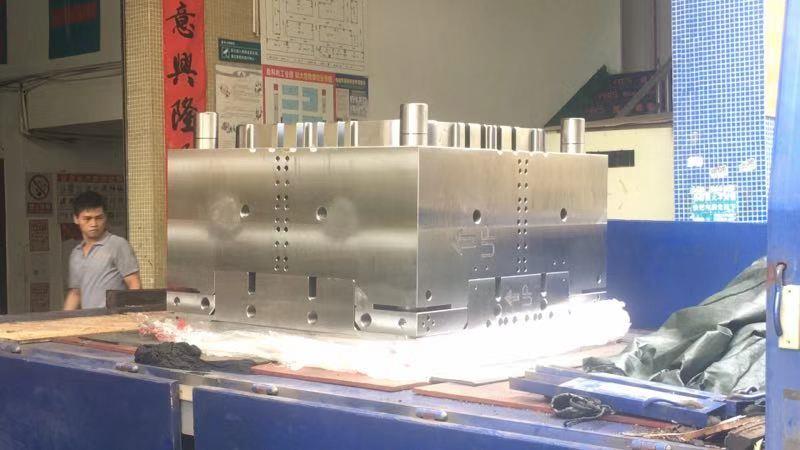
CNC Milling Technology Overview
CNC milling represents a sophisticated manufacturing methodology that employs computer-controlled machinery to precisely sculpt and form various materials including metallic alloys, polymer compounds, and composite substances. CNC milling technology delivers exceptional dimensional accuracy and repeatability in creating intricate geometries, serving critical applications across aerospace engineering, automotive manufacturing, medical device production, and consumer product development sectors. Modern CNC milling operations have transformed traditional manufacturing processes through advanced automation and precision control systems.
CNC Milling Process Workflow
The CNC milling production sequence commences when clients provide CAD blueprints for their desired components. Engineering personnel utilize Computer-Aided Manufacturing (CAM) software to transform these technical drawings into executable CNC milling programs. Subsequently, appropriate cutting implements are selected and workpieces are secured to the CNC milling platform using specialized clamping mechanisms. CNC milling machine selection depends upon component specifications and geometric complexity requirements. Operators input CNC milling programming instructions via the computerized interface to initiate the machining cycle. High-velocity rotating cutters in CNC milling operations follow predetermined toolpaths to systematically remove excess material until the finished component emerges. Post-CNC milling operations in the finishing department ensure adherence to specified tolerances and surface quality standards.
CNC Milling Machine Architecture Components
CNC milling equipment comprises several fundamental elements essential for optimal performance. The spindle assembly in CNC milling systems houses and drives the cutting implement; the worktable platform secures the raw material during CNC milling operations; multi-axis drive systems govern spindle and table positioning in CNC milling processes; the numerical control interface manages CNC milling operational parameters; protective enclosures ensure operator safety during CNC milling procedures. Additional CNC milling subsystems encompass automatic tool-changing mechanisms, coolant delivery networks for CNC milling operations, sensing devices, and positional feedback systems that enhance CNC milling precision.


CNC Milling Equipment Classifications
Vertical CNC Milling Machines
Vertical CNC milling systems feature cutting tools that operate in vertical rotational patterns, typically incorporating three-axis motion control for upward and downward tool movement. These vertical CNC milling configurations are ideal for specific CNC milling applications requiring precise vertical machining operations.
Horizontal CNC Milling Machines
Horizontal CNC milling equipment provides similar functionality to vertical CNC milling units but with laterally-oriented tool rotation. Both horizontal and vertical CNC milling configurations utilize identical cutting implement specifications, making CNC milling operations versatile across different orientations.
Three-Axis CNC Milling Systems
In three-axis CNC milling operations, workpieces remain stationary while cutting tools traverse three coordinate planes. This CNC milling approach is optimal for producing geometric features, apertures, and angular edges through precise three-axis CNC milling movements.
Four-Axis CNC Milling Systems
Four-axis CNC milling incorporates three-axis capabilities plus additional A-axis rotational movement, enabling lateral surface machining operations. Advanced four-axis CNC milling systems provide enhanced flexibility for complex CNC milling applications.
Five-Axis CNC Milling Systems
Five-axis CNC milling combines four-axis functionality with B-axis rotation, facilitating complex component manufacturing for diverse industrial applications. These sophisticated five-axis CNC milling machines represent the pinnacle of CNC milling technology advancement.
Nine-Axis CNC Milling Mill-Turn Systems
Nine-axis CNC milling systems integrate five-axis capabilities with angular CNC milling and balanced turning operations, utilizing B-axis motion and specialized tooling for intricate component fabrication through advanced CNC milling processes.
CNC Milling Technology Benefits
CNC milling has revolutionized product development and manufacturing methodologies, offering key advantages that make CNC milling indispensable in modern manufacturing:
- Precision Engineering: CNC milling programmable systems achieve stringent dimensional tolerances
- Process Automation: CNC milling dramatically reduces cycle times and increases throughput
- Material Versatility: CNC milling accommodates diverse substrates across multiple industry sectors
CNC Milling Process Limitations
Despite significant CNC milling advantages, certain constraints exist in CNC milling operations:
- Dimensional Restrictions: CNC milling machine envelope limits maximum component dimensions
- Complex Geometry Challenges: Intricate shapes in CNC milling require extended setup time and increased tooling costs, though remain achievable through advanced CNC milling techniques
Prototek CNC Milling Specifications
CNC Milling Production Timeline
CNC milling projects: 5-22 business days
Maximum CNC Milling Workpiece Dimensions
CNC milling capacity: 84 x 40 x 30 inches (2134 x 1016 x 762 mm) Multiple CNC milling machines with varying capacities available; specifications represent maximum CNC milling envelope
CNC Milling Tolerance Capabilities
Standard CNC Milling Tolerances: Metallic materials in CNC milling conform to ISO 2768 specifications or ±0.005 in (±0.127 mm) unless specified otherwise; polymeric and composite materials in CNC milling maintain ±0.010 in (±0.254 mm)
CNC Milling Threading Operations
All standard thread specifications accommodated in CNC milling; custom threading in CNC milling requires manual quotation review.
CNC Milling Edge Finishing
Sharp edges in CNC milling receive chamfering and deburring treatment as standard practice.
CNC Milling Surface Roughness
Standard CNC milling finish: Ra 126 µin / Ra 3.2 µm or superior; additional CNC milling finishing options available upon quotation request.
CNC Milling Material Portfolio

CNC Milling Metallic Substrates
CNC milling metallic materials: Aluminum alloys, bearing bronze, brass, bronze, carbon steel, copper, phosphor bronze, silicon aluminum bronze, stainless steel, steel, titanium
CNC Milling Polymeric Materials
CNC milling polymeric substrates: ABS, acrylic, acetal, HDPE, nylon, PEEK, polycarbonate, polypropylene, Radel, Ultem

CNC Milling Design Guidelines
CNC milling operations produce diverse high-performance surface finishes, each engineered for specific CNC milling application requirements. Smooth CNC milling surfaces deliver exceptional flatness and dimensional control, ideally suited for precision CNC milling components. Textured CNC milling finishes provide aesthetic appeal while offering functional benefits including enhanced grip characteristics and reduced contact area. Specialized CNC milling processes such as mirror polishing and bead blasting create ultra-smooth or matte surface textures. Our skilled CNC milling machinists collaborate closely with customers to determine optimal CNC milling finishes that balance visual appeal, functional performance, and economic considerations.
CNC Milling Design Parameter Guidelines
| CNC Milling Feature Type | Recommended CNC Milling Specifications | Minimum Feasible CNC Milling |
|---|---|---|
| CNC Milling Cavities and Pockets | d < 4w | 10× tool diameter |
| CNC Milling Engraving | 0.2 in, Font: ≥20pt sans serif | - |
| CNC Milling Holes | Standard drill sizes, d > 4ø | d ≤ 10ø |
| CNC Milling Internal Corners | Radius: r > 1/3 d | - |
| CNC Milling Minimum Features | 0.10 in | 0.02 in |
| CNC Milling Wall Thickness | Metal: 0.03 in, Plastic: 0.06 in | Metal: 0.02 in, Plastic: 0.04 in |
| CNC Milling Thread Specifications | Length: 3ø, Size: 0-80 | - |
| CNC Milling Dimensional Tolerances | Metal: ISO 2768 or ±0.005 in, Plastic: ±0.010 in | Metal: <±0.001 in, Plastic: ±0.002 in |
| CNC Milling Undercut Features | Width: 0.125-1.5 in, Max depth: <2w, Min clearance: >4d | - |
CNC Milling Surface Treatment Processes
CNC milling operations generate extensive high-quality surface treatment options, each possessing distinct characteristics to address specific CNC milling application demands. Smooth CNC milling surfaces provide exceptional flatness and precise tolerances, representing ideal solutions for precision CNC milling components. Textured CNC milling surfaces contribute visual enhancement while delivering functional advantages such as improved tactile properties or minimized surface contact. Specialized CNC milling techniques including mirror polishing or abrasive blasting create ultra-smooth or matte surface characteristics. Expert CNC milling machinists work collaboratively with clients to select optimal CNC milling surface treatments that achieve balanced aesthetics, performance, and cost-effectiveness.
CNC Milling Finishing Equipment: Deburring systems, sanding apparatus, polishing machinery

CNC Milling Educational Resources
Through our comprehensive CNC milling resources, you can explore the intricacies of CNC milling and gain valuable insights into developing superior designs specifically optimized for CNC milling technology