





Insert Molding & Overmolding The Ultimate Guide for Manufacturers 2026<br>
By Shenzhen Abis Precision Technology Co., Ltd.<br>
Table of Contents<br>
1.Introduction: What Is Insert Molding & Why It Matters<br>
2.Insert Molding vs. Overmolding: What's the Difference?<br>
3.Core Components of Insert Molding<br>
4.Key Applications of Insert & Overmolding<br>
5.Top Benefits of Insert Molding for Your Products<br>
6.Common Materials Used in Insert & Overmolding<br>
7.Insert Molding Automation & Advanced Technologies<br>
8.Why Choose Shenzhen Abis Precision Technology Co., Ltd. as Your Insert Molding Partner?<br>
9.FAQs About Insert Molding & Overmolding<br>
10.Final Thoughts & Next Steps<br>

<br>
<br>
<br>1. Introduction: What Is Insert Molding & Why It Matters
<br>If you're in product development or manufacturing, you've likely encountered terms like insert molding, overmolding injection <br>molding, and mold inserts. These advanced injection molding techniques are the backbone of modern multi-material manufacturing, <br>enabling the creation of stronger, more functional, and cost-effective parts for every industry from automotive to consumer <br>electronics.
<br>At its simplest, insert molding is the process of placing preformed components (called inserts) into an injection mold cavity, then <br>injecting molten plastic around them to create a single, integrated part. When paired with overmolding-the process of molding a vsecond material over an existing substrate-it unlocks even more design possibilities, from soft-touch grips to enhanced structural <br>integrity.
<br>As a leading insert molding supplier and experienced mold manufacturer with years of industry expertise, Shenzhen Abis Precision <br>Technology Co., Ltd. has helped hundreds of clients turn complex multi-material designs into high-quality, production-ready parts. In <br>this comprehensive guide, we'll break down everything you need to know about insert molding, including its applications, benefits, <br>core technologies, and how to choose a reliable manufacturing partner for your project.<br>
<br>
<br>2. Insert Molding vs. Overmolding: What's the Difference?
<br>A common question we hear from product engineers and buyers is: "What's the difference between overmolding vs insert <br>molding?" While both are professional multi-material injection molding processes and often used in combined solutions, they serve <br>distinct production purposes and apply to different product scenarios:
<br>
|
Insert Molding |
Overmolding |
|
Integrates pre-placed inserts (usually metal, like brass or steel) into plastic parts during molding |
Molds a second layer of material (often soft plastic like TPU or TPE) over an existing plastic or metal substrate |
|
Creates a permanent mechanical bond between the insert and plastic |
Creates a physical or chemical bond between two different materials |
|
Core use cases: Threaded inserts for plastic housings, metal contacts in electronics, structural pins |
Core use cases: Soft-grip handles, waterproof seals, ergonomic consumer products, anti-slip parts |
<br>Many industrial and consumer product projects use a combination of both processes-for example, overmolding a TPU layer over a <br>metal insert embedded in a plastic base. This composite process, known as overmolding insert molding, perfectly integrates metal <br>structural strength and plastic ergonomics, which is widely used in high-end equipment and precision electronic products.<br><br>
<br>
<br>3. Core Components of Insert Molding
<br>Professional insert molding production relies on standardized precision components. Mastering these core parts is the key to <br>understanding the stability and precision of insert molding technology.
<br>3.1 Mold Inserts (Core & Cavity Inserts)
<br>At the heart of every insert molding process are mold inserts. These precision-machined components directly determine the <br>imensional accuracy and surface quality of finished parts:
<br>Core inserts: Responsible for forming the internal geometry of molded parts
<br>Cavity inserts: Define the external outline and appearance of parts
<br>Interchangeable mold inserts: Support fast replacement of part specifications (such as thread size and local geometry) without <br>replacing the entire mold base, greatly reducing tooling costs and production lead time
<br>At Shenzhen Abis Precision Technology Co., Ltd., we independently design and manufacture high-precision core and cavity inserts <br>with ultra-tight industrial tolerances, ensuring zero deviation of mass-produced parts and stable product consistency.
<br>3.2 Threaded Inserts for Plastic
<br>Threaded inserts are the most widely used functional inserts in insert molding. Common types include molded-in, press-in and heat-<br>set styles, mostly made of high-quality brass or stainless steel. They effectively solve the problem of easy thread stripping of pure <br>plastic parts, and create high-strength reusable threaded connections.
<br>Our mainstream supporting specifications include M4, M6 and 1/4-20 threaded inserts for plastic, which are compatible with Delrin, <br>nylon, ABS and other engineering plastics, and are widely used in equipment housings and structural assembly parts.
<br>3.3 Key Mold Design Elements
<br>High-quality insert molding cannot be separated from scientific mold design. We optimize core structures for all molds:
<br>Cashew gate injection molding: Effectively eliminate gate vestiges and ensure uniform plastic flow around inserts
<br>Hot sprue bushing injection molding: Reduce material waste, shorten production cycles, and adapt to high-volume production
<br>Conformal cooling inserts: Optimize heat dissipation, avoid part warpage and sink marks, and improve product yield<br>
 <br>
<br>
<br>
<br>4. Key Applications of Insert & Overmolding
<br>Insert molding and overmolding have strong industry adaptability, covering almost all precision manufacturing fields, and are the <br>preferred process for multi-material integrated parts:
<br>4.1 Automotive Components
<br>Metal insert injection molding for automotive electrical connectors and sensors, overmolded door handles and shift knobs, and <br>molded-in threaded inserts for automotive structural plastic parts, adapting to high vibration and high-temperature working <br>environments.
<br>4.2 Consumer Electronics
<br>Threaded inserts for plastic housings of mobile phones, laptops and smart appliances, TPU overmolded anti-slip grips for game <br>controllers and power tools, and insert-molded electrical contacts for chargers and adaptive equipment.
<br>4.3 Medical Devices
<br>Precision molded parts with metal inserts for surgical instruments, overmolded waterproof and leak-proof seals for medical pumps <br>and valves, meeting medical-grade safety and biocompatibility standards.
<br>4.4 Industrial & Hardware
<br>Molded-in threaded inserts for industrial equipment enclosures, steel and aluminum composite insert structural parts, and <br>overmolded rubber shock-absorbing and noise-reducing parts for mechanical equipment.
<br>4.5 Film Insert Molding & In-Mold Decoration
<br>Through film insert molding andin mold decoration injection moulding, integrate patterns, logos and textures into parts in one <br>molding process, eliminating secondary printing and spraying processes, and improving production efficiency and product durability.<br><br>
<br>
<br>5. Top Benefits of Insert Molding for Your Products
<br>Compared with traditional separate molding + manual assembly processes, insert molding has irreplaceable comprehensive <br>advantages in cost, quality and performance:
<br>Reduced Assembly Costs: Integrate inserts and plastic parts in one molding, cancel secondary assembly, glue bonding and welding <br>processes, and greatly save labor and time costs.
<br>Enhanced Part Strength: The integrated mechanical bond is tighter and more stable than manual assembly, effectively improving <br>structural load-bearing capacity and impact resistance.
<br>Improved Long-Term Reliability: Molded-in inserts will not loosen or fall off due to vibration and temperature changes, suitable for <br>long-term continuous working scenarios of industrial and automotive parts.
<br>Superior Design Flexibility: Realize the complementary advantages of multiple materials, combining metal strength, conductivity and <br>plastic light weight, corrosion resistance and insulation.
<br>High Volume Cost Efficiency: Reduce material waste and defective rate in mass production, and significantly reduce unit production <br>cost.
<br>Stable Dimensional Consistency: Precision mold inserts ensure high repeatability of parts, meeting strict tolerance requirements of <br>precision equipment.<br>
<br>
<br>6. Common Materials Used in Insert & Overmolding
<br>Reasonable material matching is the basis for qualified insert molding parts. We support customized matching of various insert <br>materials and engineering plastics:
<br>6.1 Insert Materials
<br>Brass inserts: Good electrical conductivity and corrosion resistance, the first choice for electronic connection and threaded fixing parts
<br>Steel inserts: High hardness and wear resistance, suitable for structural load-bearing and high-frequency use parts
<br>Aluminum inserts: Lightweight and anti-corrosion, widely used in aerospace and lightweight automotive parts
<br>6.2 Plastic Materials
<br>Glass-filled nylon: High temperature resistance and structural stiffness, for industrial structural parts
<br>TPU/TPE: Soft and elastic, for overmolding anti-slip grips and waterproof seals
<br>Delrin (POM): Low friction and high dimensional stability, for precision moving parts
<br>ABS/PC: Impact resistance and weather resistance, for consumer electronics and daily-use parts
<br>
<br>7. Insert Molding Automation & Advanced Technologies
<br>To meet the demand for high-volume and high-precision production, modern insert molding is fully combined with automated <br>production technology. Insert molding automation uses robotic arms to accurately place inserts, completely avoiding manual <br>positioning errors, and increasing production efficiency by more than 50% while improving product yield.
<br>Shenzhen Abis Precision Technology Co., Ltd. supports customized automated insert molding mold design, realizes seamless <br>docking with automated production lines, and provides one-stop services including interchangeable mold insert rapid replacement, <br>rapid prototyping verification and mass production docking, effectively shortening the project cycle for customers.
<br>8. Why Choose Shenzhen Abis Precision Technology Co., Ltd. as Your Insert Molding Partner?
<br>As a professional and experienced mold manufacturer focusing on insert molding and overmolding services, we have accumulated <br>rich project experience in serving global customers, with obvious core advantages:
<br>Professional DFM Optimization: The senior engineering team conducts full-process manufacturability evaluation for customer <br>designs, optimizes insert placement, glue feeding and cooling systems in advance, and avoids production risks
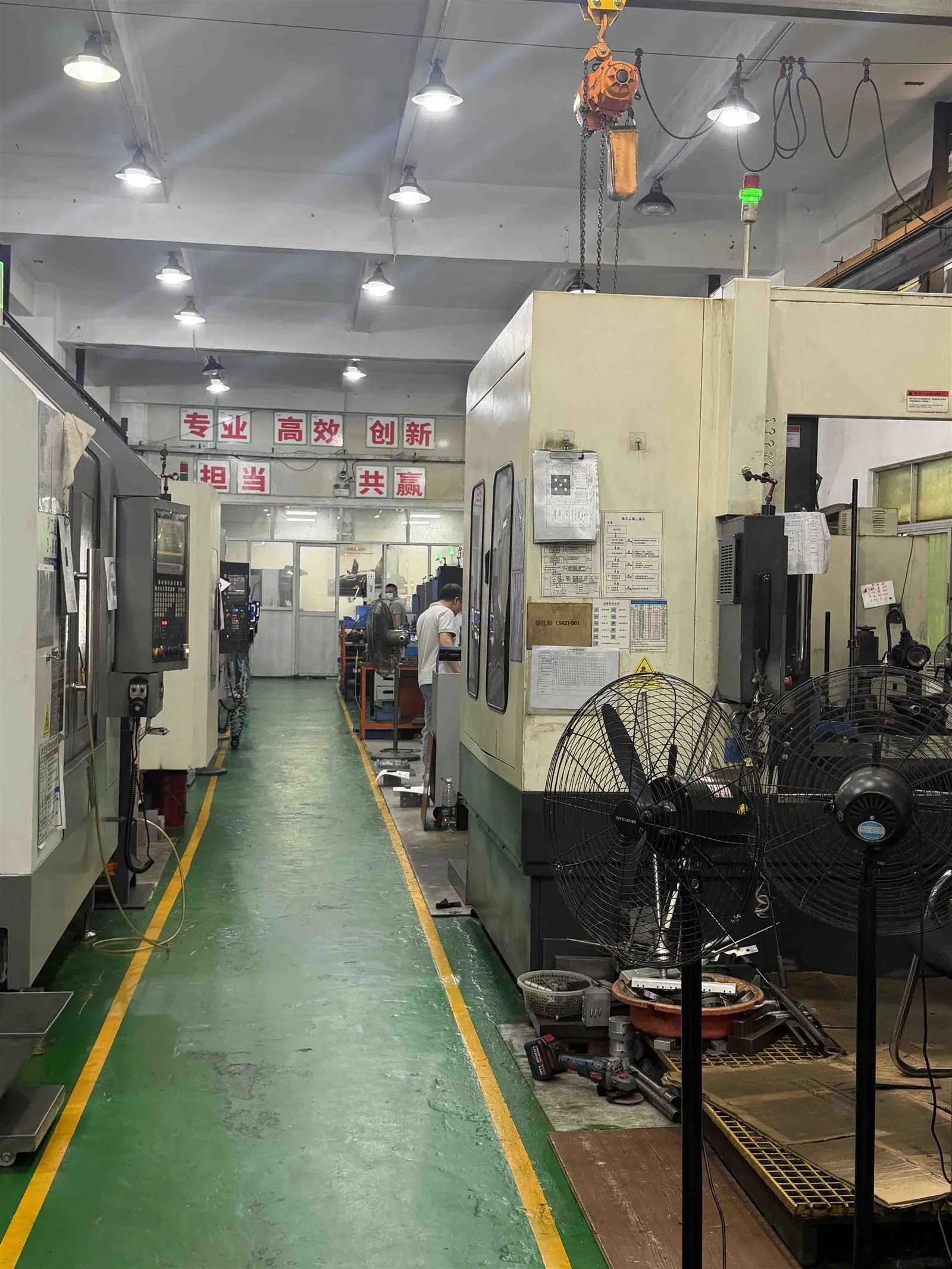
<br>Precision Mold Manufacturing: Adopt high-precision CNC and EDM processing technology to produce core and cavity inserts with <br>strict tolerance control
<br>Diversified Material Matching Experience: Proficient in the processing characteristics of various metals and engineering plastics, <br>providing targeted material solution matching
<br>Cost-Effective Tooling Solution: Adopt interchangeable insert design to reduce customer mold investment cost and shorten delivery <br>cycle
<br>End-to-End Full Service: Cover design consultation, mold making, prototype testing, small batch trial production and large-scale mass <br>production, with full after-sales technical support
<br>9. FAQs About Insert Molding & Overmolding
<br>We have sorted out the most frequently asked questions by global engineers, purchasers and product developers, with professional <br>and standardized answers to solve your core doubts:
<br>Q1: What is the main purpose of insert molding?
<br>The core purpose of insert molding is to integrate metal or functional hard inserts into plastic parts in one molding process. It <br>effectively improves the structural strength, assembly firmness, conductivity and wear resistance of plastic parts, eliminates traditional <br>secondary assembly processes, and realizes integrated production of multi-material parts.
<br>Q2: What is the difference between insert molding and overmolding?
<br>Insert molding mainly embeds rigid functional inserts (metal, ceramic) into plastic to enhance structural performance; overmolding <br>mainly covers a layer of soft or functional plastic (TPU/TPE) on the surface of the base part to realize anti-slip, waterproof, shock <br>absorption and aesthetic functions. The two can be used in combination to create higher-performance composite parts.
<br>Q3: Are threaded inserts necessary for plastic molded parts?
<br>For plastic parts that need repeated disassembly, assembly and load-bearing connection, threaded inserts are essential. Pure plastic <br>threads are easy to wear and slip, while molded-in brass or stainless steel threaded inserts can provide stable and durable thread <br>connection performance, greatly improving the service life of parts.
<br>Q4: What materials are suitable for insert molding production?
<br>Common insert materials include brass, stainless steel, aluminum and ceramic; common plastic substrates include ABS, PC, nylon, POM <br>(Delrin), TPU and glass-filled engineering plastics. Shenzhen Abis Precision Technology Co., Ltd. can customize material matching <br>solutions according to customer product usage scenarios.
<br>Q5: Is insert molding suitable for high-volume production?
<br>Absolutely. With automated insert loading equipment and high-precision interchangeable mold inserts, insert molding can realize <br>stable, high-efficiency and low-defect mass production. It is far more suitable for large-volume orders than manual assembly, with <br>lower unit cost and more stable quality.
<br>Q6: How to ensure no deviation of insert position in insert molding?
<br>The positioning accuracy of inserts depends on mold design and processing precision. We adopt customized insert positioning <br>grooves, limit structures and automated precise placement technology to effectively avoid insert offset, floating and deformation, and <br>ensure 100% qualified positioning of mass-produced parts.
<br>Q7: What industries are insert molding parts mainly used in?
<br>It is widely used in automotive manufacturing, consumer electronics, medical equipment, industrial hardware, smart home appliances <br>and aerospace precision parts. It is the core process for high-precision and high-reliability multi-material parts.
<br>10. Final Thoughts & Next Steps
<br>Insert molding and overmolding are mature, efficient and high-value advanced injection molding technologies, which solve many pain <br>points of traditional single-material molding and manual assembly. They can help brands and manufacturers improve product <br>performance, reduce production costs and enhance market competitiveness.
<br>As a reliable professional mold manufacturer with rich practical experience, Shenzhen Abis Precision Technology Co., Ltd. always <br>adheres to precision manufacturing and customized services, providing one-stop insert molding and overmolding solutions for global <br>customers from mold design, processing and manufacturing to mass production.
<br>If you have project demands for insert molding, overmolding or custom precision molds, please contact our professional team at any <br>time. We will provide free DFM analysis, professional technical consultation and accurate quotation for your project.